
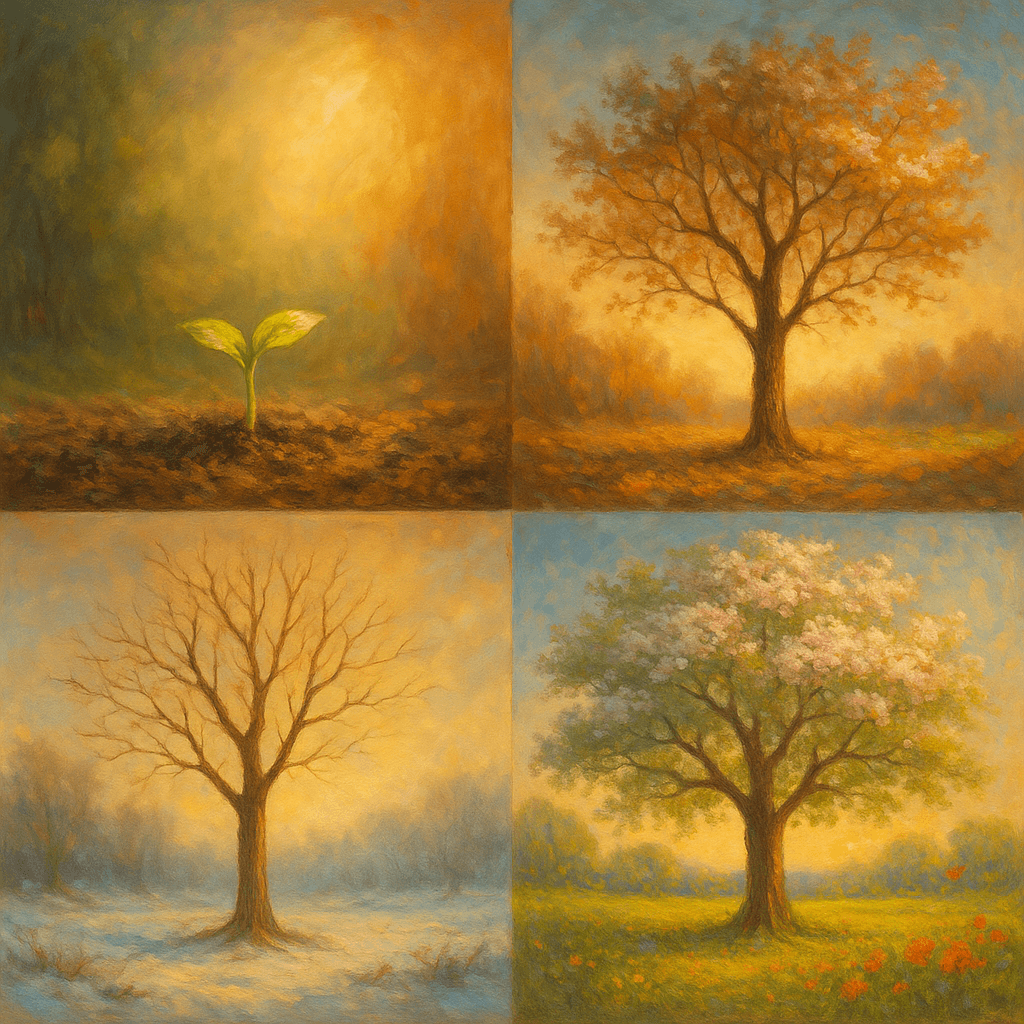
Life beats down and crushes the soul and art reminds you that you have one. — Stella Adler
—What lingers after this line?
Enduring Hardships in Everyday Life
Stella Adler’s poignant observation begins with a universal truth: life, with its trials and tribulations, can be relentless and overwhelming. Whether it’s loss, disappointment, or the accumulation of daily stresses, these experiences can weigh heavily on the spirit. Much like Sisyphus of Greek mythology, condemned to push his boulder endlessly, we often feel beaten down by circumstances beyond our control, leaving us numb or disheartened.
Art as a Source of Reconnection
In the midst of such adversity, Adler suggests that art plays a crucial, redemptive role. Art—be it painting, music, theater, or literature—serves as a bridge to parts of ourselves that may feel neglected or lost. For example, reading Maya Angelou’s ‘Still I Rise’ can reignite inner strength, while a stirring symphony can awaken dormant emotions. Thus, art provides not just comfort, but a reminder of our depths and humanity.
Historical Moments of Artistic Salvation
Looking back, great works have often emerged from periods of turmoil, offering solace to individuals and societies alike. After World War I, for instance, the poetry of Wilfred Owen and the paintings of Otto Dix articulated the trauma of conflict, helping survivors make sense of their pain. These expressions do not simply beautify suffering—they help people feel, process, and ultimately reaffirm their own souls in dark times.
Personal Reflection and Emotional Healing
On a more personal level, engaging with art can initiate healing and reflection. Many people turn to journaling, painting, or playing music when words fail, finding that creative expression validates their experiences. Psychologist James Pennebaker (1997) demonstrated how expressive writing improves well-being, reinforcing Adler’s notion that art nurtures the soul when life wears it thin.
The Lasting Legacy of Artistic Reminders
Ultimately, Adler’s wisdom endures because it recognizes art’s timeless function: to reignite the soul’s vitality in a world that often threatens to extinguish it. Whether in times of personal hardship or collective uncertainty, returning to art keeps us connected to what is most vital in ourselves. Through creative works, we are not only reminded that we have a soul—we learn how to protect, cherish, and celebrate it.
One-minute reflection
What's one small action this suggests?
Related Quotes
6 selectedArt is what we call it when the human soul shows up. — Seth Godin
Seth Godin
Seth Godin’s line reframes art as a moment of arrival: art happens when something distinctly human becomes visible through what we make. In this view, technique and output matter, but they are secondary to presence—the f...
Read full interpretation →It is a common mistake to think that art is a luxury. It is a necessity of the human spirit. — Chinua Achebe
Chinua Achebe
At first glance, Achebe challenges a deeply rooted modern assumption: that art belongs to the realm of extras, something pleasant but dispensable. By calling this belief a “common mistake,” he suggests that reducing art...
Read full interpretation →Paint your days with fearless colors. — Yoko Ono
Yoko Ono
Yoko Ono’s line reads like a simple instruction, yet it carries an expansive challenge: treat your daily life as a canvas and yourself as the painter. Rather than waiting for rare, dramatic moments to feel alive, it asks...
Read full interpretation →Step into the studio of life and sculpt meaning from motion — Pablo Picasso
Pablo Picasso
Picasso’s line begins by relocating creativity from the gallery into daily experience: life itself becomes the studio. In that space, nothing is fully finished or perfectly arranged; instead, each moment arrives like raw...
Read full interpretation →If the world asks for your struggle, give it your art — Octavio Paz
Octavio Paz
Octavio Paz’s line pivots on a subtle refusal: if society demands your “struggle,” you are not obligated to hand over raw suffering as proof of worth. Instead, he proposes a transformation—give “your art,” the shaped and...
Read full interpretation →Begin the poem of your life with one bold line, then write without fear. — Emily Dickinson
Emily Dickinson
Emily Dickinson’s line treats a human life as something authored rather than merely endured. By calling it “the poem of your life,” she implies that identity is shaped through choices, patterns, and revisions—much like s...
Read full interpretation →More From Author
More from Stella Adler →