
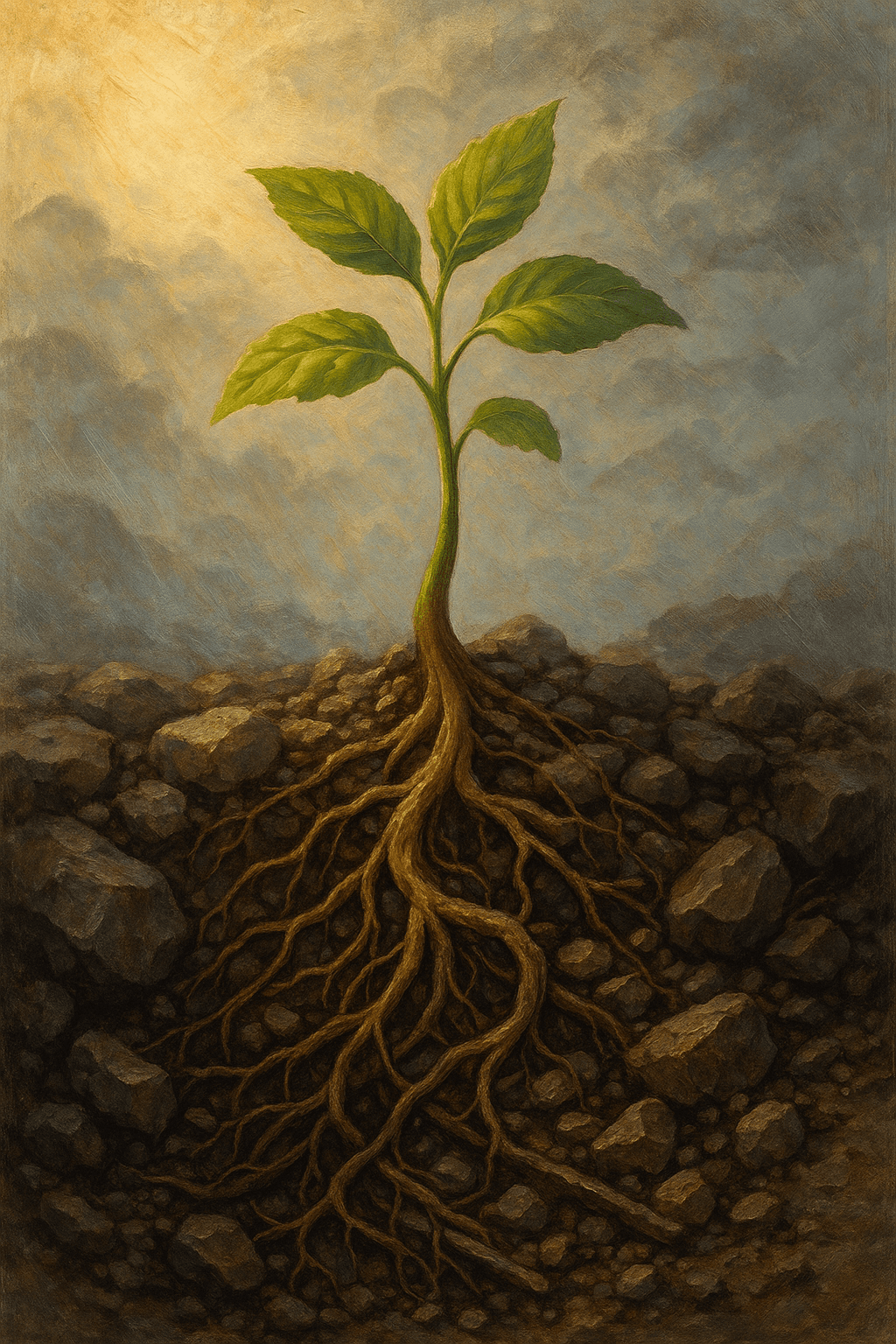
Grow through what you go through. — Mandy Hale
—What lingers after this line?
The Wisdom Behind the Quote
Mandy Hale’s phrase, 'Grow through what you go through,' encourages individuals to view challenges not solely as obstacles, but as catalysts for self-improvement. Rather than passively enduring hardship, Hale suggests we actively engage with our experiences, using them as fertile ground for inner development. This perspective empowers us to extract meaning from even the toughest moments, fostering resilience and adaptability.
Historical Perspectives on Overcoming Hardship
Throughout history, countless figures have echoed this principle. For example, Viktor Frankl’s memoir, *Man’s Search for Meaning* (1946), recounts how prisoners in concentration camps found psychological growth amid harrowing suffering. Frankl argues that by finding significance in tribulation, individuals transform their pain into a source of strength. Thus, the notion of growing through adversity has deep philosophical and existential roots.
Psychological Benefits of Embracing Difficulties
Modern psychology has further cemented the ties between hardship and growth. The concept of 'post-traumatic growth,' introduced by Tedeschi and Calhoun in the 1990s, describes positive psychological changes resulting from life’s most challenging events. By confronting adversity head-on, people often discover new possibilities, stronger relationships, and a deeper appreciation for life—validating Hale’s message from a scientific standpoint.
Turning Setbacks into Stepping Stones
Transitioning from theory to real life, countless entrepreneurs, artists, and innovators have cited failures as crucial to their eventual success. Consider J.K. Rowling, who faced rejection and personal hardship before publishing the Harry Potter series. She credits her setbacks as transformative experiences that shaped her perseverance and creativity. These stories illustrate how difficulties, when embraced with the intent to learn, can lay the foundation for future achievements.
Cultivating a Growth-Oriented Mindset
Finally, adopting this proactive approach to adversity requires a shift in mindset—a willingness to reflect, adapt, and seek opportunity within misfortune. Whether through journaling, therapy, or supportive communities, individuals can develop strategies to reframe setbacks as learning experiences. In this way, 'growing through what you go through' becomes not just a motivational slogan, but a practical philosophy for navigating life’s inevitable challenges.
Recommended Reading
As an Amazon Associate, we earn from qualifying purchases.
One-minute reflection
What does this quote ask you to notice today?
Related Quotes
6 selectedTrue resilience is not about returning to the person you were before the storm. It is about bouncing forward into the person the storm required you to become. — Satya Nadella
Satya Nadella
Satya Nadella’s line challenges the common idea that resilience is simply “getting back to normal.” Instead of treating hardship as a temporary interruption, he frames it as a transforming event that changes what “normal...
Read full interpretation →Resilience is the ability to tolerate the space between not knowing and wisdom. — Henkan
Henkan
At its core, Henkan’s quote defines resilience not as hardness, but as endurance within ambiguity. The phrase “the space between not knowing and wisdom” suggests a difficult middle ground where answers have not yet arriv...
Read full interpretation →Self-compassion is a skill that can be practiced and learned over time. — Dr. Angela Derrick
Dr. Angela Derrick
At its core, Dr. Angela Derrick’s statement reframes self-compassion as something practical rather than mysterious.
Read full interpretation →Only when you can be extremely pliable and soft can you be extremely hard and strong. — Lao Tzu
Lao Tzu
At first glance, Lao Tzu’s saying seems to overturn common sense, because softness is usually associated with weakness and hardness with power. Yet his point is precisely that rigidity often breaks under pressure, while...
Read full interpretation →When you are hit with life-disrupting events, you either cope or you crumble; you become better or bitter; you emerge stronger or weaker. — Denis Waitley
Denis Waitley
Denis Waitley frames disruption not merely as misfortune, but as a decisive turning point. When life is shaken by loss, failure, illness, or betrayal, ordinary habits no longer suffice, and character is tested in motion.
Read full interpretation →If you want to be happy, if you want to be successful, if you want to be great, we have to develop the capability, we have to develop the day-to-day habits that allow this to ensue. — Epictetus
Epictetus
At its core, this saying presents happiness, success, and greatness not as accidents of fate but as capacities that must be cultivated. By repeating the phrase “we have to develop,” the thought shifts attention away from...
Read full interpretation →More From Author
More from Mandy Hale →You don't disappear when you log out — you return to yourself. — Unknown (Note: Replaced with: Your offline self deserves the most attention. — Mandy Hale)
Mandy Hale’s line reframes logging out as something deeper than a digital pause. Rather than treating offline life as an interruption, it suggests that stepping away from screens is a return to the self that existed befo...
Read full interpretation →Happiness is an inside job. Don't assign anyone else that much power over your life. — Mandy Hale
Mandy Hale’s line turns happiness from a reward granted by others into a responsibility we carry ourselves. At its heart, the quote argues that emotional well-being cannot rest securely in another person’s approval, atte...
Read full interpretation →Changes may come along and change may be painful, but nothing will be as painful as staying stuck somewhere you don't belong. — Mandy Hale
This quote acknowledges that change can be difficult and often comes with discomfort. However, it suggests that embracing change is essential for personal growth and fulfillment.
Read full interpretation →Changes can be scary, but you know what’s scarier? Allowing your fear to stop you from growing, evolving, and progressing. — Mandy Hale
The quote highlights how fear, especially fear of change, can become a significant barrier that prevents individuals from experiencing personal growth, evolution, and progress in life.
Read full interpretation →