
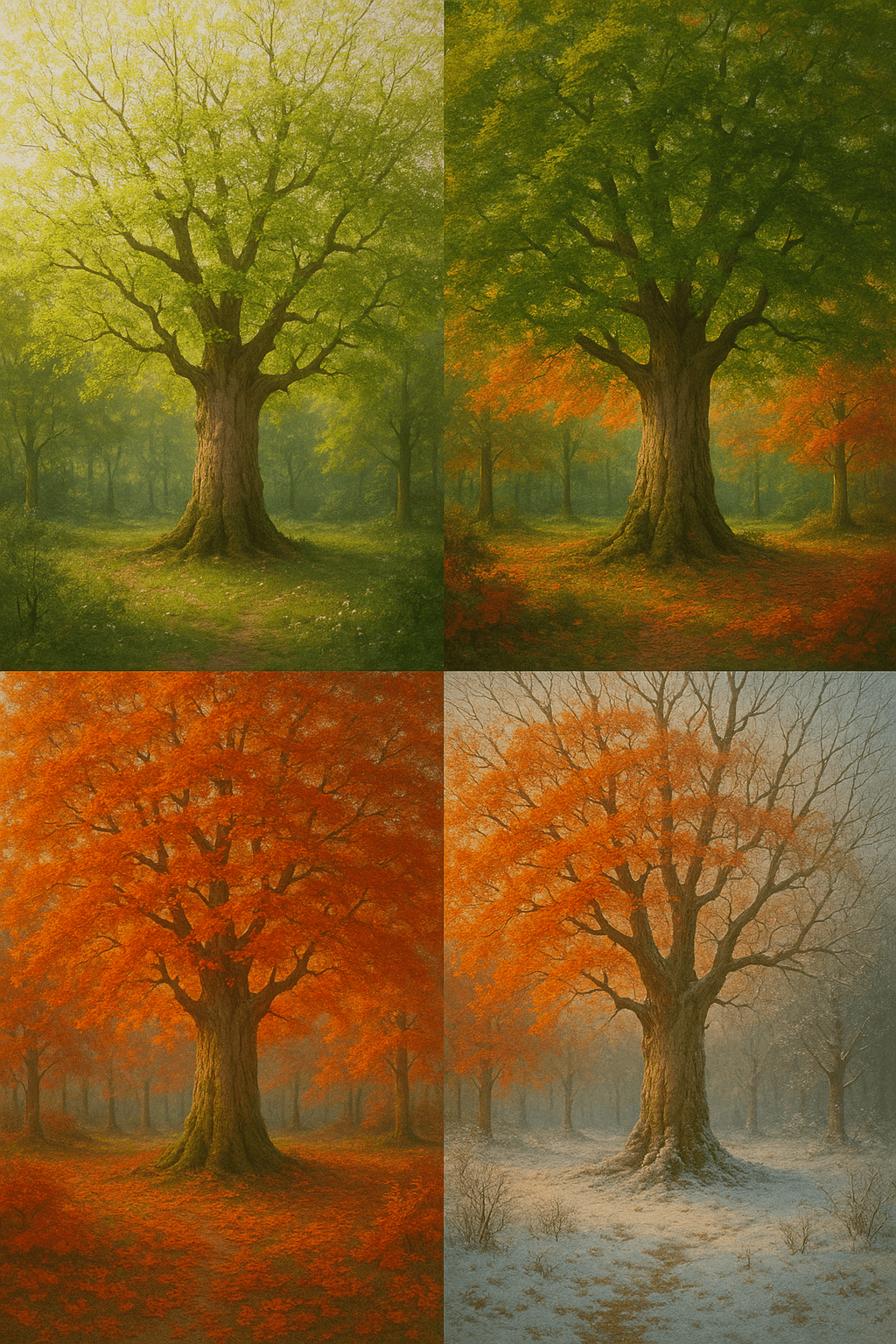
Knowing trees, I understand the meaning of patience. — Hermann Hesse
—What lingers after this line?
Hesse’s Contemplation of Nature
Hermann Hesse’s words highlight the profound wisdom humans can draw from the natural world. By observing trees—quietly persisting through seasons—Hesse finds a deeper meaning in their slow, steady growth. This reflection echoes his broader literary themes, especially evident in works like ‘Siddhartha’ (1922), where nature serves as a silent but powerful teacher of life’s virtues.
Trees as Living Symbols of Endurance
Transitioning from Hesse’s personal meditation, trees universally symbolize endurance. Their annual cycles, from budding to dormancy, exemplify steadfastness through adversity. Ancient forests, such as those in Japan’s Yakushima, contain trees thousands of years old—quiet reminders of how patience enables longevity. Trees weather storms and drought, teaching us to withstand trials with calm persistence.
Patience in Growth and Transformation
Furthermore, the growth of a tree mirrors the gradual changes inherent in human development. Unlike the rapid rewards sought in modern life, trees invest years—even decades—before reaching maturity. This process invites us to reconsider our own impatience, encouraging a shift toward embracing incremental progress and trusting in time’s natural unfolding.
Philosophical Parallels in Eastern Thought
Building upon these lessons, Eastern philosophies such as Taoism celebrate the wisdom of waiting. Laozi’s *Tao Te Ching* (c. 4th century BCE) extols the virtue of non-action or 'wu wei', urging harmony with nature’s pace. Much like a tree, humans flourish when they allow events to develop organically rather than forcing outcomes prematurely.
Cultivating Patience in Contemporary Life
Finally, in today’s fast-paced society, the lesson of patience gained from trees is more relevant than ever. Mindfulness practices often incorporate appreciation for trees and greenery to foster calm and presence. By taking the time to watch—and learn from—the quiet resilience of trees, each of us can better nurture patience within our daily routines and long-term aspirations.
Recommended Reading
As an Amazon Associate, we earn from qualifying purchases.
One-minute reflection
Where does this idea show up in your life right now?
Related Quotes
6 selectedEverything that slows us down and forces patience is a help. — Hermann Hesse
Hermann Hesse
Hermann Hesse’s line flips a common assumption: that anything slowing us down is an obstacle. Instead, he suggests that friction in life—waiting, repetition, interruptions—can serve as an ally because it compels a differ...
Read full interpretation →Everything that slows us down and forces patience is a help. — Hermann Hesse
Hermann Hesse
Hermann Hesse’s line reframes inconvenience as assistance, suggesting that delays and friction are not merely obstacles but teachers. Instead of measuring “help” by speed or ease, he points to the kind of support that re...
Read full interpretation →The two most powerful warriors are patience and time. — Leo Tolstoy
Leo Tolstoy
This quote underscores the importance of patience as a powerful tool. It suggests that being able to wait and endure challenges over time can lead to successful outcomes.
Read full interpretation →One moment of patience may ward off great disaster. One moment of impatience may ruin a whole life. — Chinese Proverb
Chinese Proverb
This proverb highlights how a brief moment of patience can prevent significant negative outcomes. Exercising patience can avert disasters or avoidable troubles.
Read full interpretation →One doesn't get to be a master of one's own life by rushing. You have to learn the patience of a gardener who knows the harvest cannot be hurried. — Paulo Coelho
Paulo Coelho
At its core, Paulo Coelho’s reflection challenges a modern obsession with speed. He argues that mastery over one’s life does not come from frantic action or constant acceleration, but from learning when to wait, observe,...
Read full interpretation →A garden is a grand teacher. It teaches patience and careful watchfulness; it teaches industry and thrift; above all it teaches entire trust. — Gertrude Jekyll
Gertrude Jekyll
Gertrude Jekyll presents the garden not merely as a decorative space but as a living instructor. From the opening phrase, she elevates cultivation into education, suggesting that soil, weather, and seasons quietly shape...
Read full interpretation →More From Author
More from Hermann Hesse →Within you, there is a stillness and a sanctuary to which you can retreat at any time. — Hermann Hesse
Hermann Hesse’s line begins with a quiet assurance: the sanctuary you seek is not something you must build, earn, or discover in distant places—it is already “within you.” By framing stillness as an inner location, he sh...
Read full interpretation →Within you, there is a stillness and a sanctuary to which you can retreat at any time. — Hermann Hesse
Hermann Hesse suggests that peace is not primarily something to be found by rearranging external circumstances, but something already present—an interior “sanctuary” that can be entered at will. The phrase implies both i...
Read full interpretation →Everything that slows us down and forces patience is a help. — Hermann Hesse
Hermann Hesse’s line flips a common assumption: that anything slowing us down is an obstacle. Instead, he suggests that friction in life—waiting, repetition, interruptions—can serve as an ally because it compels a differ...
Read full interpretation →Within you, there is a stillness and a sanctuary to which you can retreat at any time. — Hermann Hesse
Hermann Hesse’s line begins with a simple but radical claim: safety is not only something we seek in places or people, but something we can access within ourselves. By framing stillness as a “sanctuary,” he suggests an i...
Read full interpretation →