
Walking Into Fear, Returning With Stories
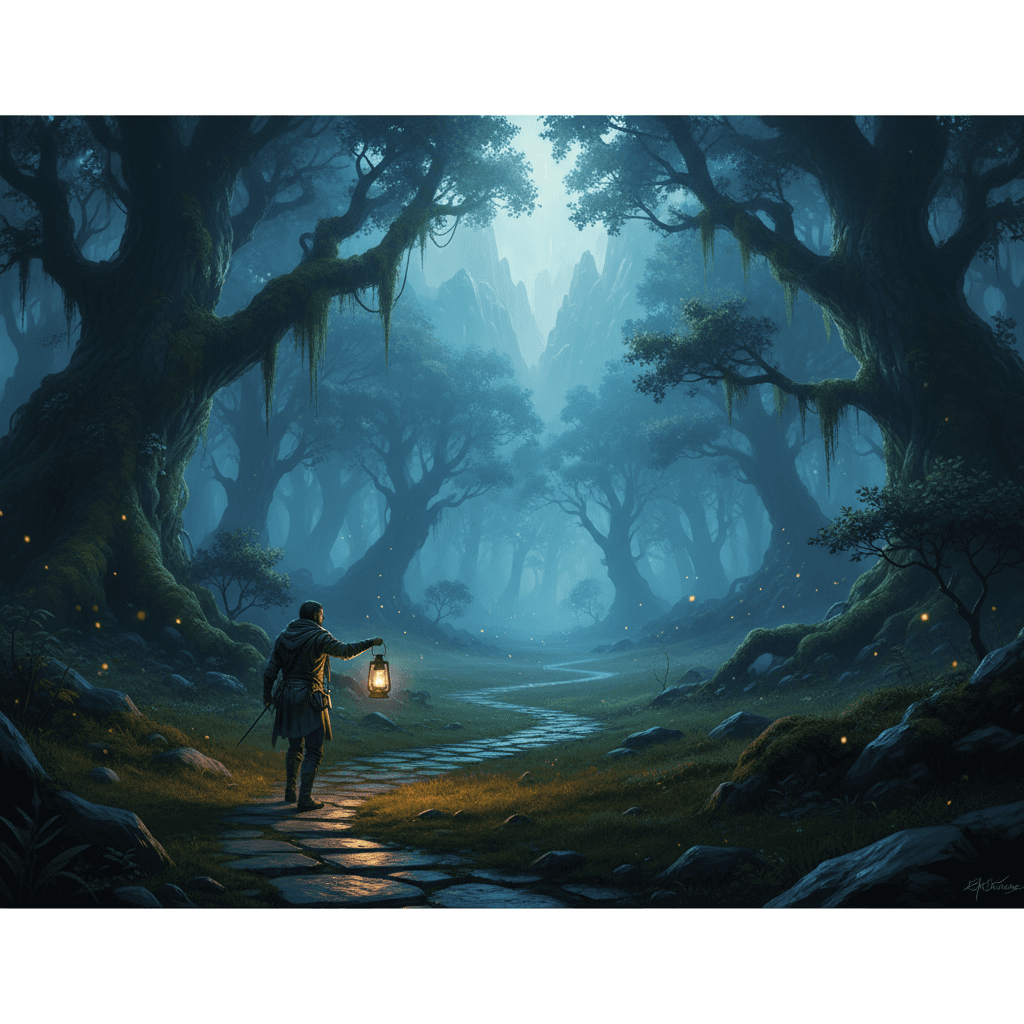
Walk toward what scares you with curiosity, and you will find new stories to tell. — Paulo Coelho
—What lingers after this line?
Fear as a Map to Meaning
Coelho’s invitation reframes fear as a compass pointing toward significance rather than a wall that stops us. What scares us often sits at the boundary of identity, beliefs, and belonging—precisely where fresh narratives are waiting. In The Alchemist (1988), Santiago repeatedly steps into uncertainty—the desert, strange cities, cryptic tests—and in doing so discovers not just treasure, but a life-story he can own. Thus, fear marks the threshold; curiosity opens the gate.
Curiosity, the Approach System
Moving from metaphor to mechanism, curiosity converts avoidance into approach. The information-gap theory (Loewenstein, 1994) shows how noticing what we don’t know creates a productive tension that pulls us forward. Likewise, research on epistemic curiosity (Litman, 2005) suggests a felt urge to resolve uncertainty. Neuroscience amplifies this: states of curiosity enhance memory via dopaminergic–hippocampal pathways (Gruber, Gelman, and Ranganath, 2014). In short, curiosity doesn’t erase fear; it supplies the energy and orientation to walk with it.
Exposure Turns Terror Into Telling
Clinically, gradual approach is how frightened brains learn new stories about old alarms. Exposure therapy’s inhibitory learning model (Craske et al., 2014) shows that violating threat expectations—safely and repeatedly—rewrites predictions more effectively than white-knuckled endurance. Complementing this, Acceptance and Commitment Therapy (Hayes et al., 1999) urges movement toward what matters, even while fear rides along. Framed this way, each small approach trial is a scene: the protagonist meets the dragon, learns its limits, and returns with notes worth sharing.
The Hero’s Journey Reframed
Myth has long encoded this arc. Joseph Campbell’s The Hero with a Thousand Faces (1949) traces how crossing the threshold into the unknown leads to an ordeal and, finally, a boon brought back to the community—the story itself. Homer’s Odyssey (Book 11) depicts Odysseus descending to the underworld to seek knowledge; he returns equipped to steer between Scylla and Charybdis. So, too, our modern journeys: the cave we hesitate to enter contains the material our audience needs.
Reporting From the Edge
In practice, great nonfiction often arises where discomfort meets disciplined curiosity. Joan Didion’s “Slouching Towards Bethlehem” (1967) walks into the disorienting currents of Haight-Ashbury with an observing, not scolding, gaze—yielding a portrait only proximity could produce. Likewise, James Baldwin’s “Down at the Cross” (1962) confronts racial terror through lucid inquiry, transforming dread into moral clarity. Both writers show that when we ask better questions in the very places we fear, we come home with stories that expand public understanding.
Everyday Micro‑Quests for Creators
Translating principle into habit, begin small. First, name the edge: “I’m avoiding interviewing strangers,” or “I fear drafting the vulnerable chapter.” Next, design a curiosity cue—one specific, low-risk step, like five minutes of freewriting on the scariest sentence, or one respectful question to a new source. Then, debrief immediately: note what surprised you. Finally, iterate tomorrow with a slightly bigger step. These micro-quests compound confidence and generate scenes you could not have outlined from a safe distance.
Ethics, Safety, and the Window of Tolerance
Crucially, walking toward fear is not a license for recklessness. Keep challenges within a window of tolerance that allows learning (Siegel’s interpersonal neurobiology describes this adaptive zone). If danger is physical, plan and partner; if emotional, pace and ground. When stories involve others’ vulnerability, obtain informed consent and protect dignity. Properly bounded, curiosity becomes a bridge rather than a battering ram—carrying you to the frontier, and back again, with new stories that do no harm.
Recommended Reading
One-minute reflection
What feeling does this quote bring up for you?
Related Quotes
6 selectedDare to begin where fear says to stop; the first step redraws the map — Paulo Coelho
Paulo Coelho
Paulo Coelho’s line treats fear less as a warning and more as a border we mistakenly accept as permanent. When fear says “stop,” it often isn’t pointing to actual danger; it’s signaling uncertainty, inexperience, or the...
Read full interpretation →Travel inward with courage and return with new maps for living. — Paulo Coelho
Paulo Coelho
Coelho’s line reframes travel as an inward expedition rather than a change of scenery. To “travel inward” is to observe your fears, desires, habits, and hidden assumptions with the same attentiveness you’d bring to a for...
Read full interpretation →Trade comfort for curiosity; new skills pay the richest interest — Paulo Coelho
Paulo Coelho
Paulo Coelho’s line begins by challenging the most seductive bargain we make with ourselves: choosing ease over exploration. Comfort isn’t inherently bad, but it can quietly harden into routine, where the days feel effic...
Read full interpretation →Create one small miracle today by choosing curiosity over fear. — Paulo Coelho
Paulo Coelho
Paulo Coelho’s line invites us to see miracles not as lightning bolts from the heavens, but as subtle shifts in how we meet the day. Rather than waiting for an external rescue, he suggests that a single inner decision—to...
Read full interpretation →Build bridges with your daring, and invite the future across. — Paulo Coelho
Paulo Coelho
Paulo Coelho’s line begins with an unexpected material: daring. Rather than treating courage as a mood we wait for, he frames it as something we actively use—like timber and stone—to create passageways where none exist.
Read full interpretation →Cast a brave seed into the soil of uncertainty — wonder grows in bold gardens. — Paulo Coelho
Paulo Coelho
Coelho’s image of casting a brave seed into uncertain soil invites us to see risk as an act of creation rather than danger. Instead of waiting for perfect conditions, he suggests that we begin anyway, accepting that the...
Read full interpretation →More From Author
More from Paulo Coelho →Your 'yes' has no value until you learn to say 'no'. — Paulo Coelho
Paulo Coelho’s line hinges on a simple contrast: a “yes” only carries weight when an alternative is genuinely available. If you can’t—or won’t—say “no,” agreement becomes automatic rather than chosen, and it starts to re...
Read full interpretation →Dare to begin where fear says to stop; the first step redraws the map — Paulo Coelho
Paulo Coelho’s line treats fear less as a warning and more as a border we mistakenly accept as permanent. When fear says “stop,” it often isn’t pointing to actual danger; it’s signaling uncertainty, inexperience, or the...
Read full interpretation →Maybe the journey isn't so much about becoming anything. Maybe it's about un-becoming everything that isn't really you. — Paulo Coelho
Paulo Coelho’s line reframes personal growth as an act of subtraction. Instead of imagining the self as a project that must be upgraded with new traits, titles, or achievements, he suggests the deeper task is removing wh...
Read full interpretation →Freedom is not the absence of commitments, but the ability to choose what is best for me. — Paulo Coelho
Paulo Coelho’s line begins by overturning a common assumption: that freedom means having nothing tying you down. Instead, he frames freedom as a capacity—an inner authority to select what aligns with your well-being.
Read full interpretation →