
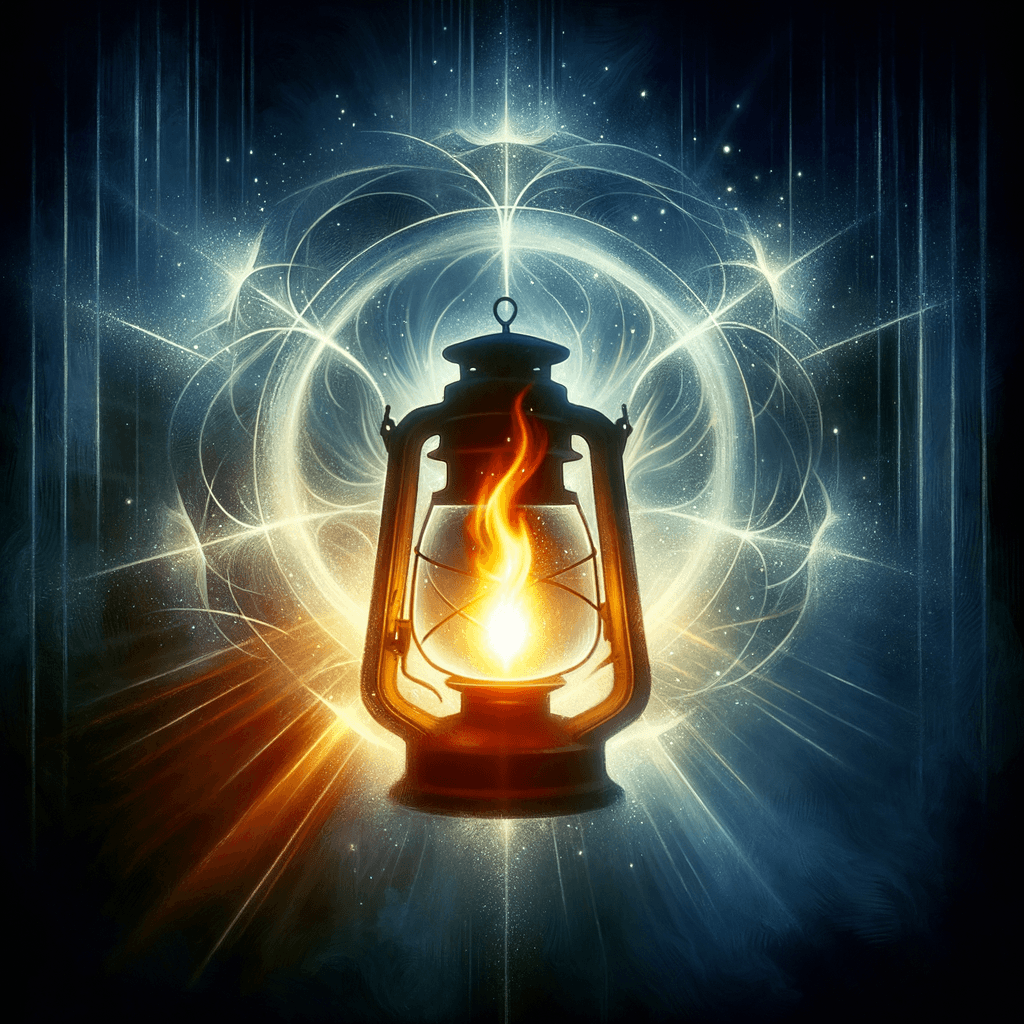
One cannot kindle the light without burning the fire. — Lucius Annaeus Seneca
—What lingers after this line?
Effort and Sacrifice
The quote highlights the idea that achieving something meaningful or illuminating often requires effort, struggle, or sacrifice, symbolized by 'burning the fire.'
Transformation and Growth
Kindling the light represents personal or collective growth, while burning the fire suggests the transformative friction or challenges necessary for that growth to occur.
Inspiration Through Struggle
It suggests that inspiration or enlightenment (the light) can only be achieved through the process of overcoming challenges (the fire) that forge character and understanding.
Philosophical Perspective on Duality
The quote reflects a Stoic perspective, where light and fire are interconnected symbols. Light signifies wisdom or clarity, and fire represents the energy or trials needed to attain them.
Historical Context
Lucius Annaeus Seneca, a Roman Stoic philosopher, often wrote about the importance of perseverance and embracing hardships as part of the human journey toward virtue and wisdom.
One-minute reflection
What's one small action this suggests?
Related Quotes
6 selectedThe old skin has to be shed before the new one can come. — Joseph Campbell
Joseph Campbell
Joseph Campbell’s image of old skin being shed before new skin can appear turns personal growth into something vivid and bodily. At its core, the quote suggests that renewal is not simply about adding better habits or br...
Read full interpretation →If seeds in the black earth can turn into such beautiful roses, what might not the heart of man become in its long journey toward the stars? — G.K. Chesterton
G. K. Chesterton
Chesterton begins with a striking contrast: black earth, dark and ordinary, somehow gives rise to roses of astonishing beauty. From that image, he invites us to see human nature in the same light.
Read full interpretation →A blazing fire makes flame and brightness out of everything that is thrown into it. — Marcus Aurelius
Marcus Aurelius
Marcus Aurelius compresses a central Stoic lesson into a vivid image: a strong fire does not merely endure what is cast into it, but transforms it into more flame and light. In that sense, adversity is not just something...
Read full interpretation →It doesn't happen all at once. You become. It takes a long time. — Margery Williams
Margery Williams
Margery Williams’s line from The Velveteen Rabbit (1922) begins with a gentle refusal of sudden change. ‘It doesn’t happen all at once’ suggests that becoming—whether becoming real, mature, or fully oneself—is not an eve...
Read full interpretation →To create is to destroy the old version of yourself that no longer fits the new truth you have found. — Martha Graham
Martha Graham
Martha Graham’s statement presents creativity not as decoration, but as a radical act of inner change. To create something genuine, she suggests, a person must let go of an earlier self—the habits, beliefs, and identitie...
Read full interpretation →Art is a wound turned into light. — Georges Braque
Georges Braque
At its core, Georges Braque’s line suggests that art does not erase suffering; instead, it converts injury into meaning. A wound is intimate, raw, and often hidden, while light is what reveals, guides, and makes things v...
Read full interpretation →More From Author
More from Lucius Annaeus Seneca →There are only a few who control themselves and their affairs by a guiding purpose; the rest do not proceed; they are merely swept along. — Lucius Annaeus Seneca
Seneca draws a sharp line between those who live deliberately and those who drift. In this contrast, self-control is not simply restraint in the moment; rather, it is the ability to organize one’s actions around a guidin...
Read full interpretation →We should every night call ourselves to an account: What infirmity have I mastered today? What passions opposed? — Lucius Annaeus Seneca
Seneca’s counsel turns the close of day into a moral checkpoint. Rather than drifting into sleep unexamined, he urges us to pause and ask what weakness we overcame and which passions we resisted.
Read full interpretation →The day which we fear as our last is but the birthday of eternity. — Lucius Annaeus Seneca
Seneca, a Stoic philosopher, views death not as an end but as a transition. The day we die is, in fact, the beginning of an eternal existence — a concept that ties death to a greater cosmic or spiritual continuation.
Read full interpretation →True happiness is... to enjoy the present, without anxious dependence upon the future. — Lucius Annaeus Seneca
This quote emphasizes the importance of living in the moment. True happiness comes from appreciating life as it unfolds rather than worrying excessively about what the future holds.
Read full interpretation →