
To build a better world, we must first build better selves. — Thich Nhat Hanh
—What lingers after this line?
The Connection Between Inner and Outer Worlds
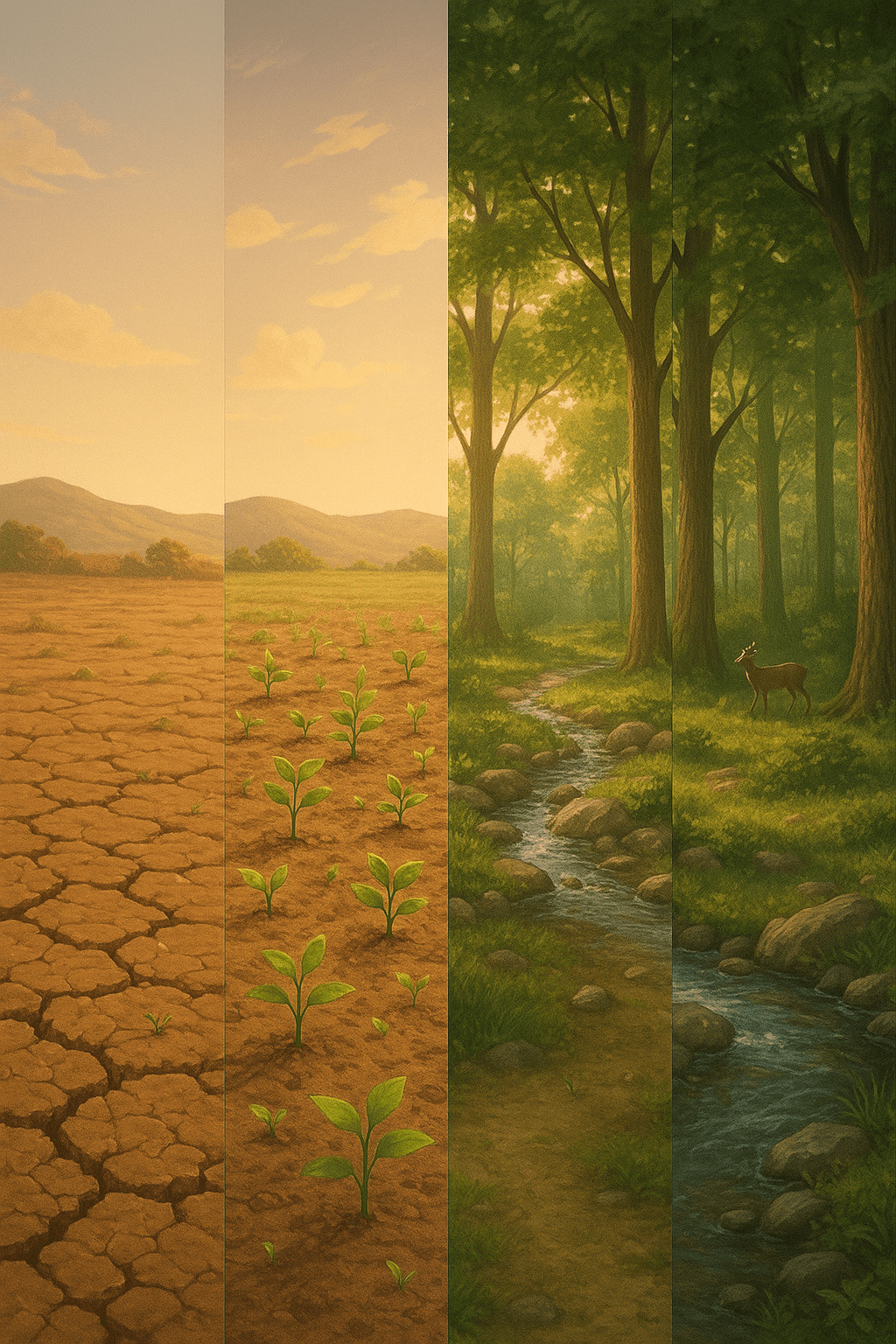
Thich Nhat Hanh’s statement eloquently ties the pursuit of a better world to the imperative of self-development. This principle suggests that societal transformation is not merely a matter of external reform but deeply rooted in individual growth. By nurturing the mind, heart, and actions of each person, collective advancements naturally follow, as each transformed individual contributes to the larger social fabric.
Historical Lessons in Personal Responsibility
Looking back, pivotal social movements have often begun with self-reflection and personal awakening. For instance, Mahatma Gandhi’s philosophy of 'be the change you wish to see' emanated from his commitment to personal discipline, which then rippled outward to ignite India’s independence movement. These examples echo Thich Nhat Hanh’s insight, highlighting that sustainable change begins at the personal level.
Cultivating Mindfulness and Compassion
Building better selves, according to Thich Nhat Hanh, involves developing mindfulness and compassion. Mindfulness allows individuals to observe their thoughts and behaviors with clarity, while compassion fosters genuine concern for others’ well-being. When these traits are widely practiced, communal interactions become more harmonious and resilient, setting the stage for a more empathetic society.
From Individual Habits to Collective Impact
Moreover, the aggregate effect of countless personal transformations can reshape communities and nations. Small acts—such as practicing patience, embracing honesty, or volunteering—when multiplied, form the backbone of social change. As discussed in Stephen R. Covey’s 'The 7 Habits of Highly Effective People' (1989), individual habits ripple outward, influencing families, workplaces, and ultimately, societal structures.
Ongoing Self-Improvement for a Sustainable Future
Finally, approaching global challenges demands continuous self-improvement. As individuals strive to overcome personal limitations—prejudices, fears, or apathy—they are better prepared to engage in meaningful dialogue and action. In this way, Thich Nhat Hanh’s teaching reminds us that the journey toward a better world is inseparable from the ongoing work of becoming better versions of ourselves.
Recommended Reading
As an Amazon Associate, we earn from qualifying purchases.
One-minute reflection
What feeling does this quote bring up for you?
Related Quotes
6 selectedIf you want to change the world, change yourself. - Mahatma Gandhi
Mahatma Gandhi
This quote emphasizes that societal change begins with individual actions. Rather than focusing on changing others, one should first work on self-improvement and personal growth to have a broader impact.
Read full interpretation →Plant ideas like seeds and tend them with action until forests of change grow — Marie Curie
Marie Curie
Marie Curie’s metaphor treats ideas not as static thoughts but as living seeds—small, vulnerable, and full of latent potential. A seed contains an entire future, yet it remains invisible until it meets the right conditio...
Read full interpretation →Don't surrender your loneliness so quickly. Let it cut more deep. Let it ferment and season you. — Hafiz
Hafiz
Hafiz’s counsel begins with a refusal: don’t “surrender” loneliness too quickly, as if solitude were merely a problem to solve. Instead, he frames it as a teacher that works slowly, revealing what constant company can hi...
Read full interpretation →Raise your voice with purpose; silence does not shape horizons. — Alice Walker
Alice Walker
Alice Walker’s line begins as a direct summons: “Raise your voice with purpose” treats speaking up not as a reflex, but as a deliberate act aimed at change. Purpose matters because volume alone can become noise, while pu...
Read full interpretation →The thing that lies at the foundation of positive change, the way I see it, is service to a fellow human being. — Marian Wright Edelman
Marian Wright Edelman
Marian Wright Edelman frames positive change not as a slogan or a sudden breakthrough, but as something built from the ground up. By placing “service to a fellow human being” at the foundation, she suggests that real pro...
Read full interpretation →Sow a generous deed and watch a landscape change. — Khaled Hosseini
Khaled Hosseini
Khaled Hosseini’s line begins with an agricultural metaphor that quietly widens into a moral vision. A “generous deed” is treated like a seed: small, ordinary, and easy to overlook at the moment it is planted.
Read full interpretation →More From Author
More from Thich Nhat Hanh →Sometimes the most radical act of courage is to simply slow down and refuse to be consumed by the urgency of the world. — Thich Nhat Hanh
At first glance, courage is often imagined as swift action, bold speech, or dramatic resistance. Yet Thich Nhat Hanh turns that assumption inside out by suggesting that bravery may lie in restraint: in slowing down when...
Read full interpretation →The quietest moments of your day are where your character is actually built, not in the loud echoes of your achievements. — Thich Nhat Hanh
At first glance, the quote shifts attention away from public success and toward the unnoticed spaces of ordinary life. Thich Nhat Hanh suggests that character is not mainly formed when others applaud us, but when no one...
Read full interpretation →The goal is not to be good at everything, but to be present for the things that matter most. — Thich Nhat Hanh
Thich Nhat Hanh’s quote gently redirects ambition. Rather than chasing excellence in every possible area, he suggests that a meaningful life depends on discernment: knowing what deserves our energy and then meeting it wi...
Read full interpretation →Don't throw your suffering away. Use it. It is the compost that gives you the understanding to nourish your happiness. — Thich Nhat Hanh
At first glance, Thich Nhat Hanh’s words reject the common impulse to discard pain as quickly as possible. Instead, he reframes suffering as something that can be transformed, much like compost becomes fertile soil.
Read full interpretation →