
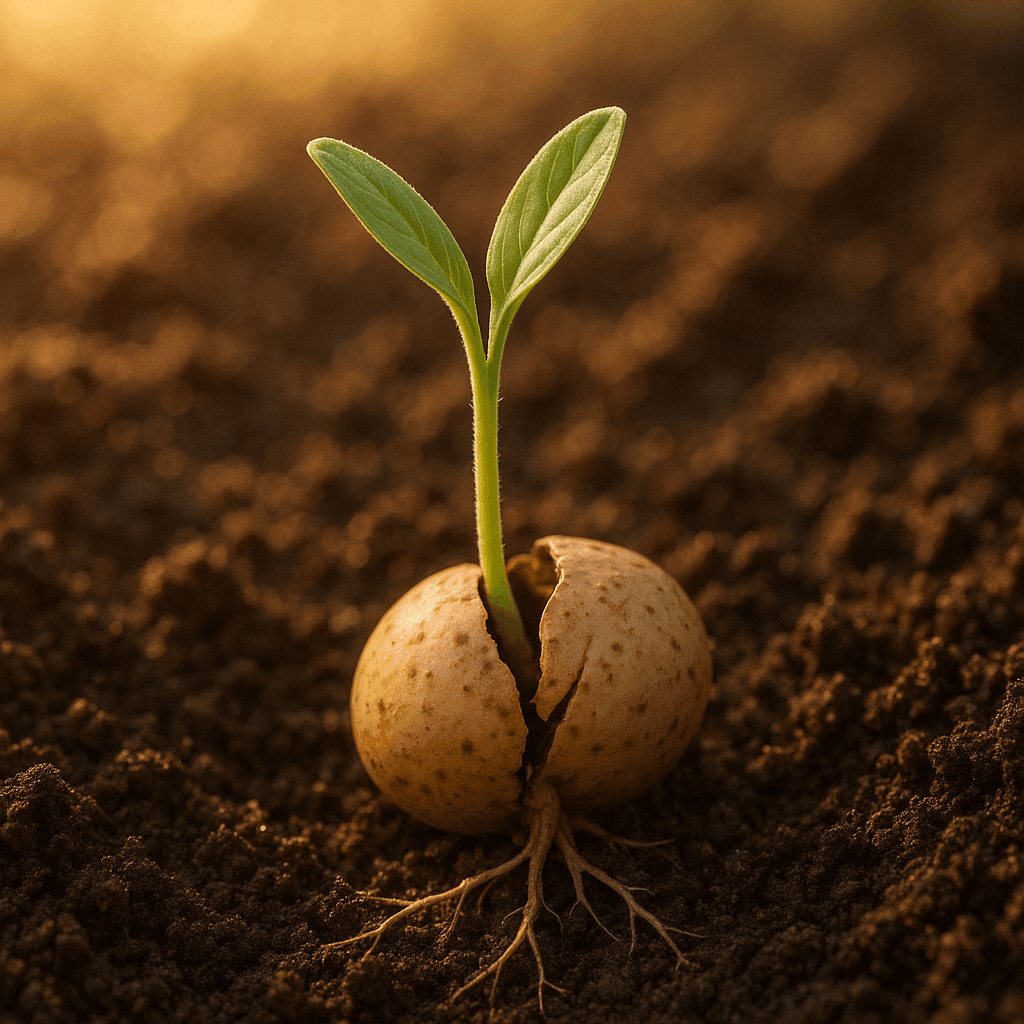
To live fully, we must be willing to be broken. — John O’Donohue
—What lingers after this line?
The Necessity of Vulnerability
John O’Donohue’s insight prompts us to reconsider our instinctive aversion to pain and vulnerability. Rather than shielding ourselves from adversity, he suggests that living fully requires a willingness to be broken—to expose ourselves to the unpredictable currents of life. This vulnerability, far from weakening us, actually opens the door to deeper connection and self-discovery, much in the way Brené Brown’s research highlights vulnerability as the birthplace of courage and creativity.
Transformation Through Adversity
Moreover, the act of being broken often serves as a catalyst for profound transformation. When old certainties are shattered, new possibilities emerge from the fragments. Many philosophical traditions, such as the Japanese art of kintsugi, embrace the beauty in brokenness by repairing pottery with gold, making the cracks integral to the object’s history and value. O’Donohue’s wisdom echoes this perspective, encouraging us to view our wounds as the starting point for growth and renewal.
Resilience Born from Experience
As we progress, embracing brokenness fosters resilience. Surviving hardship rarely leaves us unchanged; each struggle fortifies us with strength and empathy. In Viktor Frankl’s *Man’s Search for Meaning* (1946), the author documents how enduring suffering can forge a sense of purpose previously unknown. O’Donohue’s message aligns with this, proposing that our darkest moments often become the foundation upon which our truest selves are built.
Forging Authentic Connections
Continuing on, openness to being broken allows for genuine human connection. Shielding ourselves from pain may create an illusion of safety, but it also erects barriers between ourselves and others. In contrast, sharing our struggles fosters compassion and breaks the isolation that so often accompanies suffering—a theme poignantly explored in Maya Angelou’s memoirs. Thus, our brokenness, rather than isolating us, can become the very ground where intimacy flourishes.
Reimagining Wholeness
In conclusion, to live fully is to recognize that wholeness is not the absence of brokenness but its transcendence. O’Donohue urges us to embrace every fragment of our experience, trusting that in doing so, we assemble a richer, more authentic self. Ultimately, being willing to be broken is not a mark of failure but of courage—a necessary passage through which we find true fulfillment and meaning.
One-minute reflection
Why might this line matter today, not tomorrow?
Related Quotes
6 selectedThe old skin has to be shed before the new one can come. — Joseph Campbell
Joseph Campbell
Joseph Campbell’s image of old skin being shed before new skin can appear turns personal growth into something vivid and bodily. At its core, the quote suggests that renewal is not simply about adding better habits or br...
Read full interpretation →Home is the place where one finally allows the armor to drop and the spirit to breathe. — Maya Angelou
Maya Angelou
At its core, Maya Angelou’s reflection defines home not merely as a structure but as a sanctuary of emotional safety. The image of letting “the armor drop” suggests that daily life often requires protection—composure, re...
Read full interpretation →If seeds in the black earth can turn into such beautiful roses, what might not the heart of man become in its long journey toward the stars? — G.K. Chesterton
G. K. Chesterton
Chesterton begins with a striking contrast: black earth, dark and ordinary, somehow gives rise to roses of astonishing beauty. From that image, he invites us to see human nature in the same light.
Read full interpretation →What shames us, what we most fear to tell, does not set us apart from others; it binds us together if only we can take the risk to speak it. — Brené Brown
Brené Brown
At first glance, Brené Brown’s insight appears paradoxical: the very experiences we hide for fear of rejection are often the ones that make us most recognizable to others. Shame convinces people that their pain, failures...
Read full interpretation →A blazing fire makes flame and brightness out of everything that is thrown into it. — Marcus Aurelius
Marcus Aurelius
Marcus Aurelius compresses a central Stoic lesson into a vivid image: a strong fire does not merely endure what is cast into it, but transforms it into more flame and light. In that sense, adversity is not just something...
Read full interpretation →The hardest thing about loving someone deeply is letting them see your vulnerabilities. — Catherine Gilbert Murdock
Catherine Gilbert Murdock
At first glance, Murdock’s insight seems to define love as an act of devotion toward another person. Yet the quote quickly turns inward: the hardest part is not simply feeling deeply, but allowing that feeling to expose...
Read full interpretation →More From Author
More from John O’Donohue →Let your life be a counter-fragrance to the unlovely things that surround you. — John O’Donohue
This quote encourages individuals to be a source of positivity in a world that can often be filled with negativity and unpleasantness. It inspires people to counteract the unlovely aspects of life with their own positive...
Read full interpretation →The more you give away the more is returned to you. — John O’Donohue
This quote emphasizes the principle of reciprocity. When you give freely—whether love, kindness, or material resources—it often returns to you in unexpected, abundant ways.
Read full interpretation →Every step you take reveals a new horizon. — John O'Donohue
This quote emphasizes that each decision or action in life leads to new possibilities and personal growth. It suggests that progress is continuous and every step forward broadens our understanding and perspective.
Read full interpretation →To know how to choose a path with heart is to learn how to follow one's intuition. — John O'Donohue
This quote highlights the value of intuition in life's decision-making processes. It suggests that trusting your inner voice is key to finding a meaningful path in life.
Read full interpretation →