
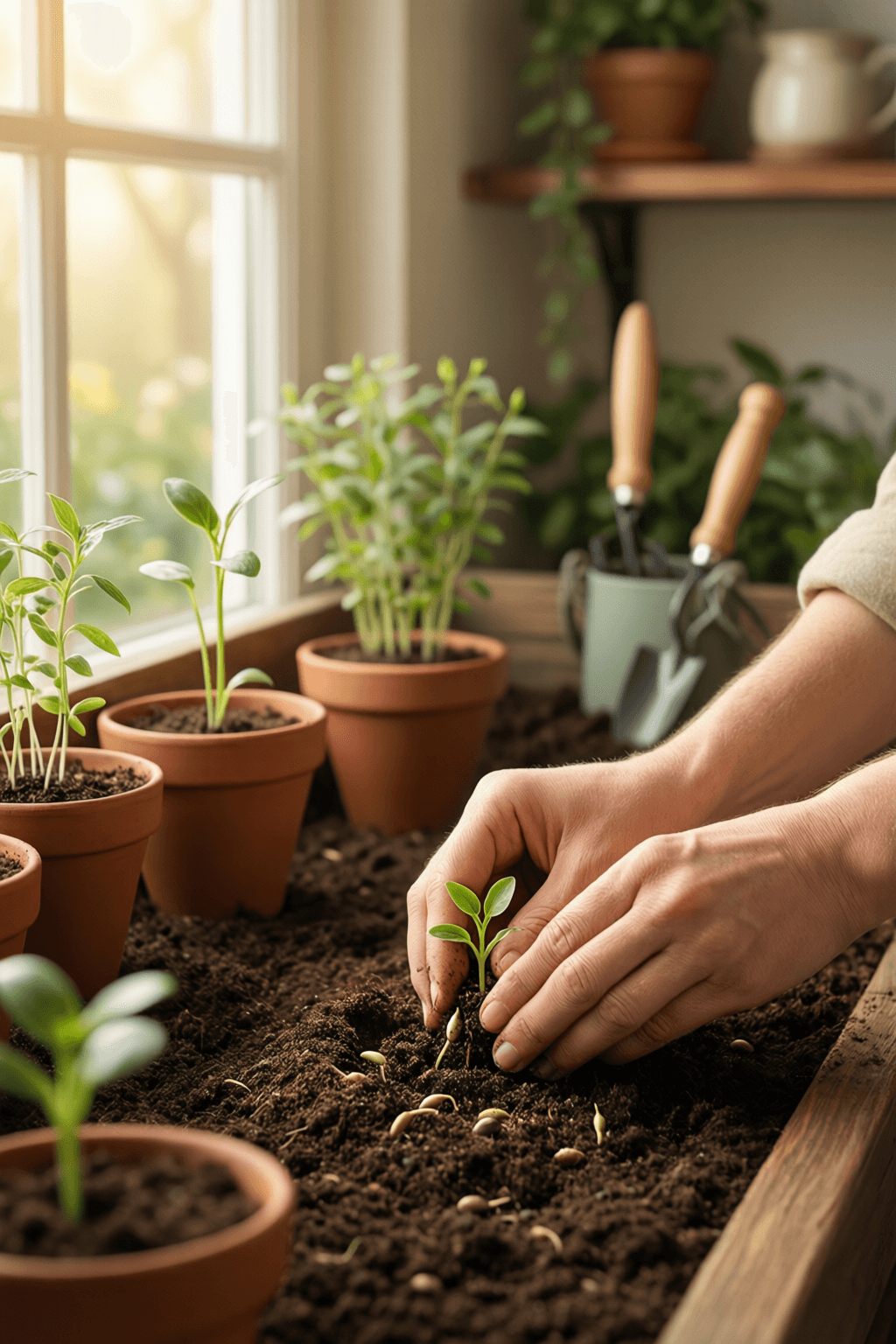
We were planting seeds of change, the fruit of which we might never see. We had to be patient. — Michelle Obama
—What lingers after this line?
A Metaphor for Long-Term Work
Michelle Obama’s quote frames social progress through the language of cultivation: people plant seeds now, even when the harvest may come much later. In that image, change is not sudden or theatrical but gradual, organic, and dependent on care. The metaphor also humbles the individual, suggesting that meaningful work often outlives the person who begins it. From there, the statement shifts attention away from immediate reward and toward responsibility. To plant a seed is to act in faith, trusting that unseen growth is still real. In this way, the quote honors efforts whose success cannot be instantly measured, whether in public service, education, or community life.
Patience as a Civic Virtue
Building on that metaphor, the call for patience becomes more than personal advice; it becomes a civic virtue. Democracies, institutions, and cultural attitudes rarely transform overnight, and those who work within them must often accept slow, uneven progress. Michelle Obama’s words therefore recognize a truth familiar to reformers: endurance is part of the work itself. History reinforces this perspective. Martin Luther King Jr.’s final book, Where Do We Go from Here: Chaos or Community? (1967), reflects on the long, unfinished struggle for justice, while the U.S. civil rights movement shows how decades of organizing preceded visible legislative victories. Patience, then, is not passivity but disciplined persistence.
Working Beyond One’s Own Lifetime
The quote grows even more powerful when it admits that the ‘fruit’ may never be seen by those who planted the seeds. That acknowledgment resists the modern desire for quick outcomes and personal recognition. Instead, it proposes a more generous ethics: one generation labors so that another may live differently. This idea has deep historical echoes. In Plato’s Republic (c. 375 BC), the just city depends on citizens who value the common good over immediate self-interest. Similarly, many grassroots movements are sustained by people whose names are forgotten, even though their labor becomes the foundation for later progress. Michelle Obama’s line gives dignity to that often invisible sacrifice.
Hope Without Certainty
At the same time, planting seeds does not guarantee a harvest. Weather changes, soil fails, and growth can stall; by extension, social change is vulnerable to backlash, delay, and disappointment. Michelle Obama’s statement is moving precisely because it does not promise certainty. Rather, it asks people to continue acting meaningfully despite incomplete control over results. This is where hope enters the quote. Not naive optimism, but a steadier form of hope grounded in action. Vaclav Havel’s Disturbing the Peace (1986) similarly describes hope as something independent of immediate success. In that sense, patience becomes the emotional discipline that allows hope to survive reality.
Leadership Through Example
Consequently, the quote also reveals a particular style of leadership: one centered on stewardship rather than spectacle. A leader who speaks of seed-planting emphasizes preparation, mentoring, and institution-building over dramatic personal triumphs. The focus shifts from ‘What did I achieve today?’ to ‘What conditions did I help create for tomorrow?’ That perspective is especially resonant in educational and civic settings, where the strongest outcomes often appear years later. A teacher may never fully witness the impact of a lesson; a community organizer may not live to see a policy’s ultimate effects. Yet Michelle Obama’s words suggest that such deferred influence is not failure but the natural rhythm of meaningful leadership.
An Invitation to Humble Persistence
Ultimately, the quote leaves readers with an ethic of humble persistence. It asks people to keep working, even when recognition is absent, results are delayed, and the future remains uncertain. In doing so, it counters a culture of instant gratification with a quieter but more durable model of purpose. As a final thought, the agricultural image returns us to a basic truth: growth is often invisible before it becomes undeniable. Roots deepen long before fruit appears. By embracing that rhythm, Michelle Obama offers not only encouragement but also a moral framework for anyone committed to change—start faithfully, nurture patiently, and trust that some good will ripen beyond your sight.
Recommended Reading
As an Amazon Associate, we earn from qualifying purchases.
One-minute reflection
Where does this idea show up in your life right now?
Related Quotes
6 selectedDo not mistake patience for passivity. True growth requires the discipline to walk away from what is stagnant so you can run toward what is vital. — Epictetus
Epictetus
At first glance, the quote draws a sharp line between patience and passivity, two qualities often confused in daily life. Patience, in this sense, is not silent resignation but a disciplined steadiness that allows a pers...
Read full interpretation →One doesn't get to be a master of one's own life by rushing. You have to learn the patience of a gardener who knows the harvest cannot be hurried. — Paulo Coelho
Paulo Coelho
At its core, Paulo Coelho’s reflection challenges a modern obsession with speed. He argues that mastery over one’s life does not come from frantic action or constant acceleration, but from learning when to wait, observe,...
Read full interpretation →A garden is a grand teacher. It teaches patience and careful watchfulness; it teaches industry and thrift; above all it teaches entire trust. — Gertrude Jekyll
Gertrude Jekyll
Gertrude Jekyll presents the garden not merely as a decorative space but as a living instructor. From the opening phrase, she elevates cultivation into education, suggesting that soil, weather, and seasons quietly shape...
Read full interpretation →Growth feels scary because comfort feels warm, but you can take one small step. Change doesn't crush you; staying still slowly does. — Justin Welsh
Justin Welsh
At first glance, Justin Welsh captures a tension nearly everyone recognizes: comfort feels safe precisely because it is familiar. Routine wraps itself around us like warmth, making even imperfect situations feel preferab...
Read full interpretation →The craft of living is a slow art, requiring the courage to be ordinary and the patience to be consistent. — Parker Palmer
Parker Palmer
Parker Palmer’s line frames living not as a sudden achievement but as a craft, something formed through repetition, attention, and humility. By calling it a “slow art,” he shifts the focus away from dramatic breakthrough...
Read full interpretation →When you plant seeds in the garden, you don't dig them up every day to see if they have sprouted yet. You simply water them and clear away the weeds; you know that the seeds will grow in time. — Thubten Chodron
Thubten Chodron
Thubten Chodron’s image of planting seeds turns patience into something practical and visible. Once a seed is placed in the soil, constant interference does not help it grow; in fact, it can damage what is beginning invi...
Read full interpretation →More From Author
More from Michelle Obama →I've learned that it's harder to hate up close. — Michelle Obama
Michelle Obama’s observation begins with a simple but powerful truth: distance makes it easier to turn people into abstractions, while closeness restores their full humanity. When we know others only as labels, stereotyp...
Read full interpretation →Inspiration on its own was shallow; you had to back it up with hard work. — Michelle Obama
Michelle Obama’s remark begins with a necessary correction to a popular myth: feeling inspired is not the same as accomplishing something meaningful. Inspiration can ignite ambition, but on its own it is fleeting, emotio...
Read full interpretation →We need to do a better job of putting ourselves higher on our own to-do list. — Michelle Obama
Michelle Obama’s line reframes self-care as something sturdier than an occasional treat; it is a task worthy of the same seriousness we give work, family, and obligations. By saying we must put ourselves “higher” on the...
Read full interpretation →Refuse to shrink; expand your kindness until it fills the room — Michelle Obama
Michelle Obama’s line begins with a vivid, almost physical instruction: “Refuse to shrink.” In moments of pressure—criticism, uncertainty, or social tension—many people respond by making themselves smaller, speaking less...
Read full interpretation →