
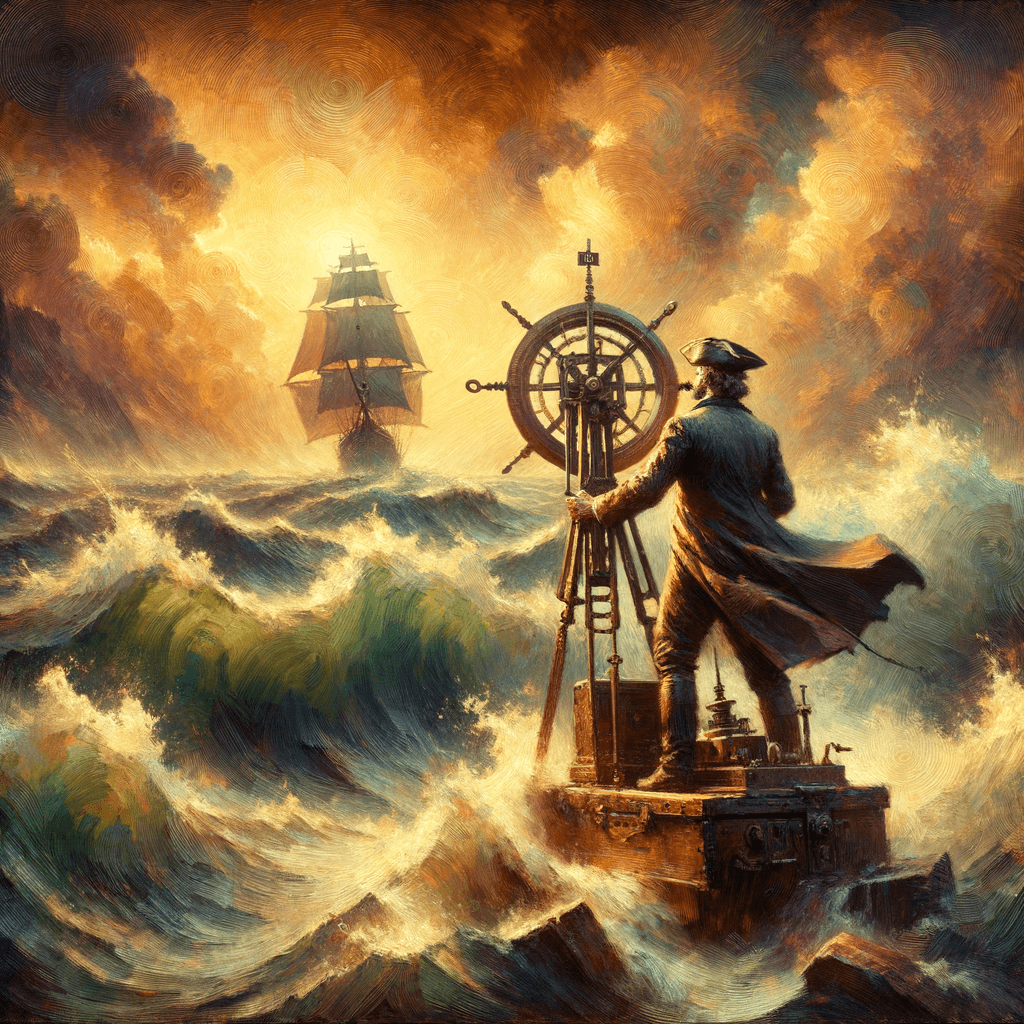
Be the master of your fate, the captain of your soul. — William Ernest Henley
—What lingers after this line?
Personal Empowerment
This quote emphasizes the importance of taking control of one's own life. It encourages individuals to be proactive and assertive in shaping their destiny, rather than passively allowing external circumstances to dictate their path.
Self-Determination
It highlights the concept of self-determination, suggesting that people have the power and responsibility to make their own choices and direct their lives according to their values and goals.
Resilience and Strength
The quote underscores the resilience and inner strength required to overcome challenges. It implies that by assuming control over one’s fate and soul, individuals can endure hardships and emerge stronger.
Philosophical Perspective
From a philosophical standpoint, the quote speaks to the existential idea that individuals are the authors of their own lives, constructing meaning and purpose through their actions and decisions.
Historical Context
William Ernest Henley was a 19th-century English poet, critic, and editor. He wrote the poem 'Invictus,' from which this quote is taken, during a time of personal hardship, highlighting his resilient spirit despite struggles with illness and adversity.
One-minute reflection
Why might this line matter today, not tomorrow?
Related Quotes
6 selectedBe the hero of your own story. — Unknown
Unknown
This quote encourages individuals to take charge of their own lives and decision-making processes. It emphasizes the importance of being proactive in shaping one's destiny.
Read full interpretation →You are the artist of your own life. Don't hand the paintbrush to anyone else. — Unknown
Unknown
This quote emphasizes the importance of personal autonomy, encouraging individuals to take control of their own lives and decisions rather than allowing others to dictate their path.
Read full interpretation →My will shall shape my future. Whether I fail or succeed shall be no man's doing but my own. — Elaine Maxwell
Elaine Maxwell
At its core, Elaine Maxwell’s statement is a declaration of personal agency. By saying that her will shall shape her future, she rejects the idea that destiny is merely handed down by circumstance, luck, or the judgments...
Read full interpretation →If it is to be, it is up to me. — William H. Johnsen
William H. Johnsen
At first glance, William H. Johnsen’s line compresses an entire philosophy into a few plain words: desired outcomes do not arrive by wish alone, but through personal action.
Read full interpretation →You cannot command things, but you can command yourself. — Michael D. Pollock
Michael D. Pollock
At first glance, Michael D. Pollock’s line draws a sharp boundary between the outer world and the inner one.
Read full interpretation →The road ahead is not some predetermined path that I am forced to trod, but it is a rich byway that I can help create. — Craig D. Lounsbrough
Craig D. Lounsbrough
At its core, Craig D. Lounsbrough’s quote resists the idea that life is a rigid script already written for us.
Read full interpretation →More From Author
More from William Ernest Henley →