
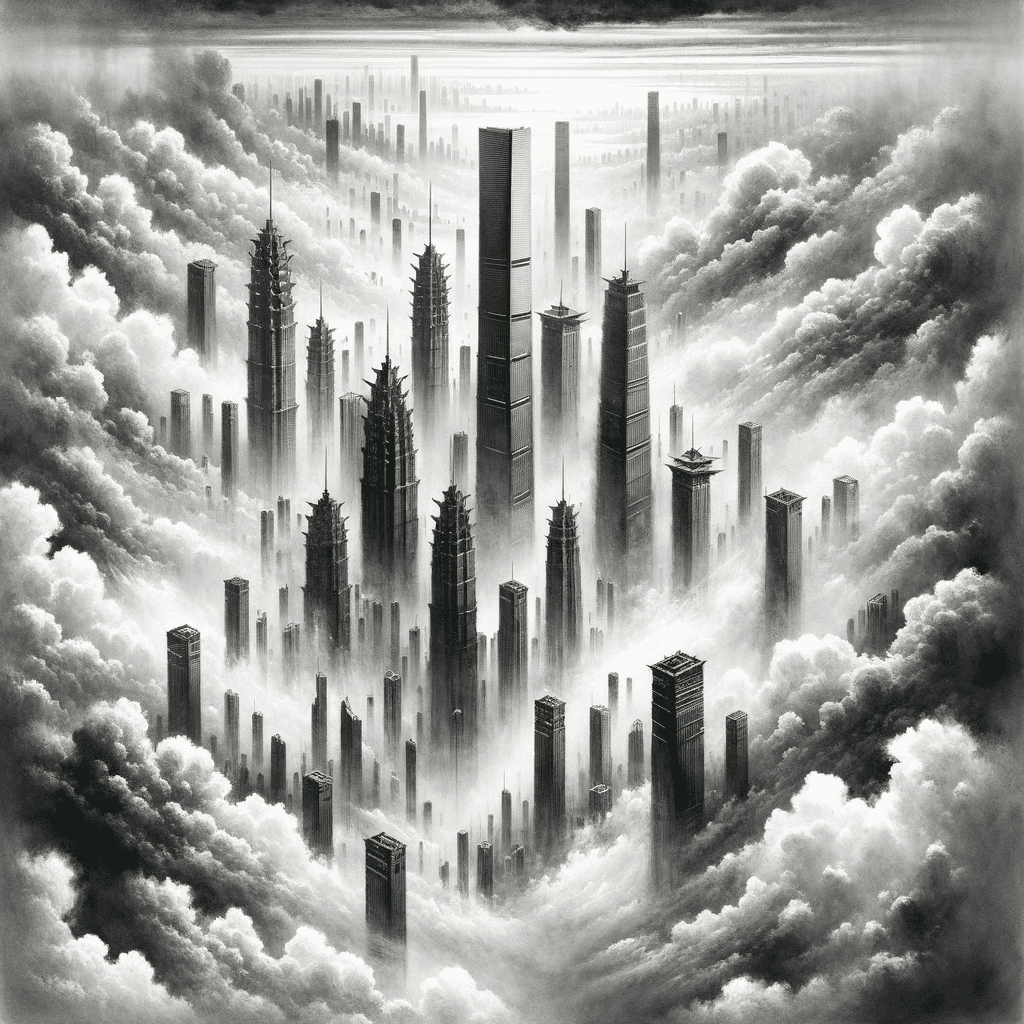
Do not fear the floating clouds that obscure your vision, for you are already at the highest level. - Wang Anshi
—What lingers after this line?
Overcoming Obstacles
The quote suggests that temporary obstacles, symbolized by floating clouds, should not instill fear. Despite these clouds blocking your view, you are already at a high point in your journey, indicating that obstacles are merely transient and do not diminish your achievements.
Confidence in Achievement
It emphasizes believing in one's own accomplishments. Being at the 'highest level' implies that you've reached a significant milestone, and the clouds are just minor distractions that shouldn't deter you from recognizing your progress.
Perspective on Challenges
The floating clouds can represent challenges or uncertainties in life. The quote advises maintaining a broader perspective, understanding that these are temporary and do not impact the overall elevation of one's status or situation.
Staying Focused
Wang Anshi's words encourage maintaining focus and not being swayed by temporary issues. It suggests that one should remain steady and confident, knowing that they have already achieved a significant level of success.
Philosophical Context
Wang Anshi was a Chinese economist, statesman, and poet of the Song Dynasty. His philosophy often revolved around reform and progress. This quote reflects his broader views on resilience, progress, and maintaining clarity even amidst temporary obscurities.
One-minute reflection
What feeling does this quote bring up for you?
Related Quotes
6 selectedThis is my secret: I don't mind what happens. — Jiddu Krishnamurti
Jiddu Krishnamurti
At first glance, Krishnamurti’s confession sounds almost startling in its simplicity: “I don't mind what happens.” Yet beneath that calm sentence lies a radical refusal to struggle against reality. He is not praising pas...
Read full interpretation →The first rule is to keep an untroubled spirit. The second is to look things in the face and know them for what they are. — Marcus Aurelius
Marcus Aurelius
Marcus Aurelius pairs two deceptively simple directives: keep an untroubled spirit, and face reality without distortion. Read together, they form a single discipline rather than separate tips—because clarity is hard to s...
Read full interpretation →You are the sky. Everything else—it’s just the weather. — Pema Chödrön
Pema Chödrön
Pema Chödrön’s line begins with a simple reversal: instead of identifying with everything that happens inside you, she invites you to identify with the capacity that can hold it. The “sky” points to awareness itself—wide...
Read full interpretation →Opinions are nothing; better is the self-contained calm of true realization. — Rabindranath Tagore
Rabindranath Tagore
Tagore’s line draws a sharp contrast between what people say and what a person is. “Opinions” are portrayed as weightless—changeable, socially contagious, and often untethered from lived truth—while “true realization” im...
Read full interpretation →Know its honor, keep its disgrace, and be the valley of the world. -- Laozi
Laozi
Laozi’s line—“Know its honor, keep its disgrace, and be the valley of the world”—unfolds like a short spiritual method. First, it asks for clear recognition of “honor,” meaning the visible standards of success, status, a...
Read full interpretation →Quiet resilience is narrowing the swing so external events do not hijack the inner world. — Bhagavad Gita
Bhagavad Gita
The image of “narrowing the swing” frames resilience as a deliberate shaping of our emotional amplitude. Instead of ricocheting between elation and despair with every success, insult, headline, or setback, quiet resilien...
Read full interpretation →More From Author
More from Wang Anshi →