
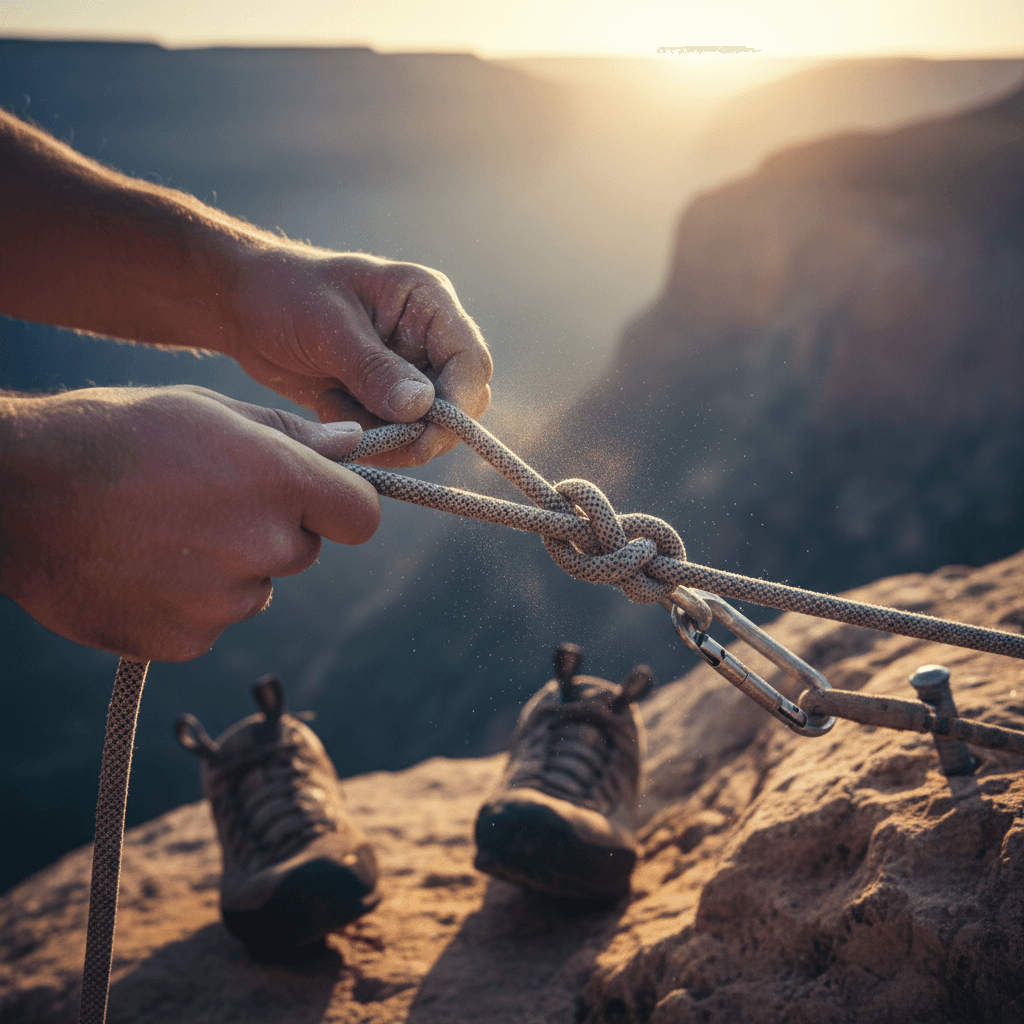
Let your hands learn bravery before your mind catches up. — Barack Obama
—What lingers after this line?
Acting Before Certainty Arrives
In this line, Barack Obama frames courage as something practiced physically and behaviorally—through what we do—rather than something we perfect intellectually first. “Let your hands learn bravery” suggests that the body can commit to a difficult act even while the mind still hesitates, questions, or searches for reassurance. From there, the quote gently reverses a common assumption: that we must feel ready before we act. Instead, it proposes that readiness is often the result of action, with confidence and clarity arriving later, almost as a lagging indicator of growth.
The Training Ground of Small Risks
Once bravery is understood as something the “hands” can learn, it becomes easier to see courage as incremental. We rarely leap into the hardest moment first; we accumulate capability through small, repeated choices—speaking up once, trying again, making the call, submitting the application. Each act becomes a rehearsal that widens our tolerance for discomfort. In that sense, Obama’s phrasing implies a practical pathway: if you want to become brave, give your body tasks that require bravery in manageable doses. Over time, the mind “catches up,” interpreting repeated survival and progress as evidence that fear is not a stop sign.
The Mind as a Late Narrator
Next, the quote highlights how the mind often narrates after the fact. We like to believe our decisions are guided by fully formed reasoning, yet many meaningful actions begin with a push—an embodied commitment—followed by reflection and explanation. That’s why “before your mind catches up” rings true: understanding and self-trust can come after motion has already started. This also reframes doubt as normal rather than disqualifying. If the mind is naturally cautious, then waiting for perfect internal agreement can become a disguised way of avoiding risk. Action, in contrast, gives the mind new data to revise its story.
Echoes of Pragmatism and Experiment
This action-first view aligns with philosophical pragmatism, which treats ideas as tools tested in lived experience rather than finalized in advance. William James’s lecture “The Will to Believe” (1896) argues that certain commitments must be made without complete proof because the evidence only emerges after we choose and act. Similarly, the quote suggests that bravery is not merely a belief about oneself but a hypothesis confirmed through doing. Seen this way, courage becomes experimental: you take a step that feels slightly premature, observe that you can handle the outcome, and then update your self-concept. The “hands” run the trial; the “mind” records the results.
Embodied Courage in Real Life
In everyday terms, “hands” can mean any concrete behavior: raising your hand in a meeting, knocking on a door, typing the first sentence, practicing the difficult conversation. Many people recognize the pattern in public speaking: the first minutes feel like pure adrenaline, yet the body continues—breathing, projecting, gesturing—until the mind finally realizes it’s working. Courage, then, is often a bodily perseverance that outlasts initial fear. Because of that, the quote also offers a compassionate instruction: you don’t have to win the internal debate before you begin. Start the action, however small, and allow the mind to learn from what the body proves.
Turning the Idea into a Habit
Finally, Obama’s sentence functions like a method. Choose a single brave act that is specific and time-bound—send the email, ask the question, make the appointment—and treat the discomfort as part of the lesson rather than a sign of failure. Then repeat, since repetition is how the “hands” become trained. Over time, the gap between action and understanding narrows. The mind catches up faster because it has a history of evidence: you acted while afraid, and you were capable. In that accumulation, bravery stops being a rare heroic event and becomes a practiced, durable skill.
One-minute reflection
Where does this idea show up in your life right now?
Related Quotes
6 selectedMake each choice a brushstroke in the portrait of your future — Barack Obama
Barack Obama
Barack Obama’s line frames the future not as a fixed destination but as a canvas gradually filled in. By calling each choice a “brushstroke,” he suggests that even small decisions—what you practice, what you ignore, what...
Read full interpretation →We did not come to fear the future. We came here to shape it. — Barack Obama
Barack Obama
Obama’s statement reframes why we are present in any pivotal moment—whether in a nation, a classroom, or a community. Rather than existing simply to endure uncertainty, he insists we are here to act upon it.
Read full interpretation →Lead with ideas, then sustain them with persistent effort. — Barack Obama
Barack Obama
Obama’s line distills a discipline: set a direction with lucid ideas, then earn outcomes through sustained work. Vision without stamina drifts into rhetoric; effort without an anchoring idea degenerates into motion witho...
Read full interpretation →Open your hands to effort; what you hold will be the proof of your intention. — Barack Obama
Barack Obama
Obama’s line moves from inner resolve to outward proof: open your hands—do the work—and the results you hold will verify what you meant to do. The image fuses motive and material, insisting that sincerity without sweat i...
Read full interpretation →The best way to not feel hopeless is to get up and do something. Don’t wait for good things to happen to you. If you go out and make some good things happen, you will fill the world with hope, you will fill yourself with hope. — Barack Obama
Barack Obama
This quote emphasizes the importance of taking action rather than passively waiting for circumstances to improve. By getting up and doing something, you can create opportunities and positive changes in your life.
Read full interpretation →The future rewards those who press on. I don’t have time to feel sorry for myself. I don’t have time to complain. I’m going to press on. — Barack Obama
Barack Obama
This quote highlights the importance of resilience. It suggests that success is often achieved by those who continue to push forward despite challenges and setbacks.
Read full interpretation →More From Author
More from Barack Obama →Make each choice a brushstroke in the portrait of your future — Barack Obama
Barack Obama’s line frames the future not as a fixed destination but as a canvas gradually filled in. By calling each choice a “brushstroke,” he suggests that even small decisions—what you practice, what you ignore, what...
Read full interpretation →We did not come to fear the future. We came here to shape it. — Barack Obama
Obama’s statement reframes why we are present in any pivotal moment—whether in a nation, a classroom, or a community. Rather than existing simply to endure uncertainty, he insists we are here to act upon it.
Read full interpretation →Lead with ideas, then sustain them with persistent effort. — Barack Obama
Obama’s line distills a discipline: set a direction with lucid ideas, then earn outcomes through sustained work. Vision without stamina drifts into rhetoric; effort without an anchoring idea degenerates into motion witho...
Read full interpretation →Open your hands to effort; what you hold will be the proof of your intention. — Barack Obama
Obama’s line moves from inner resolve to outward proof: open your hands—do the work—and the results you hold will verify what you meant to do. The image fuses motive and material, insisting that sincerity without sweat i...
Read full interpretation →