
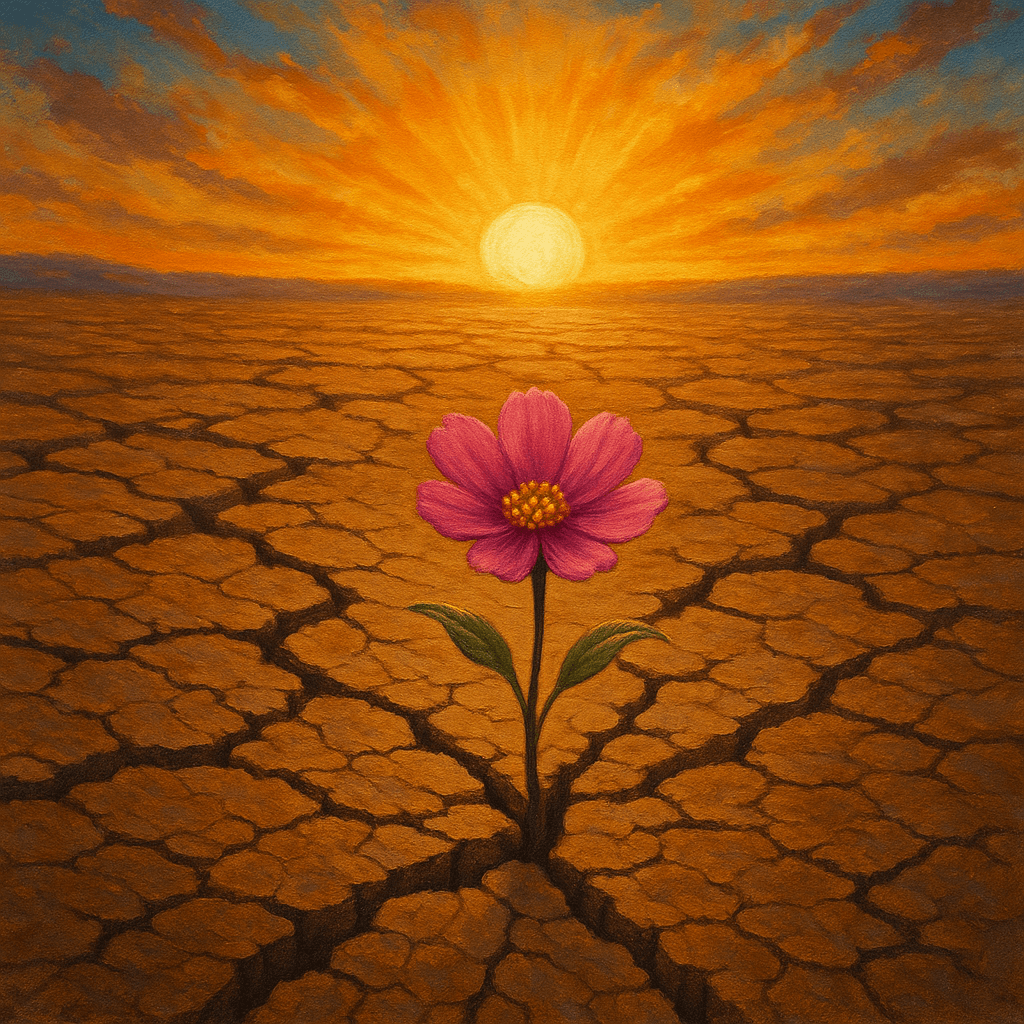
Pain is inevitable. Suffering is optional. — Haruki Murakami
—What lingers after this line?
Universality of Pain
Murakami highlights that experiencing pain is a fundamental and unavoidable part of human life.
Difference Between Pain and Suffering
The quote distinguishes 'pain' as a physical or emotional experience, while 'suffering' is seen as our mental response to it.
Power of Perspective
It suggests that while we may not control painful events, we can choose how we respond and whether we allow that pain to turn into prolonged suffering.
Personal Responsibility
The idea encourages personal responsibility for our emotional well-being, implying that suffering is a matter of choice.
Relevance in Self-Help and Mindfulness
Frequently cited in self-help and mindfulness contexts, the quote inspires resilience and mental strength.
One-minute reflection
What feeling does this quote bring up for you?
Related Quotes
6 selectedThe human soul doesn't want to be advised or fixed or saved. It simply wants to be witnessed. Exactly as it is. — Parker J. Palmer
Parker J. Palmer
At its core, Parker J. Palmer’s line shifts attention away from problem-solving and toward presence.
Read full interpretation →A rational person can find peace by cultivating indifference to things outside of their control. — Naval Ravikant
Naval Ravikant
At its heart, Naval Ravikant’s statement echoes a classic Stoic principle: inner peace grows when we stop attaching our well-being to events we cannot govern. Rather than encouraging apathy toward life itself, this kind...
Read full interpretation →Whatever is going to happen will happen, whether we worry or not. — J.K. Rowling
J.K. Rowling
At its core, Rowling’s line reminds us that worry often mistakes itself for control. We rehearse disasters in our minds as if anticipation could alter reality, yet events unfold according to forces far larger than our pr...
Read full interpretation →Nothing is wrong—whatever is happening is just real life. — Tara Brach
Tara Brach
At first glance, Tara Brach’s line gently interrupts a habit many people carry: the reflex to label discomfort as evidence that something has gone wrong. Instead, she proposes a quieter interpretation—what is happening i...
Read full interpretation →There are times in our lives when we have to realize our past is precisely what it is, and we cannot change it. — Nicholas Sparks
Nicholas Sparks
Nicholas Sparks frames a difficult but necessary truth: some moments in life demand that we stop struggling against what has already happened. At first, this realization can feel like surrender, because people often revi...
Read full interpretation →Intimacy is the capacity to be rather weird with someone – and finding that that's okay with them. — Alain de Botton
Alain de Botton
At first glance, Alain de Botton’s remark shifts intimacy away from grand declarations and toward something quieter: the freedom to reveal one’s oddities without fear. In this view, closeness is not built on flawless com...
Read full interpretation →More From Author
More from Haruki Murakami →A magician is strong because he hurts more than others. He has learned to break the world that has tried to break him. — Haruki Murakami
Murakami’s line begins with a striking reversal: the magician is not powerful because he is untouched, but because he has suffered more deeply than others. In this view, strength does not emerge from comfort; rather, it...
Read full interpretation →You have to realize it's going to be a long process and that you'll work on things slowly, one at a time. — Haruki Murakami
Murakami’s observation begins with a quiet but demanding truth: worthwhile things rarely happen quickly. Whether one is writing a novel, learning a craft, or rebuilding a life, the process unfolds in stages that cannot b...
Read full interpretation →Movement is medicine for the soul; you don't need a destination, only the willingness to keep going. — Haruki Murakami
Murakami’s line begins with a simple but profound claim: movement itself can heal. Rather than treating motion as merely a way to arrive somewhere, he frames it as a restorative act for the inner life.
Read full interpretation →I'm not interested in being a 'perfect' person. I am interested in being a whole person. — Haruki Murakami
Murakami’s distinction begins by exposing how “perfect” often means polished, acceptable, and free of visible flaws. That standard is typically external—set by culture, family expectations, or the quiet pressure to appea...
Read full interpretation →