
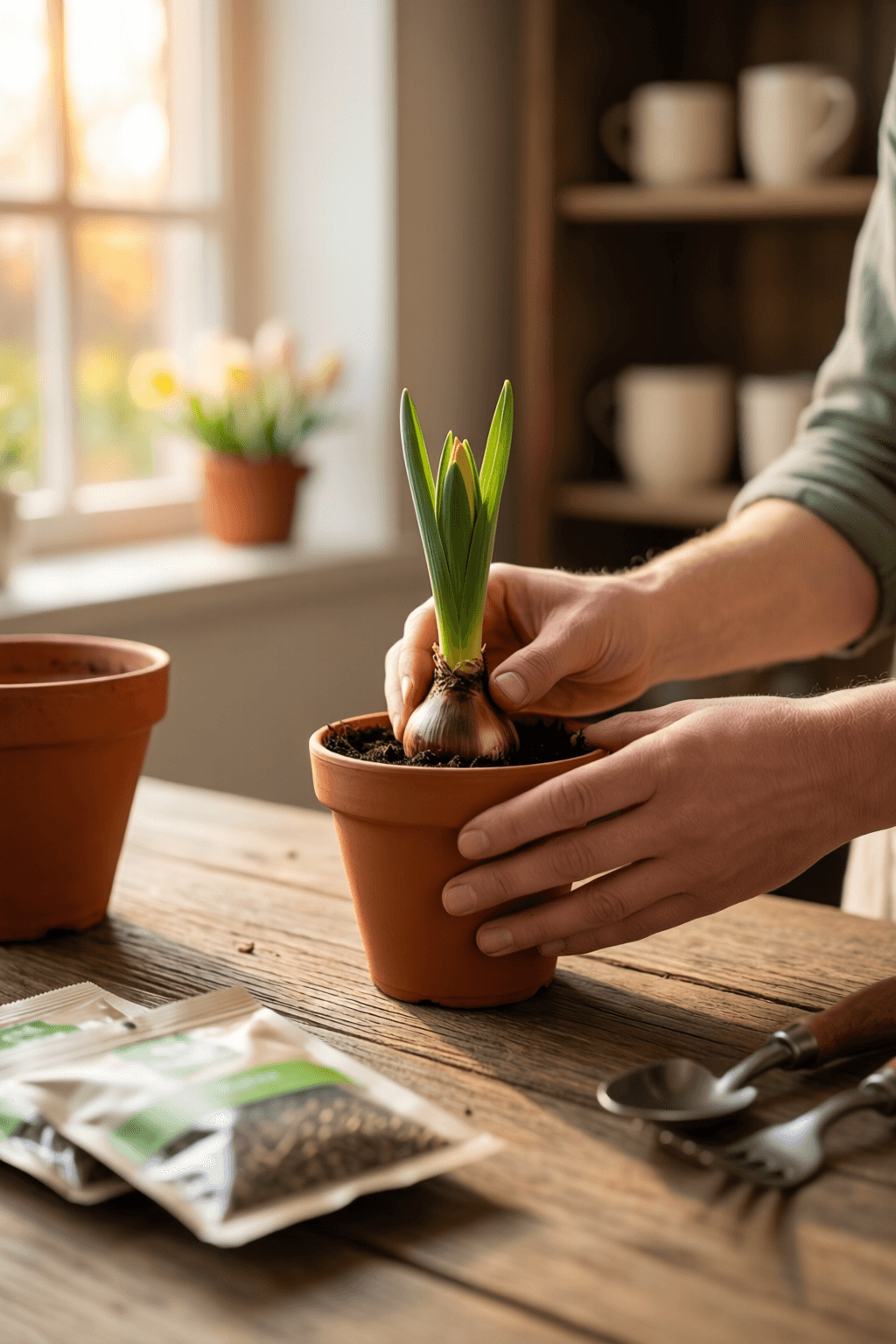
Patience is not passive waiting; it is the courage to stand in the middle of a process and trust that the bloom is coming. — Mary Oliver
—What lingers after this line?
Redefining Patience
At first glance, patience is often mistaken for mere delay or resignation, yet Mary Oliver overturns that assumption immediately. In her view, patience is not passive waiting but an active inner stance: a decision to remain present inside uncertainty without fleeing, forcing, or despairing. The quote transforms patience from something inert into something brave. This shift matters because it reframes how we meet difficulty. Rather than imagining patience as doing nothing, Oliver suggests it is a disciplined way of being—steady, awake, and emotionally engaged. In that sense, patience becomes less about time passing and more about character holding.
The Courage to Stay
From there, the heart of the quotation comes into focus: courage. To “stand in the middle of a process” is to resist the urge for premature conclusions. Whether one is grieving, healing, learning, or building something meaningful, the middle is often the least glamorous stage—too far from the beginning to feel fresh, yet too far from the end to see results clearly. Consequently, Oliver presents patience as a kind of moral bravery. It asks us to endure ambiguity without losing faith in growth. Much like Rainer Maria Rilke advised in Letters to a Young Poet (1903), one must “live the questions” for a time before answers can ripen.
Trusting Invisible Growth
The image of a coming bloom gives the quote its quiet radiance. A flower does not appear the moment a seed is planted; beneath the surface, invisible changes prepare the visible beauty to come. By invoking bloom, Oliver suggests that many of life’s most important developments occur before evidence appears, which is precisely why trust becomes essential. In this way, the quote speaks to seasons when progress feels hidden. A student struggling through years of study, for instance, may not feel transformed day by day, yet understanding accumulates slowly until one day it flowers into mastery. The process seems silent until it suddenly looks inevitable.
A Natural Vision of Becoming
Oliver’s language also reflects her lifelong attention to nature, where time and transformation are inseparable. In poems such as those collected in New and Selected Poems (1992), she repeatedly observes that the natural world does not rush itself, yet nothing in it is idle. Trees bud, marshes thaw, and birds migrate according to rhythms larger than human impatience. Therefore, the quote carries a subtle lesson from the living world: growth unfolds through fidelity to process, not domination of it. Nature becomes both metaphor and teacher, showing that waiting is not empty when it is aligned with becoming.
Patience in Human Experience
Seen in ordinary life, Oliver’s insight applies wherever outcomes cannot be commanded. Recovery after illness, reconciliation after conflict, artistic practice, and the raising of children all demand sustained trust before visible reward. In each case, impatience tempts us either to abandon the work or to force results that are not yet ready. Yet patience allows a different response. It helps a parent endure a child’s slow maturation, or an artist continue through years of uncertain drafts before a true voice emerges. Thus the quote honors those overlooked stretches of effort where little seems to happen, even though everything important is taking shape.
Hope Without Illusion
Finally, Oliver’s wisdom is hopeful without becoming naive. She does not say the bloom is already here, nor does she deny the strain of standing in the middle. Instead, she asks for trust—a forward-looking confidence that does not depend on immediate proof. This makes patience neither denial nor fantasy, but a grounded form of hope. In the end, the quotation invites us to inhabit unfinished moments with dignity. To be patient, in Oliver’s sense, is to stand firm within incompletion and believe that unseen work is still work. The bloom, then, is more than an outcome; it is the revelation of what faithful endurance has been nurturing all along.
Recommended Reading
As an Amazon Associate, we earn from qualifying purchases.
One-minute reflection
What feeling does this quote bring up for you?
Related Quotes
6 selectedEverything that is made is made by slow, steady effort. — Mary Oliver
Mary Oliver
Mary Oliver’s line distills a quiet truth: meaningful things rarely appear all at once. Instead, they emerge through repetition, patience, and attention, whether one is writing a poem, raising a family, or restoring a ga...
Read full interpretation →Patience is the ability to be present with your own heart. — Pema Chödrön
Pema Chödrön
Pema Chödrön’s line shifts patience from something we perform for the outside world into something we practice within. Instead of merely “waiting well” while life changes, patience becomes the willingness to stay close t...
Read full interpretation →It is easy finding reasons why other folks should be patient. — George Eliot
George Eliot
George Eliot’s remark turns on a quiet but piercing irony: patience is a virtue we readily prescribe when someone else must practice it. In other words, distance makes endurance look simple.
Read full interpretation →Learning is a lifelong process of unlearning the need for immediate results. Patience is the discipline of trusting the slow, quiet compounding of your efforts. — Confucius
Confucius
At its core, this saying presents learning not as a race toward instant achievement, but as a gradual reshaping of expectation. The phrase “unlearning the need for immediate results” suggests that education is not only a...
Read full interpretation →If you want to move forward, you must first give yourself permission to stand still. Perspective is often the result of stopping long enough to actually see. — Alain de Botton
Alain de Botton
At first glance, Alain de Botton’s line seems contradictory: how can standing still help us move forward? Yet that tension is precisely his point.
Read full interpretation →To do anything to a high standard, you must be prepared to be bored for long periods of time. — James Clear
James Clear
James Clear’s observation cuts against the modern preference for constant stimulation. At first glance, high achievement looks exciting from the outside, yet the path toward it is usually repetitive, slow, and uneventful...
Read full interpretation →More From Author
More from Mary Oliver →Everything that is made is made by slow, steady effort. — Mary Oliver
Mary Oliver’s line distills a quiet truth: meaningful things rarely appear all at once. Instead, they emerge through repetition, patience, and attention, whether one is writing a poem, raising a family, or restoring a ga...
Read full interpretation →The real flex is no longer looking busy. It is looking peaceful. It is having ambition without self-destruction. — Anonymous (skipped) -> The quietest moments are often where the greatest strength is found. — Mary Oliver
At first glance, these paired lines challenge a modern performance ritual: the need to appear constantly overwhelmed in order to seem important. Instead of praising busyness, they propose a subtler ideal—peacefulness as...
Read full interpretation →The slow work of cultivation is the only antidote to the frantic pace of our digital existence. — Mary Oliver
Mary Oliver’s line sets two tempos against each other: the hurried pulse of digital life and the patient rhythm of cultivation. By calling cultivation an antidote, she implies that our overstimulated routines are not mer...
Read full interpretation →When you feel like you've reached the end of your rope, tie a knot in it and hang on—or better yet, realize you can just let go and float. — Mary Oliver
At first, Mary Oliver’s line begins with a familiar survival lesson: when life feels unbearable, hold on. The image of reaching the end of a rope evokes exhaustion, fear, and the instinct to preserve oneself at any cost.
Read full interpretation →