
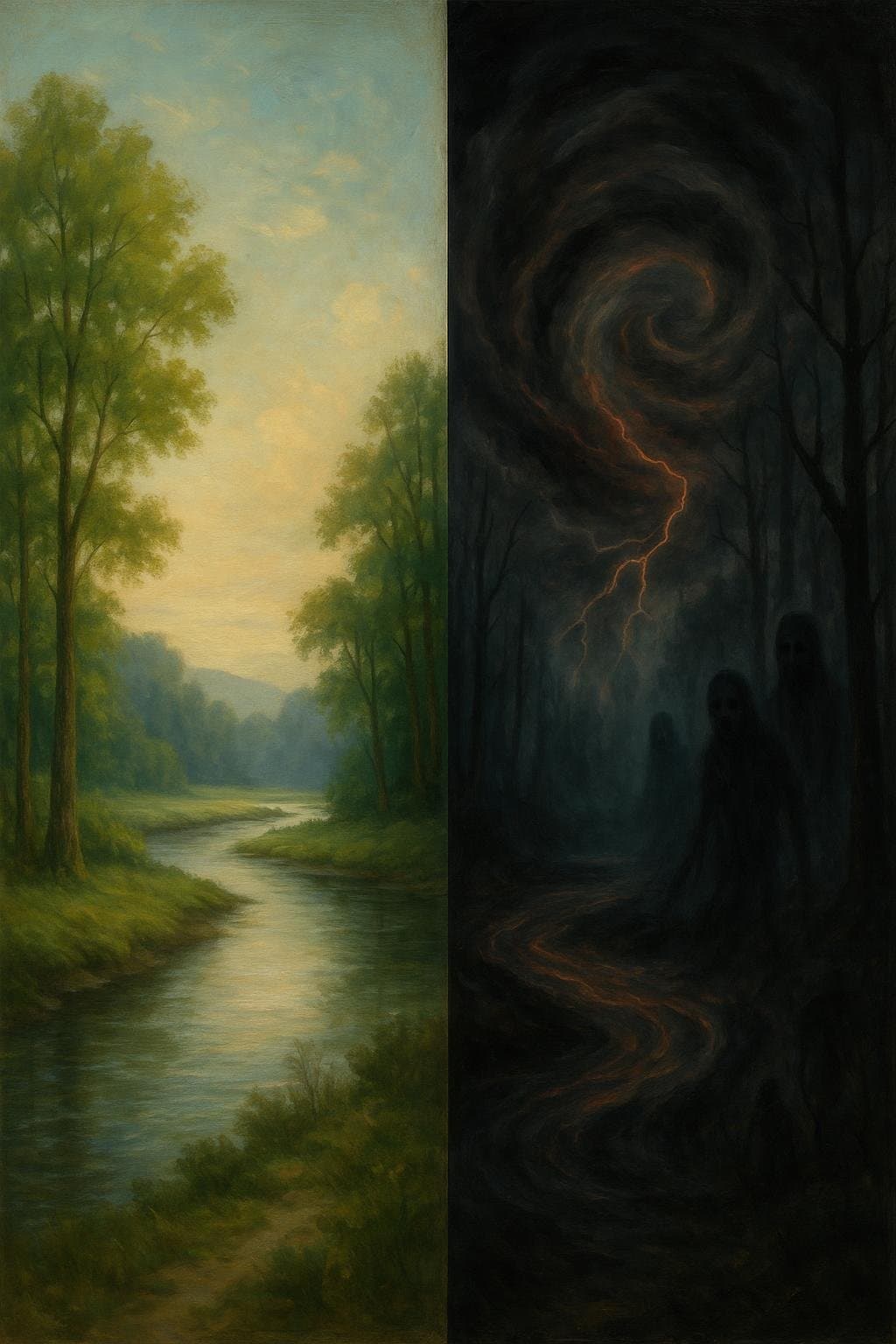
The rhythm of the heart is easily broken by desire; the soul is easily broken by fear. — Rabindranath Tagore
—What lingers after this line?
Tagore’s Reflection on Human Vulnerability
Rabindranath Tagore, a Nobel laureate and philosopher, draws attention to the delicate nature of the human heart and soul. By stating that desire and fear can easily break these core aspects of our being, he encapsulates a universal truth about human frailty. This poetic insight encourages us to examine how our innermost drives and anxieties can influence not just our actions, but our very essence.
Desire and the Heart’s Volatility
Desire, according to Tagore, disrupts the natural rhythm of the heart. Just as a sudden yearning can quicken our pulse, the heart’s metaphorical steadiness is threatened when longing overtakes reason. Literary examples abound, such as in Emily Brontë’s ‘Wuthering Heights’ (1847), where desire leads characters to emotional tumult and heartbreak. This theme reminds us that, left unchecked, desire wields the power to destabilize emotional wellbeing.
Fear and the Fragility of the Soul
Transitioning from desire to fear, Tagore underscores how fear can break the soul’s integrity. Fear operates at a deeper level than desire, permeating our beliefs and undermining our sense of self-worth. In Viktor Frankl’s ‘Man’s Search for Meaning’ (1946), stories of survival under extreme duress show how fear can fracture—or, conversely, fortify—the spirit. This duality highlights not just the soul’s vulnerability, but also its potential resilience.
The Interplay Between Emotion and Identity
These insights into desire and fear invite a broader examination of how emotions shape identity. With every surge of longing or tremor of dread, our responses sculpt who we become. Eastern philosophies, such as the teachings in the Bhagavad Gita, echo Tagore’s warnings—emphasizing that unchecked emotions cloud judgment and disrupt the harmony between heart, mind, and soul. Thus, the path to self-mastery lies in understanding and balancing these potent forces.
Toward Emotional Equilibrium and Resilience
Ultimately, Tagore’s words serve as both caution and encouragement. Recognizing the fragility he describes can inspire us to cultivate resilience: breathing space for the heart amidst desire, and courage for the soul in the face of fear. Mindfulness practices and reflective traditions from both East and West teach us to observe desires and fears without surrendering to them. In doing so, we nurture not only emotional balance but also the enduring strength of the self.
Recommended Reading
As an Amazon Associate, we earn from qualifying purchases.
One-minute reflection
Why might this line matter today, not tomorrow?
Related Quotes
6 selectedThe mind commands the body and it obeys. The mind orders itself and meets resistance. — St. Augustine
St. Augustine
At first glance, Augustine draws a simple comparison: the body often responds when the mind gives an order, yet the mind itself resists its own commands. In one sharp sentence, he exposes a familiar human frustration.
Read full interpretation →The only way to find true happiness is to risk being completely cut open. — Chuck Palahniuk
Chuck Palahniuk
This quote expresses the idea that true happiness requires us to be vulnerable. By allowing ourselves to be emotionally 'cut open,' we can confront our deepest fears and desires, leading to genuine fulfillment.
Read full interpretation →Just keep in mind: the greater your capacity to love, the greater your capacity to feel pain. — Jennifer Aniston
Jennifer Aniston
This quote highlights the intrinsic connection between love and pain. The stronger one's ability to love, the more vulnerable they are to experiencing deep emotional pain when things go wrong in that relationship.
Read full interpretation →You may find the worst enemy or best friend in yourself. — English Proverb
English Proverb
This proverb highlights the idea that one's greatest challenges and strengths come from within. A person’s mindset, choices, and self-perception can either support or hinder their growth.
Read full interpretation →Growth is often uncomfortable, messy, and full of feelings you weren’t expecting. — Unknown, attributed to Brené Brown
Unknown, attributed to Brené Brown
Transformation rarely comes smoothly. This perspective echoes psychologist Carl Rogers, who noted, 'The curious paradox is that when I accept myself just as I am, then I can change.' Change often requires facing discomfo...
Read full interpretation →You cannot protect yourself from sadness without protecting yourself from happiness. — Jonathan Safran Foer
Jonathan Safran Foer
Jonathan Safran Foer’s insight spotlights an elemental truth: emotions do not exist in isolation. To avoid sadness entirely, one would have to dull their emotional responses so thoroughly that happiness, too, becomes ina...
Read full interpretation →More From Author
More from Rabindranath Tagore →A home is not a mere transient shelter of brick and stone, but a place where hearts dwell and souls are nurtured. — Rabindranath Tagore
At its core, Tagore’s statement rejects the idea that a home can be defined by architecture alone. Walls, roofs, and doors may provide protection, yet they do not automatically create belonging.
Read full interpretation →Whatever you do with determination and grace, you do for the soul of the world. — Rabindranath Tagore
At its heart, Tagore’s line suggests that no sincere act is isolated. When a person works with determination, effort gains direction; when that same effort is carried out with grace, it acquires moral beauty.
Read full interpretation →Opinions are nothing; better is the self-contained calm of true realization. — Rabindranath Tagore
Tagore’s line draws a sharp contrast between what people say and what a person is. “Opinions” are portrayed as weightless—changeable, socially contagious, and often untethered from lived truth—while “true realization” im...
Read full interpretation →The butterfly counts not months but moments, and has time enough. — Rabindranath Tagore
Tagore’s line immediately reframes time as something felt rather than counted. The butterfly does not live by calendars or long-term schedules; it lives by what is available right now.
Read full interpretation →