
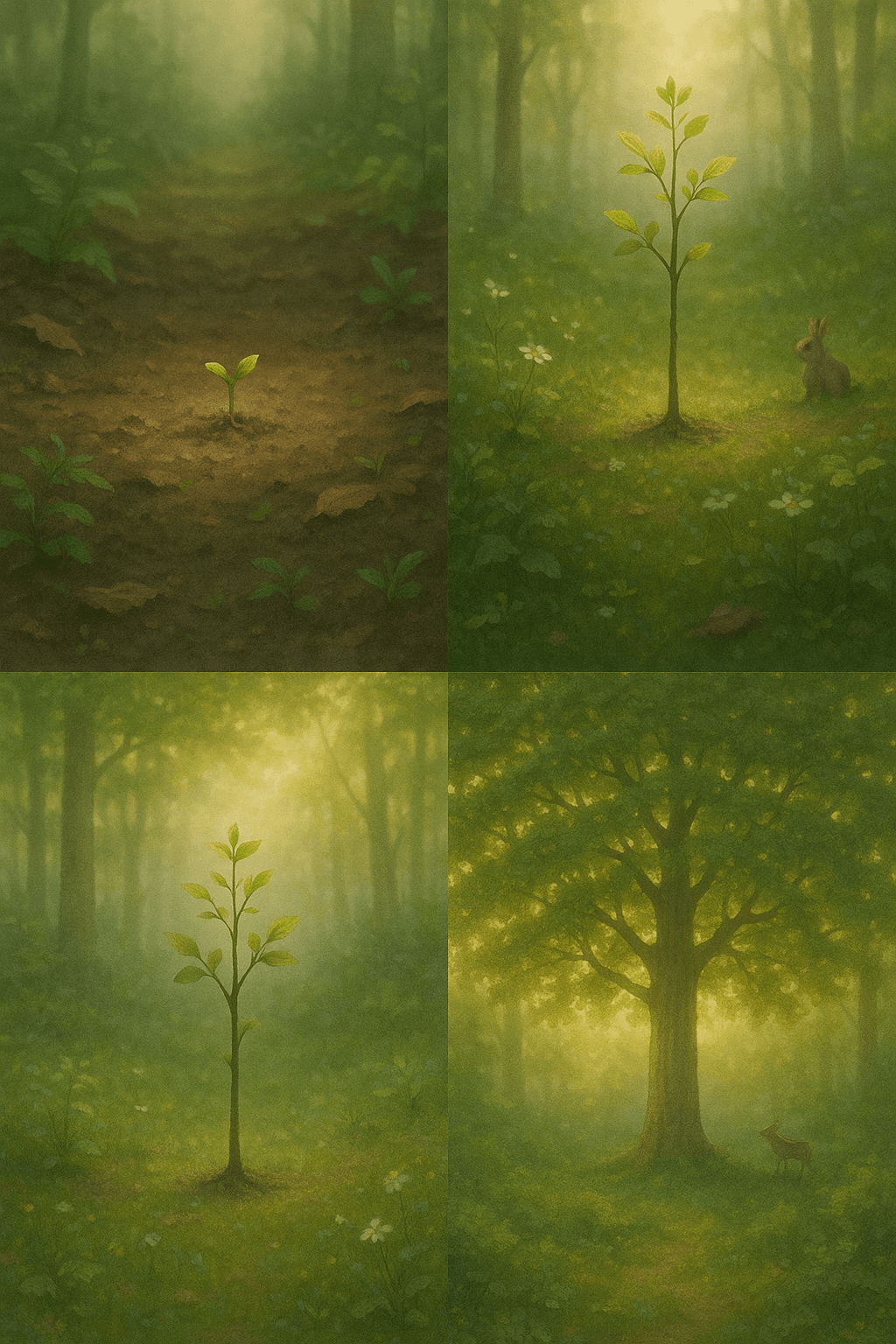
What you do makes a space in the world, and the world needs that space. — Clarissa Pinkola Estés
—What lingers after this line?
Recognizing Individual Contribution
Clarissa Pinkola Estés’s observation calls attention to the importance of each person's actions in shaping the environment around them. By emphasizing that 'what you do makes a space in the world,' Estés elevates everyday actions to acts of significance. This perspective encourages us to view our behaviors, creative outputs, and even small gestures as indispensable parts of the world’s tapestry, fostering a sense of belonging and self-worth.
The Interdependence of Society
Following this line of thought, Estés touches on the world’s need for the unique spaces we forge. Society thrives precisely because it is an amalgamation of diverse experiences and perspectives, as seen in the collaboration of different disciplines throughout history. For instance, the Renaissance was made possible by artists and scientists alike contributing new 'spaces' of knowledge and imagination that, when combined, propelled society forward.
Creativity and the Birth of New Spaces
The idea of making space also resonates strongly with the creative process. When Frida Kahlo painted her inner world onto canvas or when James Baldwin wrote about identity, they brought forth expressions and truths that did not exist before, filling voids in the cultural landscape. This act of creation is transformative, serving not only personal needs but also answering collective hunger for connection and understanding.
Validation and Vulnerability
Transitioning from creation to the emotions behind it, Estés’s words remind us that our efforts are not in vain—there is inherent value in what we offer. This recognition is particularly vital for those who hesitate to share their talents or viewpoints, fearing insignificance. By validating personal expression, Estés’s message encourages vulnerability and bravery, much like Brené Brown’s research on how daring to be seen is fundamental to growth and community (Brown, 'Daring Greatly', 2012).
Cultivating a World of Possibility
Ultimately, when we accept that the world needs the spaces we create, we unlock endless possibility. We are called to action, empowered to fill gaps, mend wounds, or bring joy. In doing so, we contribute to a richer, more inclusive world—one shaped not by the absence of our efforts, but by the presence of our authentic selves. Thus, Estés’s insight is not just a comfort, but a call to shape the world through intentional participation.
One-minute reflection
What feeling does this quote bring up for you?
Related Quotes
6 selectedHold meaning close and let it steer your steps. — Viktor Frankl
Viktor Frankl
Viktor Frankl’s line, “Hold meaning close and let it steer your steps,” distills his life’s work into a single navigational image. Rather than treating meaning as an abstract idea, he presents it as something intimate—he...
Read full interpretation →He who has a why to live can bear almost any how. - Friedrich Nietzsche
Friedrich Nietzsche
This quote emphasizes the importance of having a purpose or meaning in life. According to Nietzsche, individuals who have a clear reason for their existence are better equipped to endure hardships and challenges.
Read full interpretation →Believe with all your heart that you will do what you were made to do. — Orison Swett Marden
Orison Swett Marden
This quote underscores the importance of having unwavering faith in oneself. Believing wholeheartedly in your abilities is crucial for achieving your goals and fulfilling your destiny.
Read full interpretation →The tragedy of life doesn’t lie in not reaching your goal. The tragedy lies in having no goal to reach. — Benjamin Mays
Benjamin Mays
This quote underscores the necessity of having a purpose in life. It suggests that the real misfortune is not failing to achieve something, but rather never having a meaningful objective to strive for.
Read full interpretation →To realize one's destiny is a person's only obligation. — Pablo Coelho
Pablo Coelho
This quote emphasizes the importance of recognizing and pursuing one's life purpose. It suggests that fulfilling your destiny is the ultimate responsibility you carry as an individual.
Read full interpretation →Act as if what you have to offer the world has never been offered before. — Christine Lagarde
Christine Lagarde
This quote encourages individuals to recognize and embrace their unique talents, perspectives, and contributions, treating them as one-of-a-kind offerings to the world.
Read full interpretation →More From Author
More from Clarissa Pinkola Estés →Quietly and without fuss, you must trust your own heart. Your instincts are more reliable than the noise of the world. — Clarissa Pinkola Estés
At its core, Clarissa Pinkola Estés’s line invites a quiet act of courage: to believe that the heart can perceive truths the outside world often obscures. Rather than demanding dramatic rebellion, she emphasizes trust ex...
Read full interpretation →To create one must be willing to be stone stupid, to sit upon a throne on top of a jackass and spill rubies from one's mouth. — Clarissa Pinkola Estés
Clarissa Pinkola Estés begins with a provocation: anyone who wants to create must accept appearing “stone stupid.” In other words, genuine making starts where polish, certainty, and social dignity begin to fail. The arti...
Read full interpretation →You are not broken. You are becoming. — Clarissa Pinkola Estés
At its core, Clarissa Pinkola Estés’s line transforms the way we interpret hardship. Instead of treating pain, confusion, or loss as proof of damage, she invites us to see them as signs of movement.
Read full interpretation →If you have not been called a defiant, incorrigible, unmannerly woman, there is still time. — Clarissa Pinkola Estés
Clarissa Pinkola Estés turns a familiar set of accusations—“defiant,” “incorrigible,” “unmannerly”—into a kind of initiation rather than a shame sentence. The line suggests that these labels often appear not when someone...
Read full interpretation →