
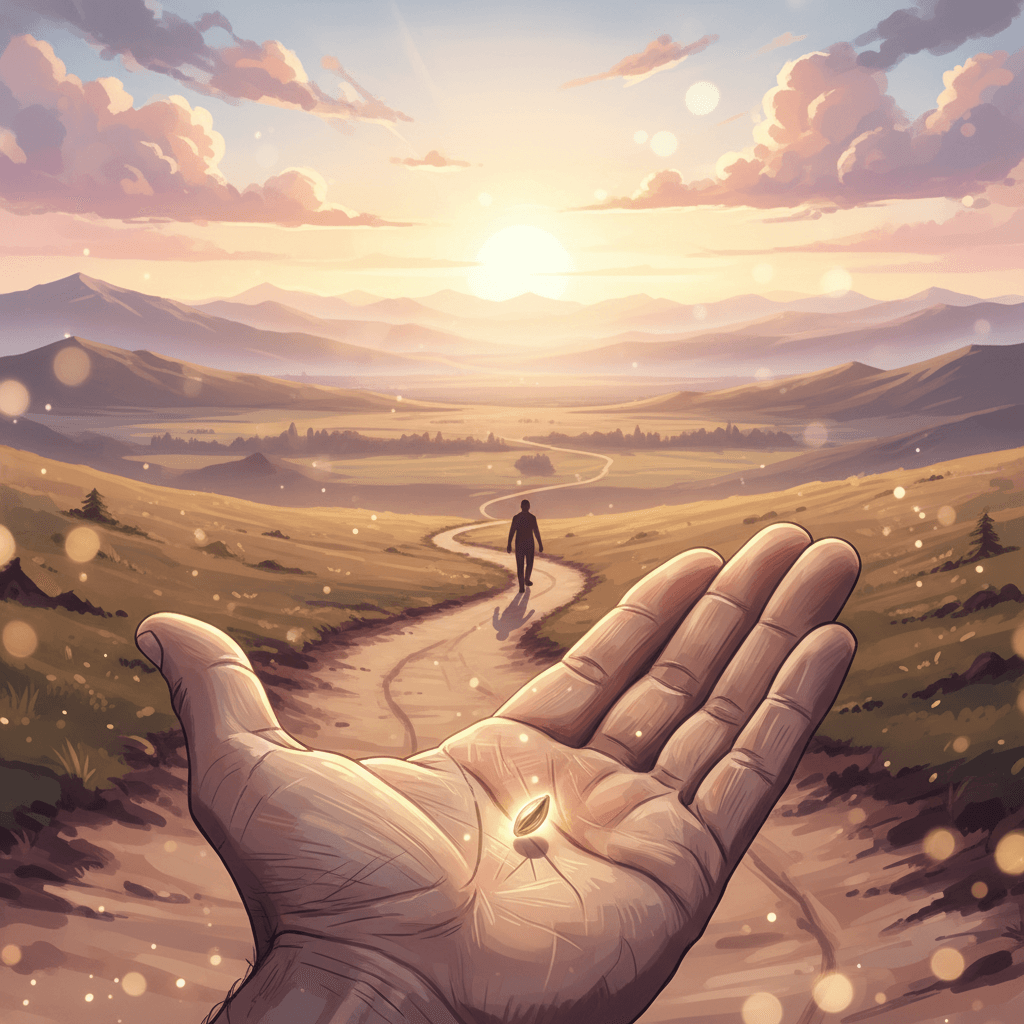
The smallest brave decision is the seed of a new life. — Malala Yousafzai
—What lingers after this line?
Planting Courage as a Hidden Seed
Malala Yousafzai’s image of a “smallest brave decision” as a seed highlights how inner change often begins invisibly. Just as a seed looks insignificant before it becomes a tree, a moment of courage can appear trivial to others yet feel immense to the person choosing it. By stressing “smallest,” she reminds us that bravery is not reserved for dramatic, heroic acts; it can be as understated as raising a hand in class, telling the truth, or choosing not to remain silent.
From Single Choice to New Direction
From this seed-like decision, a new direction unfolds. A single “yes” or “no” can subtly redirect a life path, much as a ship’s tiny change in course eventually leads to a different continent. Malala’s own choice to keep attending school in defiance of a ban on girls’ education illustrates this principle: it began as a daily decision to show up, which in turn shaped her identity, opportunities, and future. Over time, repeated small acts of courage accumulate into a markedly different life story.
Bravery in Ordinary Contexts
Furthermore, the quote dignifies ordinary contexts as sites of real heroism. Not everyone will face the dangers Malala did in Pakistan’s Swat Valley, yet many confront quieter fears—fear of rejection, failure, or disapproval. Deciding to apply for a job, end an unhealthy relationship, or ask for help can feel perilous in their own way. By framing such choices as seeds, she suggests that the everyday person’s courage is both valid and consequential, even when it happens far from the public eye.
The Chain Reaction of Inner Growth
As the metaphor continues, a seed does not remain a seed; it germinates, grows roots, and eventually reshapes the soil around it. In the same way, a brave decision initiates inner growth—building confidence, resilience, and a sense of agency. Each successful act of courage makes the next one more attainable, creating a chain reaction. Philosophers from Aristotle onward have described character as a product of repeated actions, and Malala’s formulation echoes this: new habits of bravery slowly construct a “new life” from the inside out.
From Personal Change to Social Impact
Finally, Malala’s life story demonstrates how personal seeds of courage can bear public fruit. Her early decisions to speak about girls’ education, first anonymously on a BBC blog and later openly, did not only change her own trajectory; they helped spark global conversations about children’s rights. Thus, the “new life” she names is not merely individual. It can extend outward into families, communities, and movements. In this way, her quote becomes both an encouragement and a gentle challenge: plant one small seed of bravery, and allow its growth to reach beyond yourself.
One-minute reflection
Why might this line matter today, not tomorrow?
Related Quotes
6 selectedLet your questions be louder than your fears. — Malala Yousafzai
Malala Yousafzai
Malala Yousafzai’s line hinges on a simple but powerful metaphor: fears and questions both speak inside us, yet we can choose which one gets the microphone. Rather than pretending fear doesn’t exist, she implies it will...
Read full interpretation →Let your voice be the river that nourishes the valleys of doubt — Malala Yousafzai
Malala Yousafzai
Malala Yousafzai’s line turns “voice” into something living and vital: a river that continuously moves, carries, and gives. Rather than portraying speech as a single act—one speech, one post, one declaration—she frames i...
Read full interpretation →Stand firm for learning and the world will open its doors. — Malala Yousafzai
Malala Yousafzai
Malala Yousafzai’s line marries resolve with possibility, suggesting that education rewards those who persist through resistance, boredom, or fear. To stand firm is not only to defend a principle in public but also to re...
Read full interpretation →Gather courage from the sea of small decisions you take each day — Nâzım Hikmet
Nâzım Hikmet
Nâzım Hikmet frames daily life as a “sea,” suggesting that what looks like a single mood or character trait is actually formed by countless small acts. Courage, in this view, isn’t a rare storm that appears only in crise...
Read full interpretation →To be courageous is to act with the heart. — Molière
Molière
Molière’s line suggests that courage is not merely the absence of fear, but the decision to move despite it. By connecting courage with the heart, he frames bravery as an emotional and moral act rather than a simple disp...
Read full interpretation →The best people possess a feeling for beauty, the courage to take risks, the discipline to tell the truth, the capacity for sacrifice. — Ernest Hemingway
Ernest Hemingway
Hemingway’s line presents goodness not as politeness or success, but as a demanding inner code. The “best people” are those who combine sensitivity, bravery, honesty, and self-denial—qualities that do not always coexist...
Read full interpretation →More From Author
More from Malala Yousafzai →Stand firm in tenderness; strength without compassion narrows the soul. — Malala Yousafzai
Malala Yousafzai’s line reframes tenderness not as softness, but as a disciplined stance—something you “stand firm” in. In other words, compassion is not a mood that comes and goes; it is a choice that can hold steady un...
Read full interpretation →Let your questions be louder than your fears. — Malala Yousafzai
Malala Yousafzai’s line hinges on a simple but powerful metaphor: fears and questions both speak inside us, yet we can choose which one gets the microphone. Rather than pretending fear doesn’t exist, she implies it will...
Read full interpretation →Let your voice be the river that nourishes the valleys of doubt — Malala Yousafzai
Malala Yousafzai’s line turns “voice” into something living and vital: a river that continuously moves, carries, and gives. Rather than portraying speech as a single act—one speech, one post, one declaration—she frames i...
Read full interpretation →Stand where your heart points, even if the road is less traveled. — Malala Yousafzai
Malala Yousafzai’s line treats the heart not as a fickle impulse but as a moral compass—an inner pointer toward what feels true and necessary. To “stand” where it points suggests steadiness: not merely choosing once, but...
Read full interpretation →