
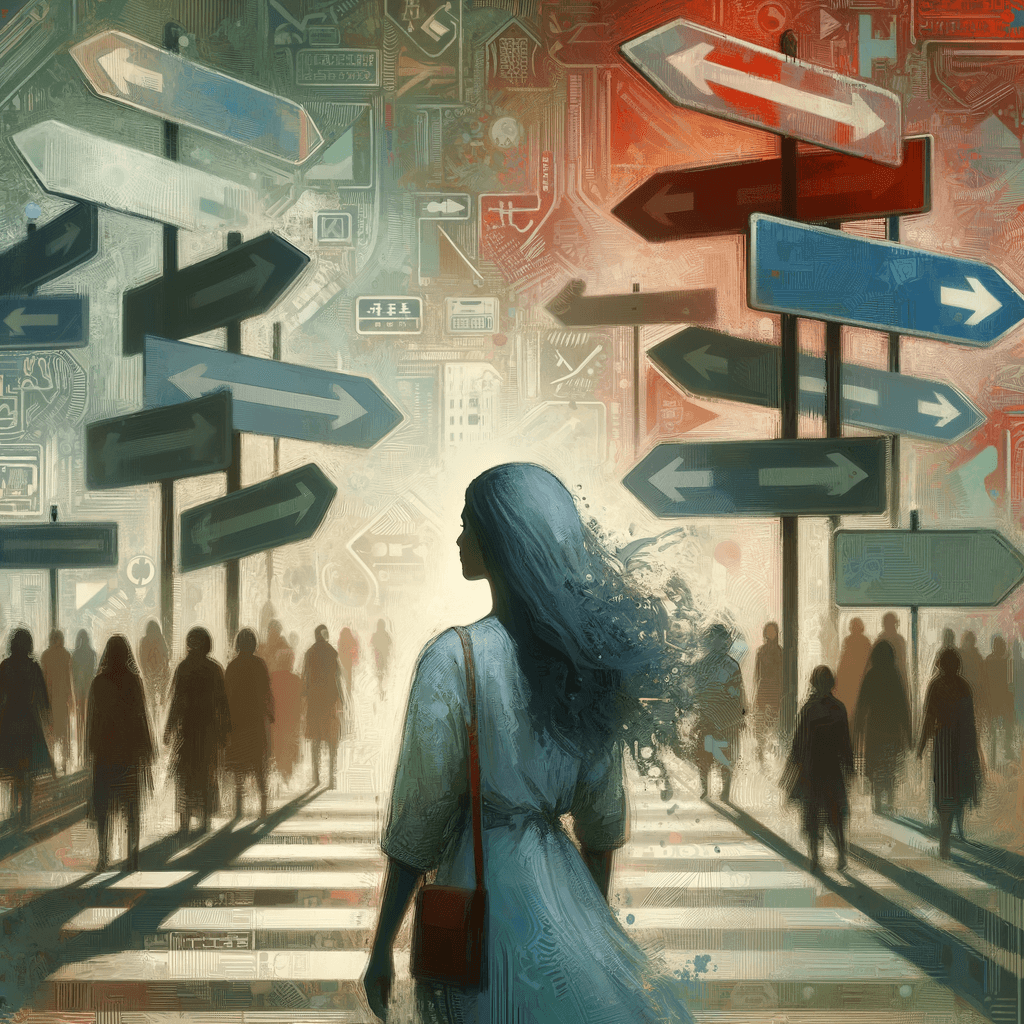
We must not allow the opinion of others to deprive us of our right to be wrong. — Paul Valéry
—What lingers after this line?
Growth Through Mistakes
This quote suggests that making mistakes is a valuable part of personal development and learning. It emphasizes the importance of experiencing failure as a means of gaining wisdom.
Independence from Social Judgment
Valéry stresses the need to maintain autonomy in our thoughts and actions, even in the face of societal pressure. Other people's opinions should not control or inhibit our ability to take risks or make decisions, even if those decisions end up being wrong.
Freedom of Thought
The 'right to be wrong' highlights the freedom of thought and expression. It's an affirmation that intellectual independence – including the possibility of being incorrect – is a fundamental human right.
Fear of Failure
The quote warns against the fear of criticism or judgment preventing us from taking action, which can paralyze creativity and innovation. Being overly concerned with outside opinions can stifle personal growth and exploration.
Resilience and Confidence
To embrace the right to be wrong is to cultivate resilience – the ability to recover and learn from errors – and confidence in navigating the world without being deterred by the judgments of others.
Philosophical Context
Paul Valéry was a French poet and philosopher. His works often dealt with ideas of human intellect, mental freedom, and self-reflection, fitting into the broader landscape of European modernist thought.
One-minute reflection
What's one small action this suggests?
Related Quotes
6 selectedEven the monkey falls from the tree. — Japanese Proverb
Japanese Proverb
“Even the monkey falls from the tree” begins with a vivid picture: a creature built for climbing still loses its grip. By choosing an expert climber rather than a novice, the proverb makes its point gently but firmly—ski...
Read full interpretation →The beautiful thing about learning is that no one can take it away from you. — B.B. King
B.B. King
This quote highlights that the knowledge gained through learning is a lasting asset. Unlike material possessions, once you learn something, it becomes a part of who you are and cannot be taken away.
Read full interpretation →Knowledge is the wings of a bird, and the joy of knowledge is flying high. — Chetan Bhagat
Chetan Bhagat
This quote compares knowledge to wings, suggesting that gaining knowledge empowers individuals to rise above limitations, explore new opportunities, and achieve success.
Read full interpretation →True freedom is impossible without a mind made free by discipline. — Mortimer J. Adler
Mortimer J. Adler
This quote suggests that genuine freedom is not simply the absence of restrictions but requires mental discipline. Without self-control and structured thinking, freedom becomes meaningless or even chaotic.
Read full interpretation →The highest activity a human being can attain is learning for understanding, because to understand is to be free. — Baruch Spinoza
Baruch Spinoza
Baruch Spinoza, a leading thinker of the 17th century Enlightenment, valued the act of understanding as the highest pursuit for humankind. For Spinoza, understanding is not a mere accumulation of facts but a transformati...
Read full interpretation →Knowledge rests not upon truth alone, but upon error also. — Carl Jung
Carl Jung
Carl Jung’s statement invites us to move beyond a simplistic view of knowledge as built solely upon truth. Rather, he emphasizes that our grasp of the world is shaped equally by what is right and what is wrong.
Read full interpretation →More From Author
More from Paul Valéry →An artist never really finishes his work, he merely abandons it. — Paul Valéry
At first glance, Paul Valéry’s remark sounds severe, yet it captures a familiar truth about artistic labor: a work rarely reaches a perfect, final state in the artist’s mind. Instead, there comes a moment when revision m...
Read full interpretation →What is simple is false and what is not is useless. -- Paul Valery
Paul Valéry’s line compresses a lifelong skepticism into a single dilemma: if an explanation is too simple, it distorts reality; if it captures reality’s full complexity, it becomes unusable. The quote therefore isn’t me...
Read full interpretation →The best way to make your dreams come true is to wake up. — Paul Valéry
This quote emphasizes the importance of taking action and being proactive in order to achieve your dreams. It highlights that dreams alone are not sufficient; they require effort and dedication to realize.
Read full interpretation →We are not what we were born, but what we choose to become. — Paul Valéry
The quote emphasizes the idea of free will, suggesting that our identity or destiny is not dictated by our birth but shaped by the choices we make throughout life.
Read full interpretation →