
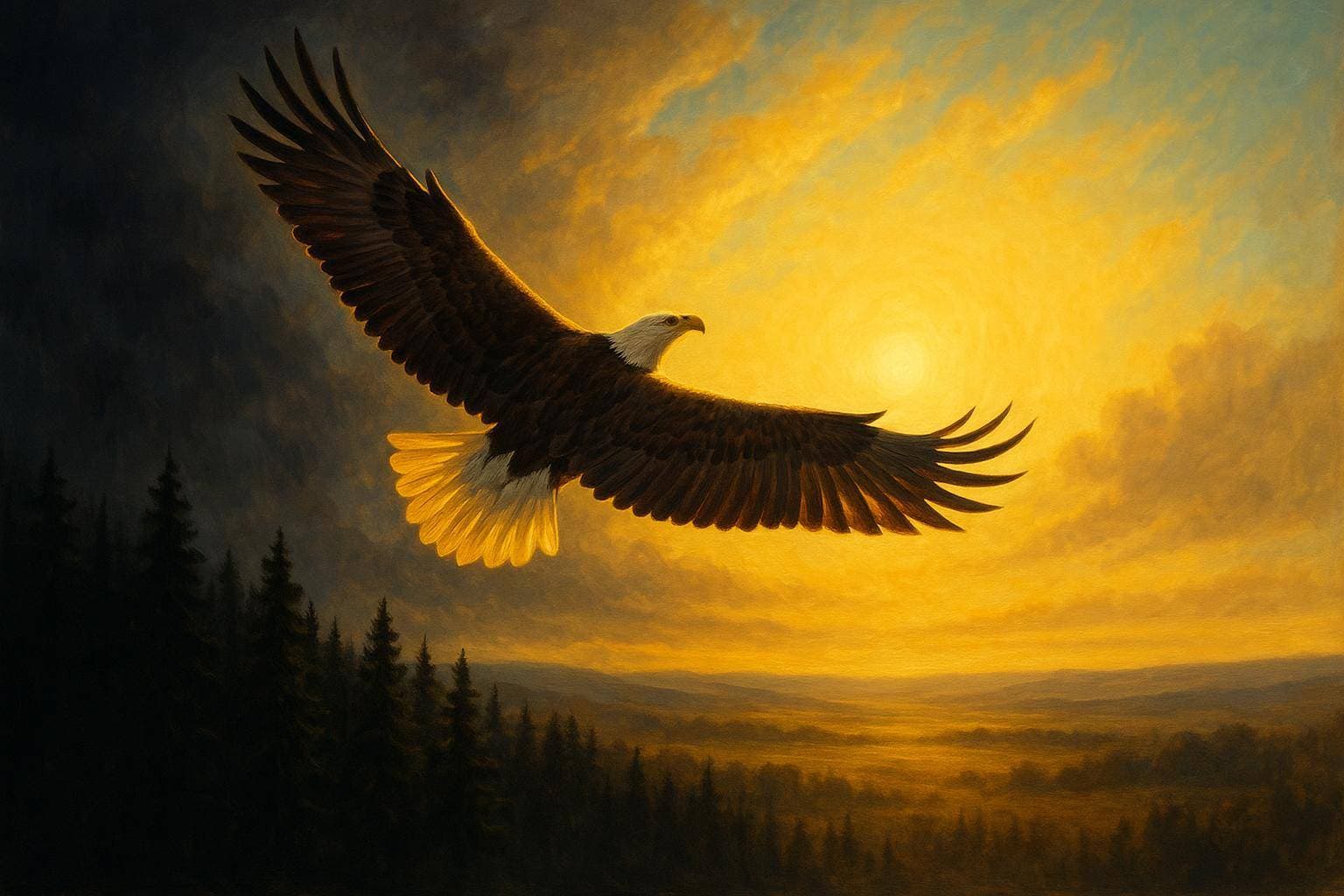
Boldness lives in the space between fear and freedom. — Chimamanda Ngozi Adichie
—What lingers after this line?
Defining the Terrain of Boldness
Chimamanda Ngozi Adichie's assertion positions boldness as an active force, existing not in the absence of fear or the certainty of freedom but in the dynamic space between the two. By framing boldness as an intermediary state, she elevates it from mere risk-taking to a conscious choice—a navigation through internal and external uncertainties.
Fear as the Starting Point
To understand boldness, we must first recognize fear as its frequent precursor. Fear, whether personal or societal, often marks the boundaries of what we perceive as possible. In Adichie’s own works, such as ‘We Should All Be Feminists’ (2014), she underscores how acknowledging fear—be it of rejection or societal backlash—lays the groundwork for any act of courage.
Freedom as an Aspirational Horizon
Conversely, freedom represents the ideal endpoint—a state of being where self-expression and agency are unfettered. Yet, as Adichie’s novels like ‘Half of a Yellow Sun’ (2006) suggest, the pursuit of freedom is seldom straightforward. Characters must traverse uncertainty and take risks, with boldness serving as the bridge from constraint to liberation.
Boldness as a Transformative Act
What transforms fear into freedom is the willingness to act despite uncertainty. This transformation is echoed in countless real-world narratives: civil rights leaders like Rosa Parks, for instance, inhabit this space when they choose defiance over compliance. Adichie’s formulation aligns with these histories, reminding us that boldness is less about fearlessness and more about persistence within vulnerability.
Embracing the Tension for Growth
Ultimately, living boldly means accepting the tension between fear and freedom as fertile ground for growth. Rather than seeking comfort in extremes, Adichie invites us to dwell in the ‘in-between’—where new possibilities emerge. As individuals and societies, recognizing and embracing this space can propel us toward both personal fulfillment and broader social change.
One-minute reflection
What feeling does this quote bring up for you?
Related Quotes
6 selectedYour home should lower your shoulders the moment you walk in. — Unknown (attributed to design philosophy/experts, but skipping as per rules: switching to:) The boundary to what we can accept is the boundary to our freedom. — Tara Brach
Tara Brach
At first glance, Tara Brach’s statement sounds simple, yet it points to a profound inner mechanism: the limits of our freedom are often set not only by external conditions, but by what we refuse to face within ourselves....
Read full interpretation →The boundary to what we can accept is the boundary to our freedom. — Tara Brach
Tara Brach
At first glance, Tara Brach’s statement suggests that freedom is not only shaped by external circumstances but also by our inner willingness to face reality. What we cannot accept—whether grief, uncertainty, fear, or imp...
Read full interpretation →True freedom is found in the discipline to choose what you want most over what you want in this fleeting moment. — Arden Mahlberg
Arden Mahlberg
At first glance, freedom is often imagined as the ability to do whatever one wants at any given moment. Arden Mahlberg’s statement gently overturns that assumption by suggesting that real freedom is not impulsive indulge...
Read full interpretation →Freedom is knowing what is yours to influence. — Zeno of Citium
Zeno of Citium
At its heart, Zeno’s statement defines freedom not as unlimited power, but as clear discernment. The founder of Stoicism, writing in the early 3rd century BC, argued that human beings suffer when they confuse what belong...
Read full interpretation →The things you own end up owning you. It is only after you lose everything that you're free to do anything. — Chuck Palahniuk
Chuck Palahniuk
At first glance, Palahniuk’s line appears to criticize materialism, yet it goes further by describing a reversal of power. We believe we possess objects, but gradually those objects begin to dictate our time, anxiety, an...
Read full interpretation →If you want to be free, stop trying to control what is not yours to command. — Seneca
Seneca
At its heart, Seneca’s line expresses a central Stoic principle: freedom does not come from mastering the world, but from mastering one’s response to it. In letters such as the *Epistulae Morales* (c.
Read full interpretation →More From Author
More from Chimamanda Ngozi Adichie →To love is to recognize that another person is a separate universe, and yet to choose, daily, to walk through it beside them. — Chimamanda Ngozi Adichie
At its heart, Adichie’s line defines love not as possession but as perception. To love someone is first to grasp that they are irreducibly distinct: a ‘separate universe’ with their own memories, fears, loyalties, and in...
Read full interpretation →True milestones are not found in our public achievements, but in the quiet, transformative moments of connection we share with those we hold dear. — Chimamanda Ngozi Adichie
At first glance, Adichie’s quote gently overturns a common modern assumption: that the most important markers of a life are public victories, titles, or visible accomplishments. Instead, she redirects our attention towar...
Read full interpretation →Your job is not to be likable. Your job is to be yourself. — Chimamanda Ngozi Adichie
Adichie’s line begins by stripping away a common social bargain: if you act agreeable enough, you’ll be accepted. By saying your job is not to be “likable,” she points to how easily a person can become an employee of oth...
Read full interpretation →Make today the workshop where your best self is assembled piece by piece. — Chimamanda Ngozi Adichie
Chimamanda Ngozi Adichie’s line turns “today” from a deadline into a worksite: a place where something is being made. Instead of waiting for a future version of life to begin, she suggests the present is where constructi...
Read full interpretation →