
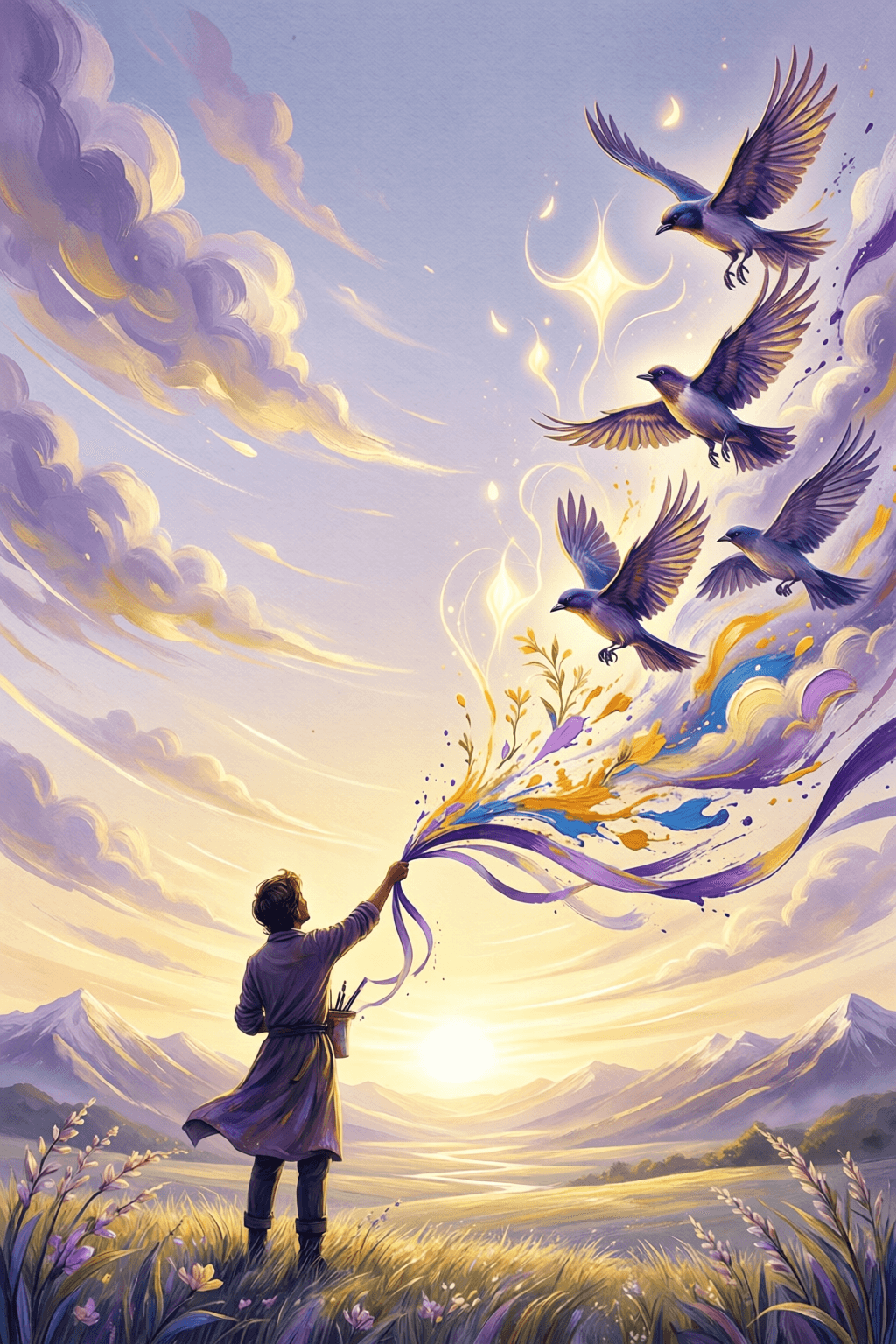
Creativity is a practice of freedom. Art is the practice of imagining what freedom looks like. — Indya Moore
—What lingers after this line?
Freedom Begins in Imagination
Indya Moore’s words begin with a powerful reversal: freedom is not only a political condition or legal status, but also a creative act. To imagine freely is to step beyond inherited limits, especially those imposed by fear, conformity, or oppression. In this sense, creativity becomes more than self-expression; it becomes a rehearsal for liberation. From there, art gives freedom a visible shape. A painting, poem, performance, or film can show what has not yet been fully allowed in the world. Moore’s statement reminds us that before freedom can be built socially, it often must be envisioned artistically.
Art as a Space of Possibility
Moving from imagination to practice, art opens a space where alternative realities can be explored without waiting for permission. This is why marginalized communities have so often turned to music, fashion, dance, and storytelling as tools of survival. In these forms, people can create versions of themselves that the dominant culture may refuse to recognize. For example, the Harlem Renaissance of the 1920s transformed Black artistic expression into a declaration of dignity and possibility. Writers like Langston Hughes and Zora Neale Hurston did not merely describe freedom; they gave audiences new images of what free Black life could sound, feel, and become.
The Body as Creative Resistance
This idea becomes especially resonant in relation to Indya Moore’s own work as an actor, model, and trans activist. Through visibility and performance, Moore has helped expand public imagination around gender, beauty, and belonging. Their presence in works such as Pose (2018–2021) reflects how art can challenge narrow definitions of humanity. In that context, creativity is not abstract. It is embodied in movement, voice, clothing, and self-presentation. When someone who has been denied recognition creates an image of themselves with power and grace, that act becomes a form of resistance as well as a vision of freedom.
Historical Traditions of Liberation Art
Continuing this thread, Moore’s insight belongs to a long tradition in which art has accompanied struggles for justice. In The Souls of Black Folk (1903), W. E. B. Du Bois described sorrow songs as spiritual records of endurance and hope. These songs did not erase suffering, but they transformed it into collective memory and moral force. Similarly, protest posters, murals, and freedom songs have shaped movements from anti-colonial struggles to civil rights campaigns. Each artistic form makes liberation emotionally tangible. It helps people not only demand change, but also feel that another world is possible.
Creativity as Daily Practice
Yet Moore’s phrase “practice of freedom” also suggests repetition, discipline, and ongoing effort. Creativity is not only the sudden flash of inspiration; it is a daily commitment to seeing differently. A person practices freedom whenever they choose curiosity over obedience, invention over resignation, or expression over silence. This makes the quote deeply practical. Freedom is strengthened through use, much like a muscle. Whether someone writes in a journal, designs a community garden, makes music with friends, or tells their story honestly, they participate in the ongoing work of imagining and inhabiting a freer life.
Imagining What Comes Next
Finally, the quote points toward the future. Art does not always deliver immediate freedom, but it prepares the mind and heart to recognize it. By giving form to what is missing, artists help society name its desires and confront its failures. In this way, creativity becomes both vision and invitation. Moore’s statement asks us to treat imagination as a serious political and spiritual force. If we cannot picture freedom, we may struggle to pursue it; but once art allows us to see it, even briefly, we begin to understand that it can be practiced into being.
One-minute reflection
What does this quote ask you to notice today?
Related Quotes
6 selectedNo man has the right to dictate what other men should perceive, create or produce, but all should be encouraged to reveal themselves. — Ansel Adams
Ansel Adams
At its core, Ansel Adams’s statement rejects artistic authoritarianism. He insists that no individual has the moral authority to prescribe what others must see, make, or express.
Read full interpretation →We are not here to fit into a mold, but to break the ones that keep our most honest work hidden. — Virginia Woolf
Virginia Woolf
At its core, Virginia Woolf’s statement rejects the quiet pressure to adapt ourselves to preexisting expectations. To “fit into a mold” suggests becoming legible, acceptable, and predictable at the cost of what is most i...
Read full interpretation →You do not need anybody's permission to live a creative life. — Elizabeth Gilbert
Elizabeth Gilbert
Elizabeth Gilbert’s statement begins by shifting creativity from something granted to something inherent. Instead of treating art as a special status bestowed by gatekeepers—teachers, critics, institutions—she frames it...
Read full interpretation →Chase your dreams like the wind chasing the leaves; let your spirit dance freely and boldly, for the world is your stage. — Unknown, Global.
Unknown, Global.
This quote encourages individuals to pursue their dreams with the same relentless energy and enthusiasm as the wind that chases leaves, emphasizing the importance of being proactive in the pursuit of one’s aspirations.
Read full interpretation →Everything that is great and inspiring is created by the individual who can labor in freedom. — Albert Einstein
Albert Einstein
This quote highlights the importance of personal freedom for creativity and innovation. When individuals have the liberty to think and act independently, they are more likely to create something remarkable and inspiring.
Read full interpretation →Refuse to let fear set the rules; write terms that allow you to move and create. — Albert Camus
Albert Camus
At the outset, the aphorism frames fear as an invisible legislator, drafting rules that limit motion and imagination. For Camus, the absurd names the gap between our craving for order and the world’s indifference.
Read full interpretation →More From Author
More from Indya Moore →