
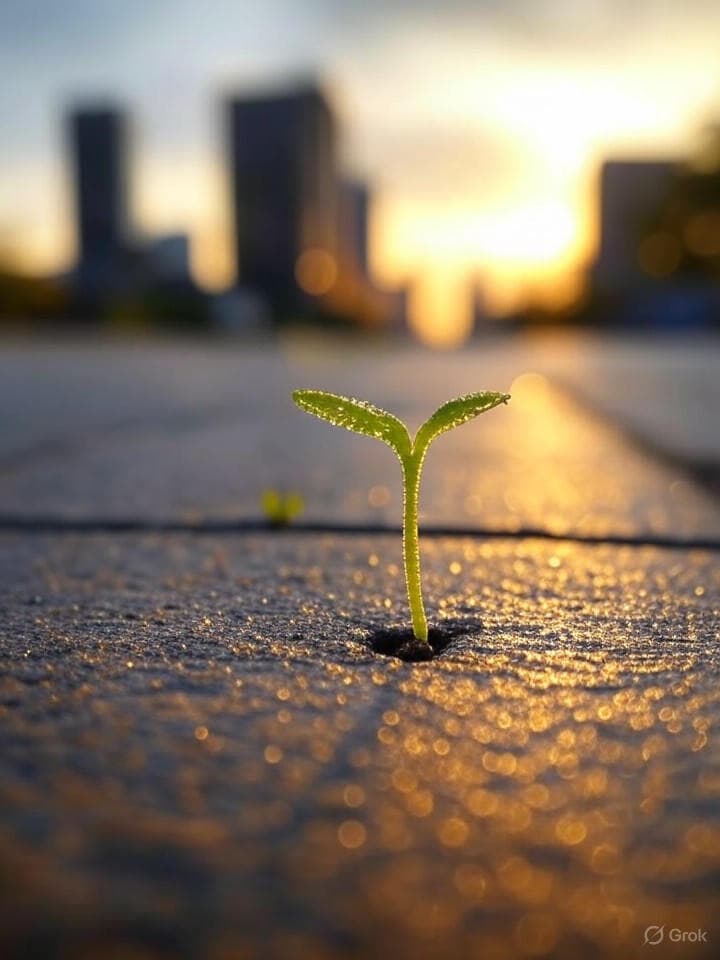
Notice the small wonders each day and use them as seeds for bolder tomorrows. — William Wordsworth
—What lingers after this line?
Wordsworth’s Romantic Seedbed
We begin where the poet himself often returned: the ordinary scene charged with quiet radiance. Wordsworth’s journals and poems dwell on how fleeting impressions become enduring strength. In 'Lines Written a Few Miles above Tintern Abbey' (1798), he describes how remembered glints of nature later restore him to purpose; likewise, in 'I Wandered Lonely as a Cloud' (1807), a field of daffodils turns into stored joy that, in solitude, quickens the heart. Across his work, he names these imprints ‘spots of time’ in The Prelude (1850), suggesting that brief attentions germinate into moral and imaginative power.
How Small Wonders Broaden Possibility
From poetry to psychology, the mechanism holds. Barbara Fredrickson’s broaden-and-build theory (2001) shows that positive emotions widen our momentary thought–action repertoire, making new options visible. Gratitude journals, studied by Robert Emmons and Michael McCullough (2003), reliably increase well-being and goal progress, essentially turning micro-noticings into momentum. Even brief experiences of awe have been linked to greater creativity and prosociality (Piff et al., 2015). Thus, attending to a birdsong or a shaft of light is not escapism; it subtly enlarges the map of what we believe we can do next.
Planting Micro-Seeds of Action
Building on this widened map, tiny behaviors convert noticing into tomorrow’s boldness. BJ Fogg’s tiny habits method (2020) and James Clear’s 'Atomic Habits' (2018) argue that very small, consistent actions compound into outsized results. Implementation intentions—if–then plans described by Peter Gollwitzer (1999)—bridge intention and behavior. For example: after your morning coffee, note one small wonder; then, take a 60-second step that leans into its energy—send a thank-you, sketch a quick idea, or draft one email line. Small seeds, planted daily, grow a trellis for larger climbs.
Observation as Creative Fuel
In creative lives, noticing is not a luxury but a practice. Wordsworth called poetry ‘emotion recollected in tranquility,’ implying that careful attention later becomes structured expression. Julia Cameron’s 'Morning Pages' (1992) and Anne Lamott’s 'bird by bird' (1994) operationalize this: capture small fragments now, assemble bolder work later. Thoreau’s field notes in 'Walden' (1854) and his journals show the same conversion, where precise details—the ring of an axe in winter air—anchor expansive ideas. Through repetition, the ordinary supplies both tinder and blueprint for ambitious building.
Cultivating Stewardship and Purpose
Beyond the self, small wonders tune us to what deserves care. Rachel Carson’s 'A Sense of Wonder' (1965) argues that attention to nature prepares an ethic of responsibility; E. O. Wilson’s biophilia hypothesis (1984) suggests an innate pull toward living systems that noticing reawakens. Citizen-science projects like eBird (Cornell Lab) translate simple sightings into conservation data, proving that modest acts can scale. In this way, daily awe does not distract from collective challenges; it recruits us, seed by seed, into bolder, shared tomorrows.
A Daily Ritual to Grow Tomorrows
To bring it home, adopt a brief cadence. First, each evening list three small wonders you noticed—textures, gestures, colors. Next, circle one and write a single sentence about why it matters. Then, attach a next-step seed: a 90-second action scheduled for tomorrow. Finally, review weekly and choose one seed to nurture into a larger commitment. With repetition, attention becomes intention, intention becomes action, and action becomes a landscape you could not previously imagine—exactly the trajectory Wordsworth hints at when small marvels flower into bold days ahead.
One-minute reflection
Where does this idea show up in your life right now?
Related Quotes
6 selectedLearning to love yourself is like learning to walk – essential, life-changing, and the only way to stand tall. — Vironika Tugaleva
Vironika Tugaleva
Vironika Tugaleva’s comparison begins with a simple but powerful truth: self-love is not a luxury, but a basic human necessity. Just as walking allows a child to move through the world with growing independence, learning...
Read full interpretation →The most gifted members of the human species are at their creative best when they cannot have their way, and must compensate for what they miss by realizing and cultivating their capacities. — Bryant H. McGill
Bryant H. McGill
Bryant H. McGill’s observation begins with a striking reversal: gifted people may not reach their highest potential when everything comes easily, but when something blocks their path.
Read full interpretation →A mind grows by staying with difficulty long enough for the experience to change it. — Mary Catherine Bateson
Mary Catherine Bateson
Mary Catherine Bateson’s observation begins with a quiet but demanding truth: the mind does not grow merely by encountering difficulty, but by remaining with it. Challenge becomes transformative only when we resist the u...
Read full interpretation →Consistency is a superpower. — Ryan Holiday
Ryan Holiday
Ryan Holiday’s line begins with a deceptively simple idea: greatness is rarely built through dramatic gestures. More often, it emerges from repeated actions that seem ordinary in isolation but become extraordinary over t...
Read full interpretation →Confidence is silent. Insecurities are loud. — Unknown (Wait—skip/replace with: True nobility is being superior to your former self. — Ernest Hemingway)
Ernest Hemingway
At its core, Hemingway’s line redefines nobility as an inward achievement rather than a social rank. Instead of measuring worth by wealth, pedigree, or dominance over others, it points to a quieter standard: becoming bet...
Read full interpretation →You are under no obligation to be consistent with the person you were yesterday. — James McCrae
James McCrae
At its core, James McCrae’s line challenges the quiet pressure to remain legible to others. Many people feel bound to opinions, habits, or identities simply because they once claimed them, as though consistency were a mo...
Read full interpretation →More From Author
More from William Wordsworth →Every great and original writer, in proportion as he is great and original, must himself create the taste by which he is to be relished. — William Wordsworth
Wordsworth’s claim begins with a bold premise: truly original writers cannot be fully judged by old measures because their work changes the very standards of appreciation. In other words, greatness is not simply a matter...
Read full interpretation →Rest and be thankful. — William Wordsworth
Wordsworth’s brief line joins two simple acts—resting and giving thanks—as if one naturally completes the other. At first glance, it sounds almost like gentle advice from a trusted friend, yet its power lies in that calm...
Read full interpretation →Poetry is the spontaneous overflow of powerful feelings: it takes its origin from emotion recollected in tranquility. — William Wordsworth
This quote highlights the idea that poetry is born from deep emotional experiences that are later contemplated and expressed in a moment of calm, underscoring the emotional depth that poetry can convey.
Read full interpretation →Fill your paper with the breathings of your heart. — William Wordsworth
This quote encourages writers to pour their genuine emotions and feelings into their work. Wordsworth urges writers to make their creations heartfelt and authentic.
Read full interpretation →