
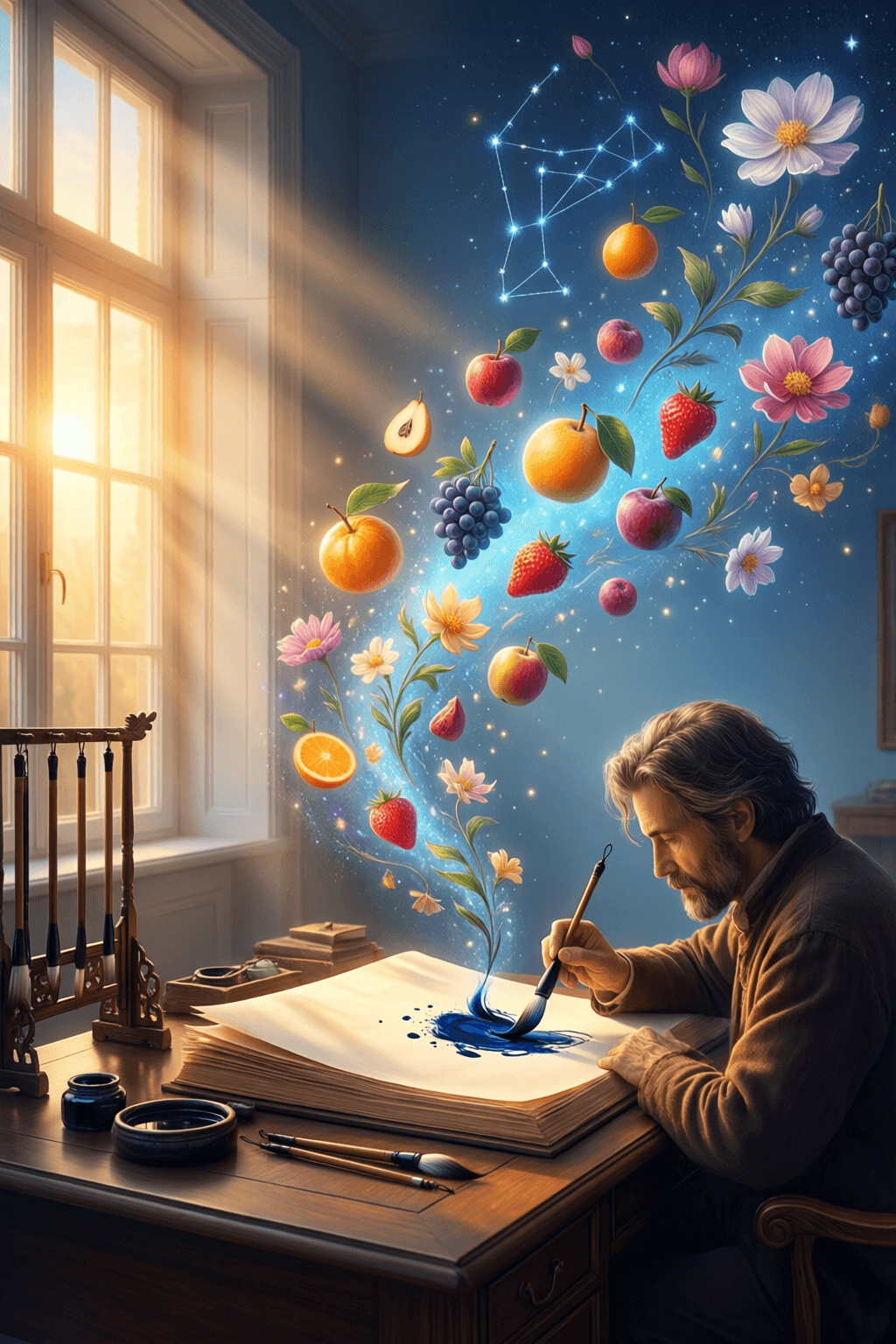
Every great and original writer, in proportion as he is great and original, must himself create the taste by which he is to be relished. — William Wordsworth
—What lingers after this line?
Originality Demands New Standards
Wordsworth’s claim begins with a bold premise: truly original writers cannot be fully judged by old measures because their work changes the very standards of appreciation. In other words, greatness is not simply a matter of pleasing an existing audience; it often requires teaching that audience how to read anew. What first seems strange, awkward, or even improper may later become the mark of innovation. This is precisely why originality so often meets resistance. Readers usually approach literature with inherited expectations about style, subject, and tone. Yet a writer of real force unsettles those habits, making unfamiliar forms feel necessary. As a result, the artist does not merely offer a work for approval; he gradually creates the sensibility by which that work can be understood.
Wordsworth’s Own Poetic Revolution
Seen in context, the statement is also a defense of Wordsworth’s own practice. In the preface to Lyrical Ballads (1800), he argued for poetry in the language of ordinary people, rejecting the elevated diction that many readers still expected. At first, such simplicity could appear plain rather than profound. However, Wordsworth believed that genuine feeling and careful observation would cultivate a new literary taste over time. Thus, his remark is not abstract theory alone but a record of artistic struggle. He understood that readers trained by older conventions might miss the value of a quieter, more inward poetry. Nevertheless, by persisting in his method, he helped reshape English literary sensibility so that intimacy with nature and common life became central poetic virtues.
Why Audiences Resist the New
From there, the quotation opens onto a broader truth about culture: people often prefer what they already know. Familiar styles are easier to admire because they confirm existing habits of judgment. By contrast, original work can feel disorienting, since it asks readers to suspend comparison and develop fresh responses. What is new, then, must often endure misunderstanding before it earns recognition. History offers many examples. John Keats was sharply criticized in the early nineteenth century, and Walt Whitman’s Leaves of Grass (1855) startled readers with its free verse and expansive voice. Yet over time, both writers helped form the very audiences that would celebrate them. In this sense, taste is not fixed; it evolves through repeated encounters with works that initially exceed accepted boundaries.
The Writer as Cultural Teacher
Consequently, Wordsworth presents the writer as more than an entertainer or craftsman. A great author becomes, in effect, a teacher of perception, guiding readers toward new emotional and imaginative capacities. This teaching does not happen through lectures alone but through the experience of form itself—through rhythm, imagery, structure, and voice that slowly educate attention. Jane Austen, for instance, refined the taste for irony and psychological nuance, while James Joyce’s Ulysses (1922) demanded new patience for interior consciousness and linguistic experimentation. In each case, readers had to learn how to relish what earlier conventions had not prepared them to enjoy. The writer therefore helps produce not just books, but also the future readership capable of valuing them.
Taste as Something Made, Not Given
Ultimately, the quotation challenges the idea that taste is natural, timeless, or universally settled. Instead, Wordsworth suggests that taste is historically made, shaped by artists who expand the range of what can be felt and admired. What counts as beautiful, powerful, or meaningful in literature often depends on prior acts of creative courage. For that reason, the line remains relevant far beyond Romantic poetry. Whenever a writer introduces a new voice, structure, or moral vision, readers are invited into a process of growth rather than instant agreement. Wordsworth’s insight therefore honors both artistic originality and patient readership: greatness does not merely satisfy taste as it exists, but enlarges it into something finer.
Recommended Reading
As an Amazon Associate, we earn from qualifying purchases.
One-minute reflection
What does this quote ask you to notice today?
Related Quotes
6 selectedThe most original writers borrowed one from another. — Voltaire
Voltaire
At first glance, Voltaire’s remark seems to undermine originality by tying it to borrowing. Yet that tension is precisely his point: great writing rarely appears from a vacuum.
Read full interpretation →The merit of originality is not novelty; it is sincerity. — Thomas Carlyle
Thomas Carlyle
At first glance, Carlyle overturns a common assumption: that originality means producing something no one has ever seen before. Instead, he argues that the true value of original work lies in sincerity—the honest express...
Read full interpretation →It is necessary to any originality to have the courage to be an amateur. — Wallace Stegner
Wallace Stegner
Wallace Stegner’s remark suggests that originality does not emerge from perfect polish at the beginning, but from a willingness to enter unfamiliar territory without guarantees. To be an amateur, in this sense, is not me...
Read full interpretation →Originality — A target best hit when not aimed at. — Charles Searle
Charles Searle
At first glance, Charles Searle’s remark seems contradictory: how can originality be achieved by not trying to achieve it? Yet that is precisely his point.
Read full interpretation →Even in literature and art, no man who bothers about originality will ever be original: whereas if you simply try to tell the truth, you will, nine times out of ten, become original without ever having noticed it. — C.S. Lewis
C.S. Lewis
At first glance, C.S. Lewis presents a paradox: the harder an artist chases originality, the less likely it is to appear.
Read full interpretation →Originality is clarity. — Zadie Smith
Zadie Smith
At first glance, Zadie Smith’s line overturns a common assumption. People often treat originality as novelty for its own sake, as if being new automatically means being meaningful.
Read full interpretation →More From Author
More from William Wordsworth →Rest and be thankful. — William Wordsworth
Wordsworth’s brief line joins two simple acts—resting and giving thanks—as if one naturally completes the other. At first glance, it sounds almost like gentle advice from a trusted friend, yet its power lies in that calm...
Read full interpretation →Poetry is the spontaneous overflow of powerful feelings: it takes its origin from emotion recollected in tranquility. — William Wordsworth
This quote highlights the idea that poetry is born from deep emotional experiences that are later contemplated and expressed in a moment of calm, underscoring the emotional depth that poetry can convey.
Read full interpretation →Fill your paper with the breathings of your heart. — William Wordsworth
This quote encourages writers to pour their genuine emotions and feelings into their work. Wordsworth urges writers to make their creations heartfelt and authentic.
Read full interpretation →Wisdom is oftentimes nearer when we stoop than when we soar. — William Wordsworth
William Wordsworth’s observation suggests that genuine wisdom emerges not in moments of pride, but through humility and self-awareness. Rather than equating greatness with lofty ambition, he reminds us that stooping—symb...
Read full interpretation →