
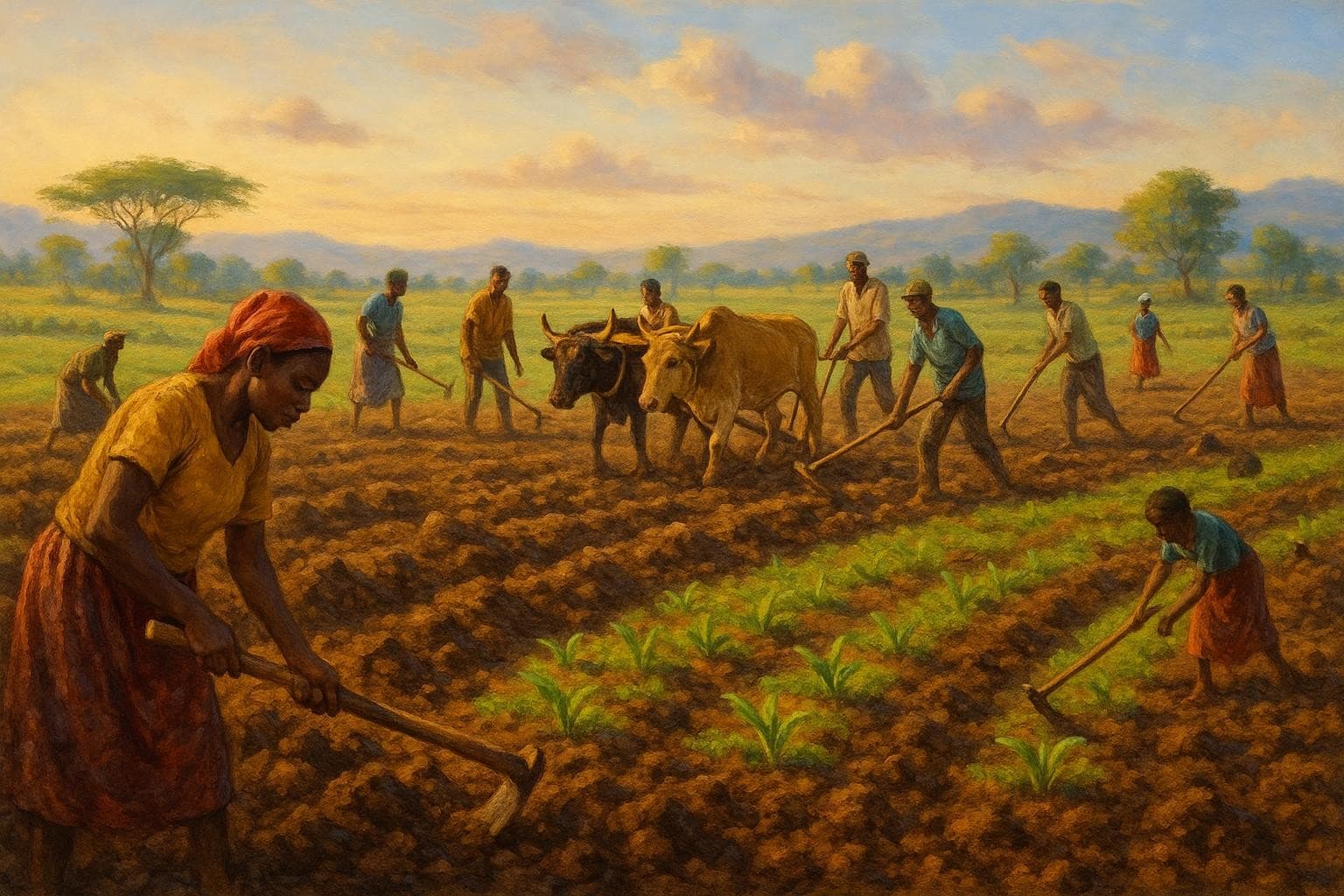
The field cannot be well tilled without turning the earth over in the spring. — African Proverb
—What lingers after this line?
The Foundation of Renewal
At its core, this African proverb emphasizes the necessity of transformation for fruitful progress. Just as the soil must be turned over to prepare for new growth, so must we embrace change in our personal and communal endeavors. This analogy mirrors the agricultural cycle, where farmers meticulously overturn the earth each spring to rejuvenate it, symbolizing the start of new possibilities.
Breaking Routine for Growth
Transitioning from theory to practice, the act of turning the earth disrupts its settled state, breaking up compacted soil and making room for air and nutrients. Similarly, in life and work, breaking routines can foster creativity and innovation. By refusing to remain stagnant, individuals and societies can unearth hidden potential, as reflected in countless stories of inventors and reformers who challenged the status quo.
Preparation for Abundance
Carrying this idea forward, tilling the field in the spring is an act of deliberate preparation. Farmers know that the effort invested before planting yields dividends come harvest. In the same way, thoughtful groundwork—whether through education, planning, or introspection—sets the stage for future abundance. Historical figures like George Washington Carver championed this approach, urging farmers to enrich their land and minds alike.
Embracing Change Despite Discomfort
Yet, the proverb gently reminds us that turning the earth can be laborious and unsettling. Change often brings discomfort, but this disruption is a precursor to improvement. Much as seeds require disturbed soil to take root, our growth occasionally depends on unsettling our assumptions and routines. Stories from African oral traditions often highlight the wisdom gained by venturing beyond comfort zones.
From Soil to Society: Broader Implications
Finally, the lesson extends beyond farming into broader societal contexts. Communities must periodically reassess systems and traditions to ensure continued vitality. Historical transformations—from post-apartheid rebuilding in South Africa to grassroots movements for education—demonstrate how turning over old ground can lay the foundation for renewal and collective flourishing.
Recommended Reading
As an Amazon Associate, we earn from qualifying purchases.
One-minute reflection
Why might this line matter today, not tomorrow?
Related Quotes
6 selectedCarve out a tomorrow that cleanses today of its sorrows. — African Proverb
African Proverb
This proverb encourages maintaining a hopeful perspective for the future, suggesting that a brighter and more positive tomorrow can heal the pains and sorrows of today.
Read full interpretation →No matter how long the night, the day is sure to come. — African Proverb
African Proverb
This proverb conveys the message that difficult or dark times, symbolized by the night, will eventually pass, and brighter, better days (the day) are inevitable. It encourages holding onto hope, no matter how long the st...
Read full interpretation →Without the rain, there would be no flowers. — African Proverb
African Proverb
This proverb teaches that difficulties (rain) are necessary for growth and beauty (flowers) in life.
Read full interpretation →To unleash a new dawn, you must first endure the night. — African Proverb
African Proverb
At its core, this African proverb uses the universal symbols of night and dawn to convey resilience and hope. The night represents hardship, uncertainty, or suffering, while dawn stands for renewal and opportunity.
Read full interpretation →Rest is not a waste of time; it is the soil from which new life grows. — Thich Nhat Hanh
Thich Nhat Hanh
At first glance, Thich Nhat Hanh’s words challenge a deeply modern assumption that only visible productivity has value. By calling rest “the soil,” he shifts our attention from immediate output to the hidden conditions t...
Read full interpretation →Rest when you're weary. Refresh and renew yourself, your body, your mind, your spirit. Then get back to work. — Ralph Marston
Ralph Marston
Ralph Marston’s quote begins with a simple but often ignored truth: weariness is not a moral failure but a signal. When he says to rest when you’re weary, he reframes pause as part of effort rather than its opposite.
Read full interpretation →More From Author
More from African Proverb →When the roots are deep, there is no reason to fear the wind. — African Proverb
The proverb frames life as weather and character as a tree: when roots run deep, wind becomes something to endure rather than something to dread. In that image, fear is not denied so much as put in its place—storms still...
Read full interpretation →The closer one comes to truth, the simpler everything becomes. — African Proverb
The proverb suggests that truth has a clarifying power: as you approach what is real, the extra clutter—misdirection, anxiety, and needless complication—falls away. In other words, complexity often signals that we are st...
Read full interpretation →The sun does not hurry to rise, yet it never misses its mark. — African Proverb
The proverb begins with an image so familiar it’s easy to overlook: sunrise. The sun appears without strain, without haste, and without visible anxiety about being “on time.” And yet, day after day, it arrives.
Read full interpretation →Do not look where you fell, but where you slipped. — African Proverb
The proverb urges a subtle but powerful change in attention: don’t fixate on the place where you landed in pain or embarrassment; instead, examine the moment your footing first failed. In other words, the visible setback...
Read full interpretation →