
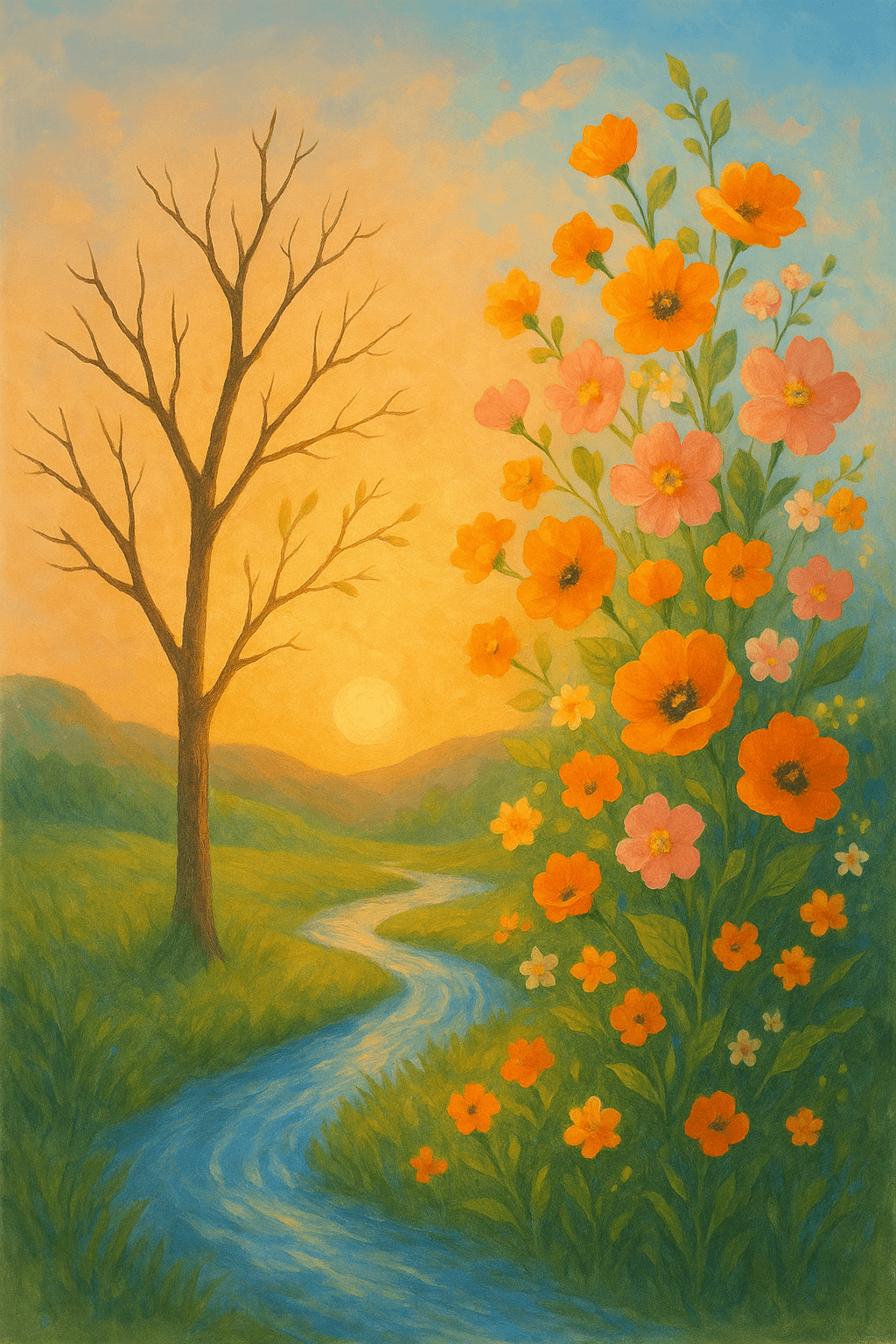
The power to create lies dormant within your daily choices. — bell hooks
—What lingers after this line?
The Subtle Influence of Daily Choices
bell hooks’ insight draws attention to the often-overlooked significance of routine decisions. Rather than viewing creativity as an occasional spark or the domain of artists alone, she underscores how every small action holds the potential for generative change. Deciding what to say, how to spend one’s time, or whom to help—all become quiet seeds of creativity waiting to be awakened in the ordinary flow of life.
From Dormancy to Creative Action
Carrying forward this idea, the concept of dormant power mirrors how seeds lie hidden under earth, awaiting the right moment to sprout. In the same way, if our choices are mindful and intentional, they activate creative faculties within us. hooks’ language evokes an invitation: rather than letting possibility remain inert, daily acts can be chosen consciously to stir ‘creation’ into being.
Historical Examples of Transformative Routines
History offers compelling examples of how incremental decisions lead to creative revolutions. For instance, Marie Curie’s methodical experimentation, carried out through persistent daily work, led to groundbreaking scientific discoveries. Similarly, bell hooks herself demonstrated that routines such as reading, writing, and listening were not mere habits—they laid the foundation for her eventual influence in feminist and cultural thought.
The Psychology Behind Small Choices
Transitioning to the psychological realm, research by James Clear in 'Atomic Habits' (2018) supports hooks’ message: consistent small choices accumulate transformative results. By aligning daily habits with long-term creative goals, individuals tap into latent abilities. This suggests that creativity is less about sporadic inspiration and more about the compounding effect of mindful patterns.
Empowering the Everyday Self
Recognizing the dormant power in everyday moments is ultimately empowering. It reframes the ordinary as fertile ground for personal and communal growth. As hooks suggests, even the humblest decision can ignite a ripple of change, reminding us that creativity is not exclusive—it is accessible, practical, and rooted in the choices we make each day.
One-minute reflection
What feeling does this quote bring up for you?
Related Quotes
6 selectedIncredible change happens in your life when you decide to take control of what you do have power over instead of craving control over what you don't. — Steve Maraboli
Steve Maraboli
This quote encourages individuals to focus on what they can control in their lives rather than wasting energy on things beyond their influence. By doing so, they can bring about meaningful and positive changes.
Read full interpretation →The power is within you.
Unknown
This phrase emphasizes that true strength and capability come from within oneself rather than external sources. It suggests that individuals hold the potential to overcome challenges and achieve their goals.
Read full interpretation →You cannot command things, but you can command yourself. — Michael D. Pollock
Michael D. Pollock
At first glance, Michael D. Pollock’s line draws a sharp boundary between the outer world and the inner one.
Read full interpretation →Character is the sum of a thousand small daily choices. — Anne Graham Lotz
Anne Graham Lotz
At first glance, Anne Graham Lotz’s line sounds simple, yet it carries a demanding truth: character is rarely formed in dramatic public moments. Instead, it emerges from repeated private decisions—whether to tell the tru...
Read full interpretation →A boundary is not a wall; it is a door with a lock that you control. — Annie Wright
Annie Wright
At first glance, Annie Wright’s quote corrects a common misunderstanding: people often treat boundaries as acts of distance or punishment, when in fact they are tools of intentional relationship. A wall shuts everyone ou...
Read full interpretation →When you feel like you are at a dead end, remember that you are at a place where you can choose a different path. — Haemin Sunim
Haemin Sunim
At first glance, a dead end feels like failure, as though movement itself has been denied. Yet Haemin Sunim’s insight gently reverses that impression: what seems like a wall may actually be a point of decision.
Read full interpretation →More From Author
More from bell hooks →But many of us seek community solely to escape the fear of being alone. Knowing how to be solitary is central to the art of loving. — bell hooks
Bell hooks begins with a quiet but difficult observation: not every search for community is rooted in love. Sometimes, we reach for others because solitude feels threatening, as though being alone exposes a lack within u...
Read full interpretation →Your presence is a form of resistance against a culture that profits from your isolation. Show up for those you love, even when it is inconvenient. — bell hooks
At first glance, bell hooks reframes something ordinary—being present for others—as a political and moral act. Her words suggest that care is not merely private sentiment; rather, it pushes back against a social order th...
Read full interpretation →If you don't build your own sanctuary, you will spend your life living in the wreckage of someone else's expectations. — Bell Hooks
Bell hooks frames sanctuary as more than a physical refuge; it is an inner and outer space where a person can live by values they have consciously chosen. At first glance, the quote sounds like a warning about independen...
Read full interpretation →The art of living is a constant process of refining one's own sanctuary against the tide of external expectations. — bell hooks
At its core, bell hooks presents living not as a finished achievement but as a continuous act of shaping and reshaping the self. The phrase “constant process” suggests that identity, peace, and integrity are never perman...
Read full interpretation →