
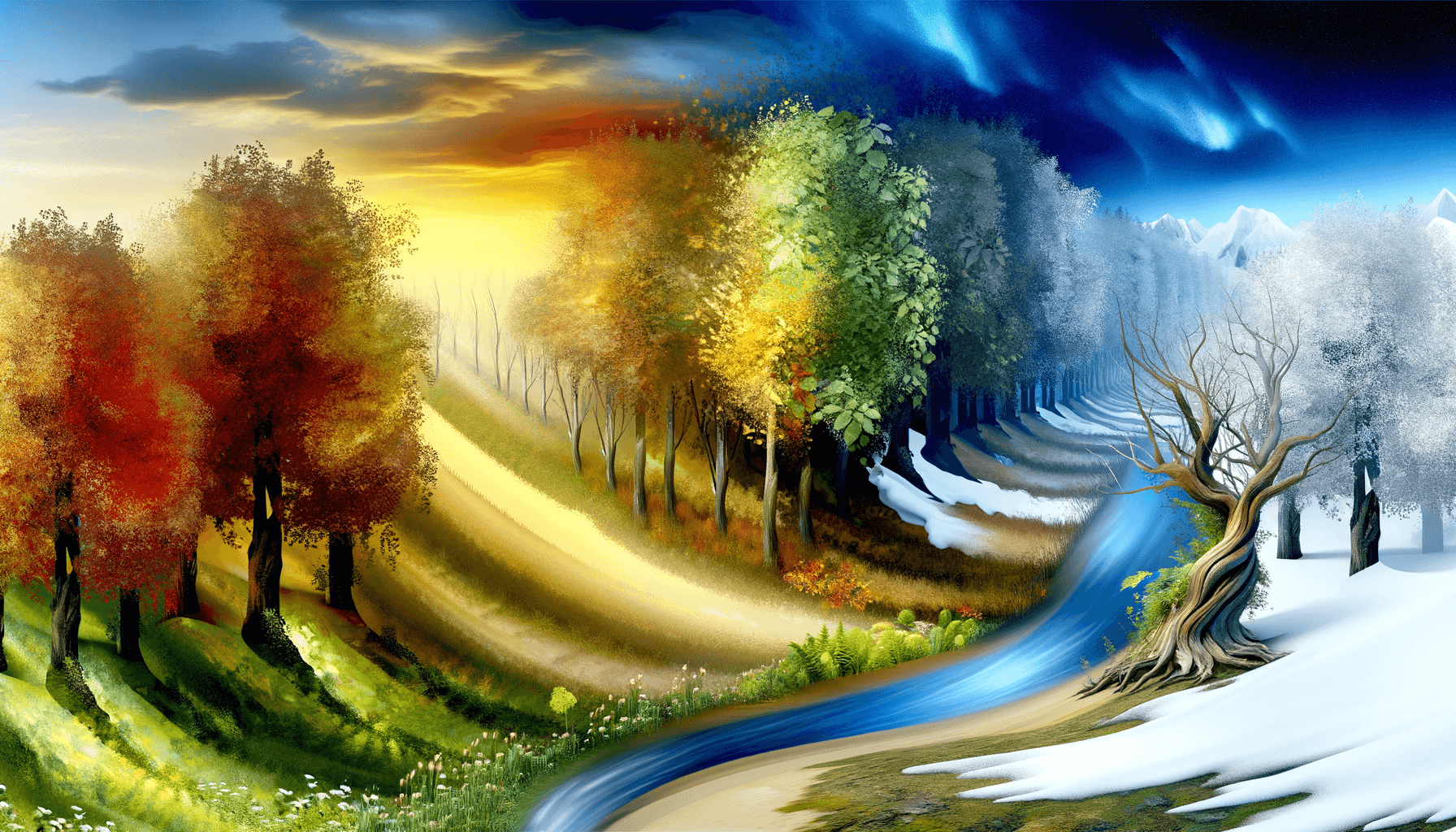
To live is to be in constant transition. — A. D. Hope
—What lingers after this line?
Nature of Life
The quote emphasizes that change is an inherent part of life. Living means continually evolving, adapting, and moving from one phase or state to another.
Personal Growth
It suggests that growth and development stem from constant transitions—emotionally, mentally, and physically. Change drives us to learn and mature.
Impermanence
This reflection aligns with the concept of impermanence: nothing stays the same forever. Life's flow involves continuous shifts in relationships, experiences, and circumstances.
Resilience and Adaptation
Recognizing that life is always in transition encourages resilience. It underlines the importance of learning to adapt to new situations as a key to well-being.
A. D. Hope’s Perspective
A.D. Hope, an Australian poet, was known for his philosophical and reflective style. This quote reflects his interest in exploring the human condition and the inevitability of change in our existence.
One-minute reflection
Why might this line matter today, not tomorrow?
Related Quotes
6 selectedImpermanence is the only permanent thing in life. Embrace change with open arms. — Thich Nhat Hanh
Thich Nhat Hanh
Thich Nhat Hanh’s timeless message begins with an acknowledgment of life’s ever-shifting landscape. The idea that ‘impermanence is the only permanent thing’ underscores the Buddhist principle that everything is in a stat...
Read full interpretation →It is when we are in transition that we are most completely alive. — William Bridges
William Bridges
William Bridges’ insight begins with a striking reversal: the moments we usually experience as unstable or uncertain may actually be the moments when life feels most vivid. Transition interrupts routine, and in doing so...
Read full interpretation →Everything in our life keeps changing—our inner moods, our bodies, our work. We can't hold on to anything. — Tara Brach
Tara Brach
At its heart, Tara Brach’s reflection points to impermanence as the basic condition of human life. Our feelings rise and fall, our bodies age and heal, and even the work that structures our days shifts in ways we cannot...
Read full interpretation →Few words accord with nature; therefore a whirlwind does not last all morning, and a sudden rain does not last all day. -- Laozi
Laozi
Laozi begins with a simple observation: even nature’s fiercest displays are temporary. A whirlwind burns itself out, and a sudden downpour cannot sustain its intensity for long.
Read full interpretation →We don't need to learn how to let things go; we just need to learn to recognize when they are already gone. — Suzuki Roshi
Suzuki Roshi
At first glance, Suzuki Roshi’s remark gently overturns a familiar self-help idea. We often imagine letting go as a difficult skill, something we must force ourselves to do through discipline or emotional effort.
Read full interpretation →You are the sky. Everything else—it's just the weather. — Pema Chödrön
Pema Chödrön
Pema Chödrön’s line hinges on a simple but expansive metaphor: awareness is the sky, while thoughts, emotions, and circumstances are weather. The sky is vast enough to hold anything without being permanently altered by i...
Read full interpretation →More From Author
More from A. D. Hope →