#Impermanence
Quotes tagged #Impermanence
Quotes: 74

Be the Sky, Not the Weather
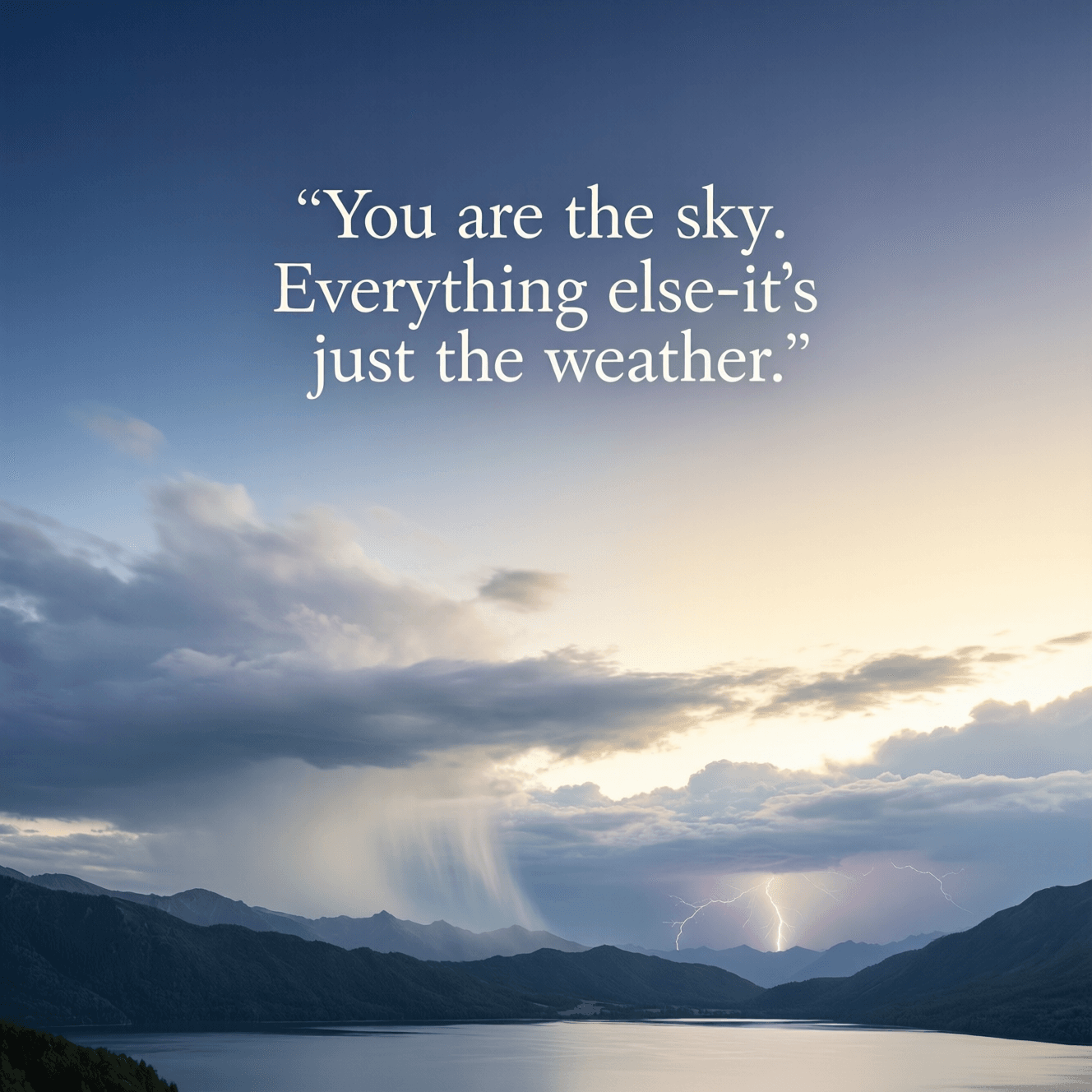
Next comes the quiet logic of impermanence: weather changes. Emotions crest, break, and dissolve; even long seasons eventually shift. By remembering that inner states are transient, the quote encourages patience—waiting out a squall rather than building a permanent identity around it. This doesn’t mean passivity. Rather, it means recognizing that many mental “forecasts” are not facts but momentary conditions. When you trust that experience moves, you can respond more wisely—like pausing before sending an angry message because you know the storm will likely look different in twenty minutes. [...]
Created on: 2/4/2026

Be the Sky, Not the Weather
Once the metaphor lands, “weather” becomes an everyday inventory: anxiety before a meeting, irritation in traffic, a burst of confidence, a disappointing message. These inner and outer conditions roll through like storms and sunbreaks, and their impermanence is part of their nature. In Buddhist teaching, this aligns with the observation of constant change (anicca). Rather than making a permanent home in any one mental state, the quote encourages recognizing each state as a temporary pattern—real, felt, and yet not fixed. [...]
Created on: 2/2/2026

Be the Sky Behind Passing Weather
From there, mindfulness becomes the act of watching weather patterns without chasing them or fighting them. When a harsh thought arrives, you can note it the way you might note thunder—real, loud, but not permanent. This aligns with a common Buddhist emphasis on the impermanent nature of mental events; the mind changes the way the sky changes, moment by moment. A small anecdote captures the point: someone stuck in traffic feels irritation rise, then silently labels it “irritation,” relaxes the shoulders, and breathes. The jam remains, but the inner sky stops narrowing around it. [...]
Created on: 2/2/2026

Be the Sky, Not the Weather
Moving from philosophy to practice, the quote functions like a compact meditation instruction: rest as the knowing, not the known. In mindfulness practice, you repeatedly return to the stance of observing—breath by breath—letting sensations, thoughts, and emotions arise and dissolve without chasing or suppressing them. A simple application is to sit for two minutes and label experience softly: “thinking,” “tightness,” “sadness,” “planning.” The labels are not meant to analyze; they’re reminders that weather is happening. The sky-like quality is the capacity to know it all without being swept away. [...]
Created on: 2/2/2026

Finding Inner Space Beyond Passing Moods
Finally, the metaphor widens beyond self-management into compassion. If your inner turmoil is weather, so is everyone else’s. The colleague’s coldness, the partner’s irritability, even your own reactivity can be seen as temporary conditions rather than fixed character flaws. This doesn’t excuse harm, but it reduces the impulse to essentialize and condemn. Chödrön’s broader teaching—echoed in works like her book *When Things Fall Apart* (1996)—often emphasizes staying present with discomfort without hardening. Seeing yourself as sky makes room for tenderness: storms can be intense, yet the sky remains, capable of holding it all. [...]
Created on: 2/1/2026

Be the Sky, Not the Weather
Finally, the quote invites a daily discipline: return to the sky again and again. In conversation, you might notice irritation rising and silently label it “weather,” creating enough space to respond rather than snap. During self-criticism, you might recognize the familiar cloud of harsh thoughts and choose not to treat it as objective truth. With repetition, this becomes less like a technique and more like a baseline orientation. Life keeps producing weather—deadlines, losses, surprises, delights—but awareness can remain hospitable. The promise isn’t a storm-free existence; it’s the growing confidence that you can meet any forecast without losing your inner vastness. [...]
Created on: 2/1/2026

Be the Sky, Not the Weather
From the metaphor, the next step is discrimination: noticing the difference between awareness and the contents of awareness. In Buddhist teachings, this resembles the practice of observing thoughts and feelings as events rather than as a self, echoing the broader tradition of mindfulness found in texts like the Satipaṭṭhāna Sutta (often dated to early Buddhism) where one learns to contemplate mental states as mental states. As this distinction becomes clearer, a new kind of freedom appears. Anger can be present without becoming “I am angry,” and sadness can be felt without becoming “I am broken.” The weather still happens, but it no longer automatically claims ownership of your identity. [...]
Created on: 1/31/2026