
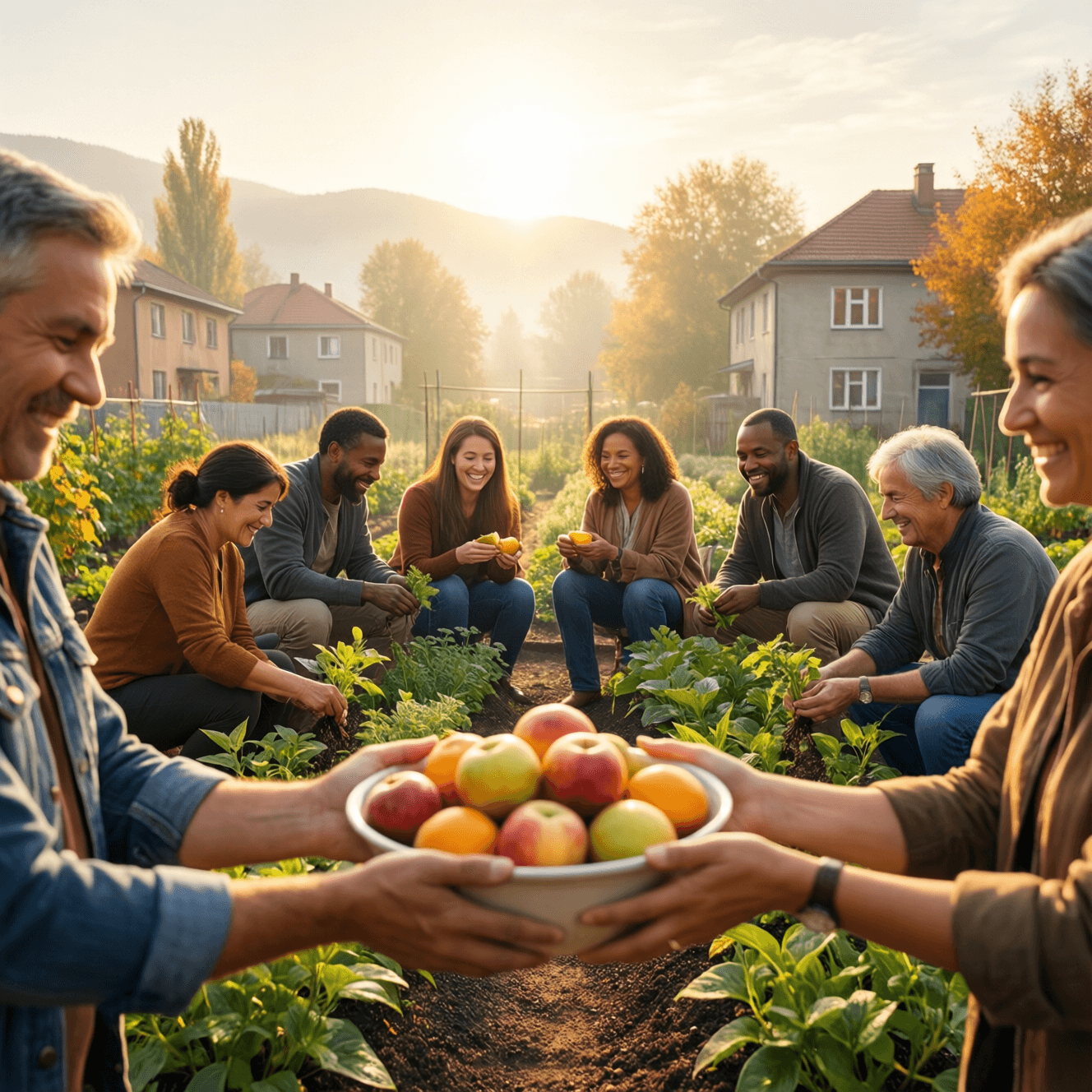
Rarely, if ever, are any of us healed in isolation. Wellness is the fruit of community. — bell hooks
—What lingers after this line?
From Private Pain to Shared Repair
bell hooks challenges the popular fantasy of the self-sufficient survivor by insisting that healing is seldom a solitary achievement. While personal insight and self-care can begin the process, she suggests that restoration usually requires contact—someone to witness our story, to mirror back our dignity, and to help carry what is too heavy to hold alone. From there, her line nudges us to see wellness not as an individual trophy but as a relational practice. In other words, the path out of suffering often runs through connection: conversation, mutual aid, and the steady presence of others who refuse to let us disappear into our wounds.
Why Isolation Undermines Recovery
Extending hooks’ claim, isolation doesn’t merely feel lonely—it can distort our perceptions. When we are alone with grief, shame, or fear, thoughts loop without correction, and we lose the stabilizing feedback that relationships provide. Even basic emotional regulation is easier when another person helps us name what we’re experiencing and reminds us that our reactions make sense. That is why many recovery pathways are structured around groups rather than heroic individual effort. Programs like Alcoholics Anonymous, founded in 1935, operationalize this insight through sponsorship and meetings, treating sustained contact as a central ingredient rather than an optional add-on.
Community as the Soil for Wellness
When hooks says, “Wellness is the fruit of community,” she uses an agricultural metaphor that matters: fruit implies cultivation, seasonality, and shared conditions. Wellness, in this framing, grows when the environment supports it—when there is safety, nourishment, and reliable care. A person may do everything “right,” but if their surroundings are hostile or neglectful, wellbeing becomes far harder to sustain. This shifts attention from self-improvement toward shared responsibility. It also reframes community as infrastructure: the everyday systems of checking in, making meals, offering childcare, creating accountability, and building spaces where vulnerability doesn’t get punished.
Witness, Belonging, and the Power of Being Seen
Moving from metaphor to lived experience, one of community’s most healing functions is witnessing. Trauma researchers and clinicians often note that recovery involves integrating what happened into a coherent narrative, and that process is easier when another person listens without minimizing or sensationalizing. In that sense, being believed and understood becomes a therapeutic force. Belonging also counters the inner story that we are uniquely broken. Whether in a support group, a faith community, or a circle of trusted friends, the simple recognition—“me too”—can loosen shame’s grip and make room for change.
Care as a Practice, Not a Sentiment
hooks’ emphasis on community implies that care must be enacted, not merely felt. It is one thing to endorse compassion in principle; it is another to show up consistently, set boundaries, and share resources. Communities heal when they develop habits of care—rides to appointments, meals after a loss, accompaniment during hard conversations—small actions that accumulate into stability. A quick anecdote captures this: after a medical crisis, a neighbor who organizes a rotating schedule for groceries and check-ins often does more for real recovery than a hundred motivational slogans. The body heals better when life is held together around it.
Mutuality: Giving Help Also Restores the Helper
Finally, hooks’ view hints that wellness is reciprocal. In healthy communities, people are not locked into permanent roles of “the strong” and “the needy”; instead, support flows back and forth over time. Offering care can rebuild a person’s sense of agency and purpose, especially after periods of helplessness. This mutuality protects against the loneliness of both suffering and success. It suggests that true wellness includes the capacity to participate—to receive without shame and to give without domination—so that healing becomes not a private escape but a shared way of living.
One-minute reflection
What feeling does this quote bring up for you?
Related Quotes
6 selectedThe strength of a family, like the strength of an army, lies in its loyalty to each other. — Mario Puzo
Mario Puzo
Mario Puzo’s line turns immediately to a simple but demanding truth: strength is not merely a matter of numbers, wealth, or status, but of dependable bonds. A family, like any tightly knit group, becomes resilient when i...
Read full interpretation →Connection is the antidote to the feeling of being adrift. We are not meant to navigate this life in isolation; we are meant to be the anchors for one another. — Brene Brown
Brené Brown
At its heart, Brené Brown’s quote turns loneliness into a vivid physical image: drifting without direction. To feel adrift is not merely to be alone, but to lose orientation, steadiness, and a sense of belonging.
Read full interpretation →The cure for burnout is not 'self-care'; it is all of us caring for one another. — Emily Nagoski
Emily Nagoski
Emily Nagoski’s line pivots burnout away from a private failing and toward a shared condition created by overload, low control, and chronic stress. By rejecting “self-care” as the primary cure, she challenges the common...
Read full interpretation →I'm not interested in competing with anyone. I hope we all make it. — Erica Cook
Erica Cook
Erica Cook’s line begins with a simple declaration—“I’m not interested in competing with anyone”—that reframes success as something other than a race. Instead of measuring worth by outperforming others, she suggests step...
Read full interpretation →For the strength of the pack is the wolf, and the strength of the wolf is the pack. — Rudyard Kipling
Rudyard Kipling
Kipling’s line frames strength not as a solitary possession but as something created through interdependence. The pack becomes formidable because each wolf contributes attention, endurance, and skill; likewise, each wolf...
Read full interpretation →When change feels heavy, lift someone else; strength grows in shared burden. — Harriet Tubman
Harriet Tubman
Harriet Tubman’s line begins with an honest admission: change can feel heavy, not exhilarating. Yet instead of waiting for the feeling to pass, she offers a practical pivot—“lift someone else.” In other words, when trans...
Read full interpretation →More From Author
More from bell hooks →But many of us seek community solely to escape the fear of being alone. Knowing how to be solitary is central to the art of loving. — bell hooks
Bell hooks begins with a quiet but difficult observation: not every search for community is rooted in love. Sometimes, we reach for others because solitude feels threatening, as though being alone exposes a lack within u...
Read full interpretation →Your presence is a form of resistance against a culture that profits from your isolation. Show up for those you love, even when it is inconvenient. — bell hooks
At first glance, bell hooks reframes something ordinary—being present for others—as a political and moral act. Her words suggest that care is not merely private sentiment; rather, it pushes back against a social order th...
Read full interpretation →If you don't build your own sanctuary, you will spend your life living in the wreckage of someone else's expectations. — Bell Hooks
Bell hooks frames sanctuary as more than a physical refuge; it is an inner and outer space where a person can live by values they have consciously chosen. At first glance, the quote sounds like a warning about independen...
Read full interpretation →The art of living is a constant process of refining one's own sanctuary against the tide of external expectations. — bell hooks
At its core, bell hooks presents living not as a finished achievement but as a continuous act of shaping and reshaping the self. The phrase “constant process” suggests that identity, peace, and integrity are never perman...
Read full interpretation →