
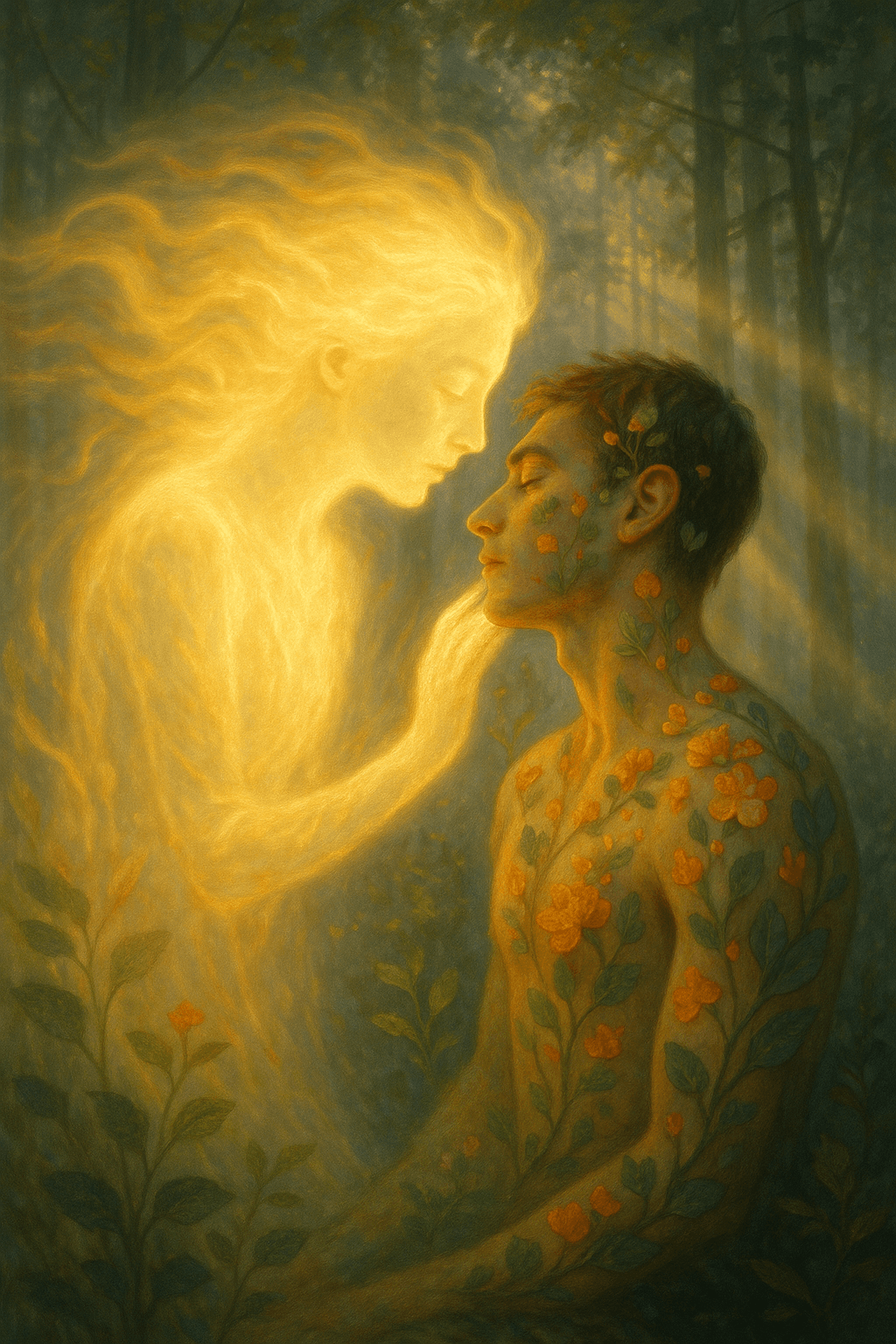
When the soul speaks, the body listens. — Vera Nazarian
—What lingers after this line?
Interconnectedness of Mind and Body
Vera Nazarian’s observation highlights the profound synergy between our inner life and physical existence. The soul, often understood as the seat of emotion, intuition, and spirit, continuously communicates with the body, influencing its states and functions. This connection echoes the ancient holistic view found in Aristotle’s *De Anima* (c. 350 BC), which proposes that the soul is the form and essence animating matter—in this case, our bodies.
Manifestations of Emotional States
Transitioning from theory to experience, we frequently observe how emotions manifest physically: anxiety quickens the heartbeat, sorrow brings tears, and joy relaxes muscles. These visceral reactions illustrate how the soul’s intangible language finds expression in bodily responses. The classic case of ‘butterflies in the stomach’ before public speaking exemplifies how anticipation deep within can elicit a physical change.
Historical Perspectives on Psychosomatic Responses
Building on this, historical records across cultures have recognized psychosomatic phenomena. Traditional Chinese medicine, for example, associates specific organs with emotions—anger affecting the liver or grief burdening the lungs—demonstrating the age-old belief in mind-body unity. More recently, Sigmund Freud’s studies on hysteria in the late 19th century explored how psychological distress translates into physical symptoms, formalizing the idea that the body listens intently to the soul.
Modern Science and Psychoneuroimmunology
Scientific advances have fortified this perspective by examining the interplay of mental states and bodily health. The field of psychoneuroimmunology shows that stress, hope, or trauma can alter immune function, affirming that the soul’s signals do not simply echo within—they shape our very physiology. For instance, research demonstrates that chronic emotional strain can suppress immunity, while positive outlooks may aid recovery.
Cultivating Mind-Body Harmony
Recognizing this intimate dialogue prompts us to nurture both soul and body. Practices like meditation, yoga, and expressive arts foster a harmonious relationship, enabling us to ‘speak’ kindly to our bodies through soulful intent. In this way, Nazarian’s insight serves as a gentle reminder: to care for our bodies, we must first listen to the whispers of our souls, forging a life where inner and outer well-being thrive together.
One-minute reflection
What does this quote ask you to notice today?
Related Quotes
6 selectedIn the quiet night, the soul finds its most authentic voice.
Unknown
The quote suggests that in moments of solitude, particularly during the tranquility of night, we are able to connect with our true selves. This quiet time allows for introspection and self-reflection, helping us to under...
Read full interpretation →Belonging is neither abstract nor soft. It is visceral. It is embodied. — john a. powell
john a. powell
At its core, john a. powell’s statement rejects the idea that belonging is merely a moral slogan or intellectual ideal.
Read full interpretation →Our deepest wishes are whispers of our authentic self. We must learn to respect them. We must learn to listen. — Sarah Ban Breathnach
Sarah Ban Breathnach
Sarah Ban Breathnach’s quote begins with a gentle but radical claim: our deepest wishes are not random fantasies but signals from the truest part of who we are. Rather than treating longing as weakness or distraction, sh...
Read full interpretation →If you do not express your own original ideas, if you do not listen to your own being, you will have betrayed yourself. — Rollo May
Rollo May
At first glance, Rollo May’s warning sounds intensely personal, yet it carries a moral force: failing to voice one’s original ideas is not merely hesitation, but a form of self-betrayal. In this sense, May frames authent...
Read full interpretation →Everyone needs a place to retreat; a spot where the world grows quiet enough for the soul to speak. — Angie Wyland Crosby
Angie Wyland Crosby
At its core, Angie Wyland Crosby’s reflection suggests that retreat is not escapism but renewal. A private place—whether physical or emotional—offers relief from noise, pressure, and constant demands.
Read full interpretation →You only have to let the soft animal of your body love what it loves. — Mary Oliver
Mary Oliver
Mary Oliver’s line begins by removing a burden: “You only have to…” suggests that life’s most essential task is simpler than we pretend. Rather than striving to justify every desire or earn approval for every feeling, sh...
Read full interpretation →More From Author
More from Vera Nazarian →The whole world opens to you when you learn to read. — Vera Nazarian
Vera Nazarian’s insight spotlights reading as the ultimate gateway to accumulating knowledge. With literacy, individuals access vast troves of information—ranging from science and history to art and philosophy.
Read full interpretation →The whole world opens to you when you learn to read. — Vera Nazarian
Vera Nazarian’s declaration positions reading as the master key to myriad realms of experience. When one learns to read, doors to knowledge, adventure, and empathy swing wide open.
Read full interpretation →