
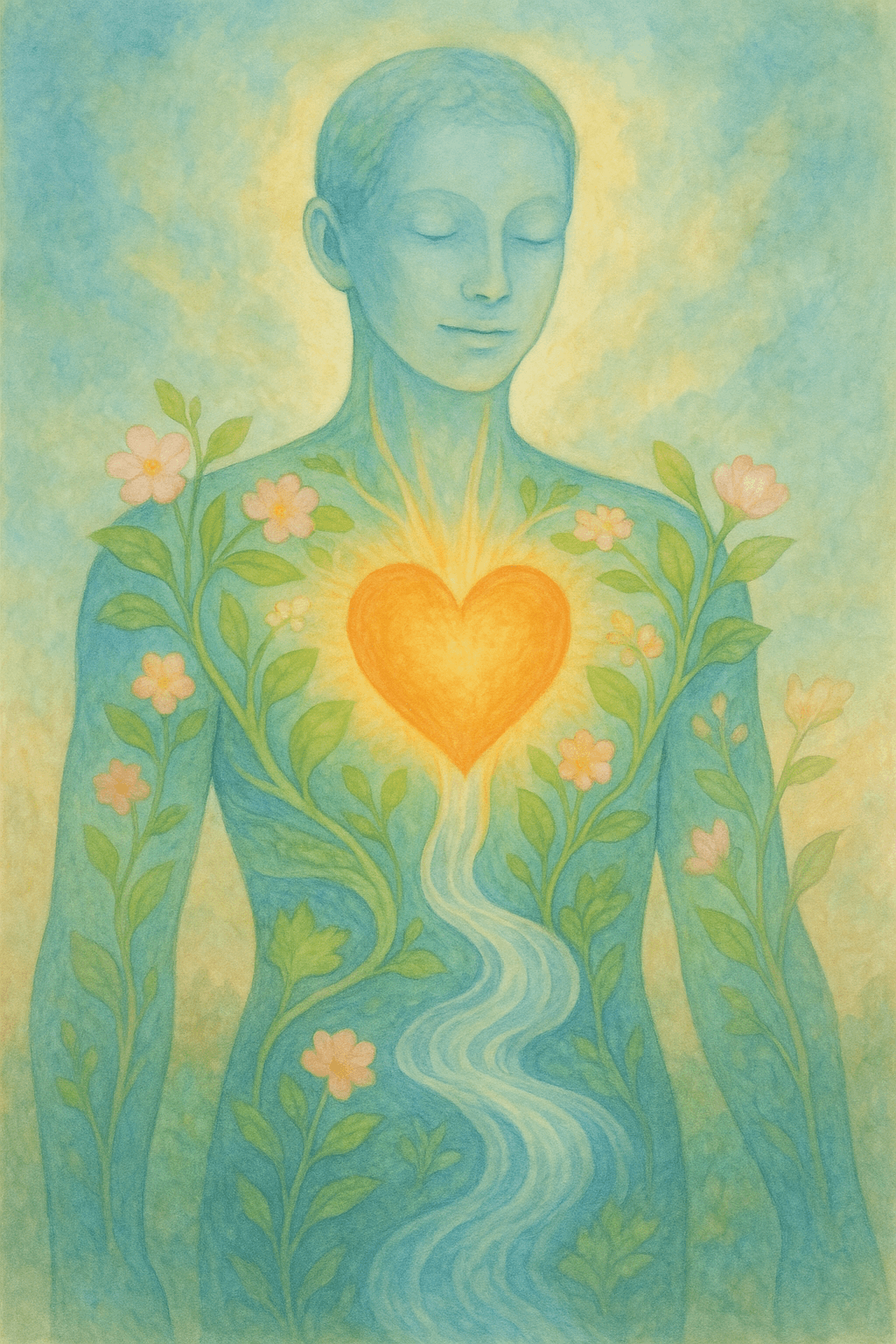
A heart at peace gives life to the body. — Proverbs 14:30
—What lingers after this line?
Ancient Wisdom on Inner Peace
Proverbs 14:30 offers a succinct observation from antiquity: 'A heart at peace gives life to the body.' This proverb, embedded within the Hebrew Bible’s wisdom literature, encapsulates the enduring belief that inner tranquility has tangible benefits for physical health. From the earliest days, sages recognized that emotional harmony is not merely an abstract ideal, but a force that directly sustains and energizes one’s body.
The Mind-Body Connection Across Cultures
Building on this ancient insight, the mind-body connection has been celebrated worldwide. In traditional Chinese medicine, for example, harmonious qi (energy) is essential for vitality, reflecting a principle similar to the peace described in Proverbs. Similarly, the yoga sutras of India highlight the link between peaceful thoughts and overall well-being, reinforcing the idea that what dwells in the heart profoundly shapes bodily health.
Modern Science Validates the Proverb
As knowledge progressed, scientific inquiry has substantiated what the proverb intuitively knew. Today, researchers affirm that chronic stress and emotional turmoil can contribute to illnesses like hypertension and heart disease. Conversely, maintaining emotional balance—what the ancient writer called ‘a heart at peace’—supports immune function and longevity. Studies published in journals such as Circulation (2017) demonstrate that practices fostering calm, like meditation and gratitude, yield measurable physiological benefits.
Emotional Stability as a Source of Strength
Transitioning from clinical findings to lived experience, emotional stability equips individuals to withstand life’s storms. When faced with adversity, those who cultivate inner calm often rebound more quickly and maintain clearer judgment. This pattern echoes through narrative traditions, where heroes—such as Job in the Hebrew Bible—find renewal not through external fortune, but through steadfast inner peace that rejuvenates their bodies and spirits alike.
Integrating Peacefulness into Daily Living
Finally, cultivating 'a heart at peace' becomes a practical imperative. Mindfulness exercises, regular reflection, and nurturing relationships all contribute to this state. Whether through ancient wisdom or modern self-care routines, the path to well-being lies in reconciling one’s innermost self. By intentionally seeking tranquility of heart, we not only enrich our minds but give enduring life to our bodies, fulfilling the timeless promise of Proverbs 14:30.
Recommended Reading
As an Amazon Associate, we earn from qualifying purchases.
One-minute reflection
What feeling does this quote bring up for you?
Related Quotes
6 selectedWhen the heart is at ease, the body is healthy. — Chinese Proverb
Chinese Proverb
This proverb highlights the close relationship between emotional well-being and physical health. When the heart (representing emotions and mental state) is calm and content, the body thrives and stays healthy.
Read full interpretation →A calm heart is a creative heart. When we release the frantic need to prove our worth, we finally make space for the life we were meant to live. — Elizabeth Gilbert
Elizabeth Gilbert
At its core, Elizabeth Gilbert’s quote proposes that creativity does not flourish in inner chaos but in emotional steadiness. A calm heart is not an empty or passive one; rather, it is a mind cleared of constant self-def...
Read full interpretation →The real flex is no longer looking busy. It is looking peaceful. It is having ambition without self-destruction. — Anonymous (skipped) -> The quietest moments are often where the greatest strength is found. — Mary Oliver
Mary Oliver
At first glance, these paired lines challenge a modern performance ritual: the need to appear constantly overwhelmed in order to seem important. Instead of praising busyness, they propose a subtler ideal—peacefulness as...
Read full interpretation →Whatever we are waiting for—peace of mind, contentment, grace—it will surely come to us, but only when we are ready to receive it with an open and grateful heart. — Sarah Ban Breathnach
Sarah Ban Breathnach
Sarah Ban Breathnach’s quote offers comfort, but it also places gentle responsibility on the reader. Peace of mind, contentment, and grace are not described as prizes seized by force; instead, they arrive when a person b...
Read full interpretation →When the pace of change becomes relentless, the most radical act of resilience is to protect your own peace and internal equilibrium. — Dr. Thema Bryant
Dr. Thema Bryant
At first glance, Dr. Thema Bryant’s statement reframes resilience in a striking way: rather than merely enduring external pressure, it asks us to preserve our inner steadiness.
Read full interpretation →If you really want to escape the things that harass you, what you're needing is not to be in a different place but to be a different person. — Seneca
Seneca
Seneca’s remark shifts the idea of escape away from geography and toward character. At first glance, we often imagine that a new city, job, or routine will free us from anxiety, resentment, or restlessness.
Read full interpretation →More From Author
More from Proverbs 14:30 →