
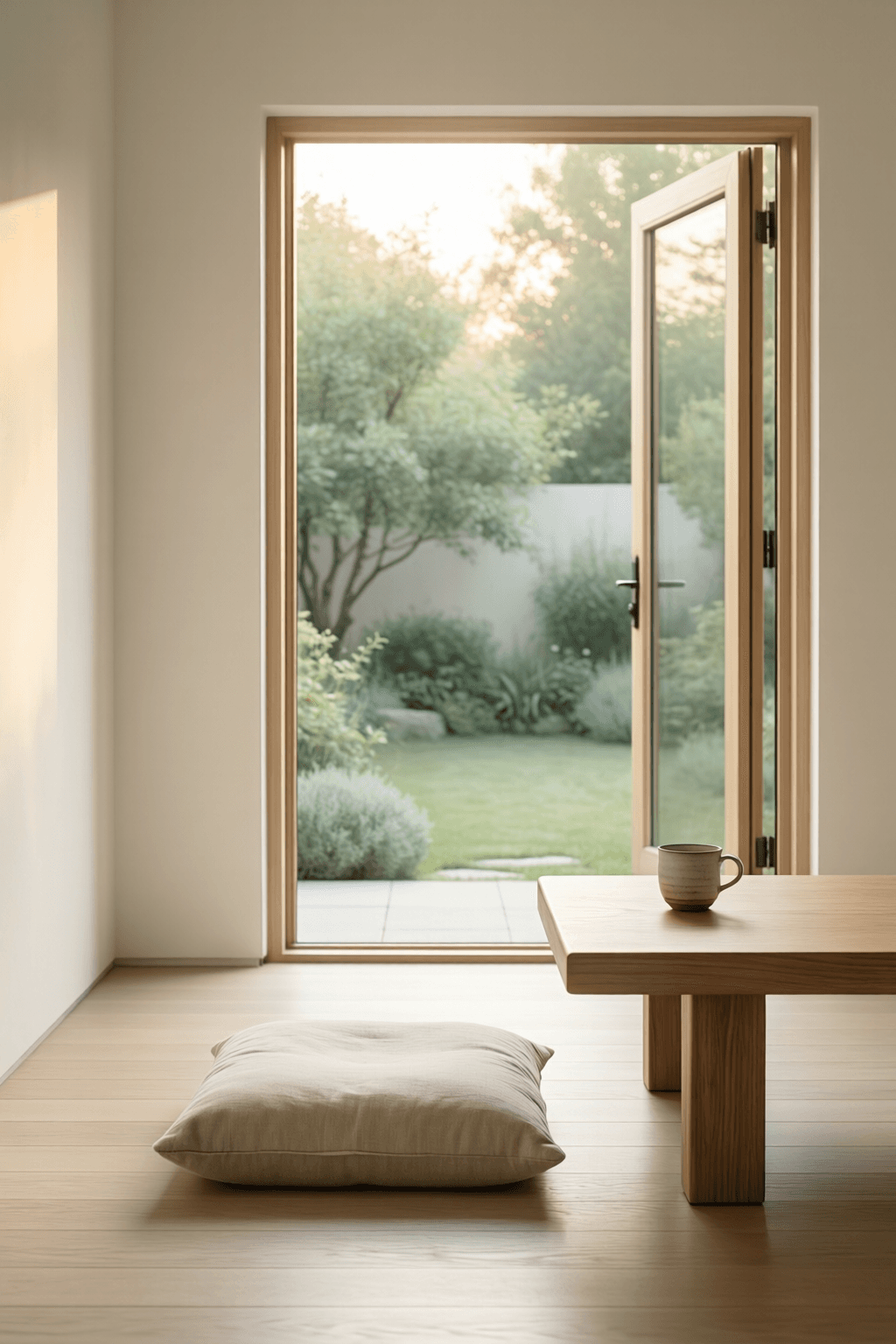
The simplification of life is one of the steps to inner peace. — Peace Pilgrim
—What lingers after this line?
The Meaning of Simplicity
Peace Pilgrim’s statement begins with a quiet but demanding insight: inner peace is not only discovered through meditation or belief, but also through the way daily life is arranged. To simplify life is to remove what is unnecessary—excess possessions, needless obligations, restless ambitions—so the mind has room to become still. In this sense, simplicity is not deprivation. Rather, it is a deliberate return to what matters most. By narrowing attention to essentials, a person begins to experience peace not as an escape from life, but as a clearer way of living it.
Peace Pilgrim’s Living Example
This idea becomes more powerful when connected to Peace Pilgrim herself, who walked across the United States for decades beginning in 1953, owning little more than the clothes she wore and a few items in her pockets. Her life embodied her teaching: peace was not merely a slogan, but a practice made visible through radical simplicity. Because she gave up material security and social status, her message carried unusual force. Her outward simplicity reflected an inward freedom, suggesting that the fewer things we cling to, the less fear we carry.
Freedom from Excess
Moving from her example to ordinary life, simplification often begins with recognizing how excess creates anxiety. Too many possessions require maintenance, too many commitments scatter attention, and too many desires keep the mind reaching toward the next thing. What first appears as abundance can quietly become a burden. By letting go of excess, people often discover a different kind of wealth: time, attention, and emotional space. In this way, simplifying life becomes a practical doorway to peace, because it reduces the noise that prevents us from hearing ourselves.
Ancient Wisdom in a Modern Form
Peace Pilgrim’s insight also belongs to a long spiritual tradition. The Buddha’s teachings on non-attachment, recorded in texts such as the Dhammapada, suggest that craving is a root of suffering. Similarly, the Stoic philosopher Epictetus taught in the Enchiridion (c. 125 AD) that freedom comes from wanting less and mastering one’s responses. These traditions differ in language, yet they meet at the same point: peace grows when dependence on external things decreases. Peace Pilgrim translates this ancient wisdom into modern life, reminding us that simplicity is not old-fashioned, but timeless.
The Inner Shift Behind Outer Change
Still, simplification is not only about owning fewer things. A person may live in a plain room and remain consumed by envy, resentment, or fear. Therefore, the deeper step is inward: simplifying motives, expectations, and emotional attachments until the heart becomes less divided. This inner simplification changes how one moves through the world. Decisions become easier, relationships become more honest, and daily routines feel less rushed. Gradually, peace is no longer something postponed for a perfect future; it becomes available in the present.
A Practical Step Toward Peace
Finally, the quote is encouraging because it describes simplification as one step, not the whole journey. Inner peace may require forgiveness, courage, compassion, and discipline, yet simplifying life creates the conditions in which those qualities can grow. It clears the path. A person might begin modestly: declining one unnecessary obligation, clearing one crowded space, or choosing silence instead of constant distraction. Such small acts accumulate. Through them, Peace Pilgrim’s wisdom becomes practical: by making life less complicated, we make the soul more available to peace.
One-minute reflection
Where does this idea show up in your life right now?
Related Quotes
6 selectedBreathe in calm, breathe out chaos, and anchor yourself in peace. — Lori Deschene
Lori Deschene
Lori Deschene’s words begin with a simple invitation: return to the breath. In moments of stress, the mind often rushes ahead, but breathing offers an immediate way back to the present.
Read full interpretation →Stop shrinking yourself to make others comfortable. Your peace is worth more than their approval. — Nedra Glover Tawwab
Nedra Glover Tawwab
Nedra Glover Tawwab’s words begin with a quiet but powerful warning: when we constantly make ourselves smaller to keep others comfortable, we often pay with our confidence, honesty, and emotional well-being. This kind of...
Read full interpretation →Your peace is worth more than their approval. — Karen Salmansohn
Karen Salmansohn
Karen Salmansohn’s quote draws a clear boundary between inner well-being and the exhausting pursuit of validation. At its heart, it reminds us that approval from others can feel rewarding, but it is often unstable, condi...
Read full interpretation →Peace is not found by controlling the storm—it's found by learning to breathe through it. — Jon Kabat-Zinn
Zinn
Jon Kabat-Zinn’s insight begins by challenging a common human instinct: the urge to control discomfort before allowing ourselves to feel calm. Storms, whether emotional, relational, or physical, often arrive without our...
Read full interpretation →Take refuge in silence. Fixed in silence, established in the inner 'I,' you can be as you are. The world will never perturb you if you are well founded upon the tranquility within. — Ramana Maharshi
Ramana Maharshi
Ramana Maharshi’s counsel begins with a simple but radical invitation: to take refuge in silence. Rather than treating silence as mere absence of noise, he presents it as a sanctuary where the self is no longer scattered...
Read full interpretation →If it costs my peace, it's outside my boundary. — Adam J. Jackson
Adam J. Jackson
At its core, Adam J. Jackson’s line reframes boundaries as more than rules we impose on others; they become protections for our inner life.
Read full interpretation →More From Author
More from Peace Pilgrim →