
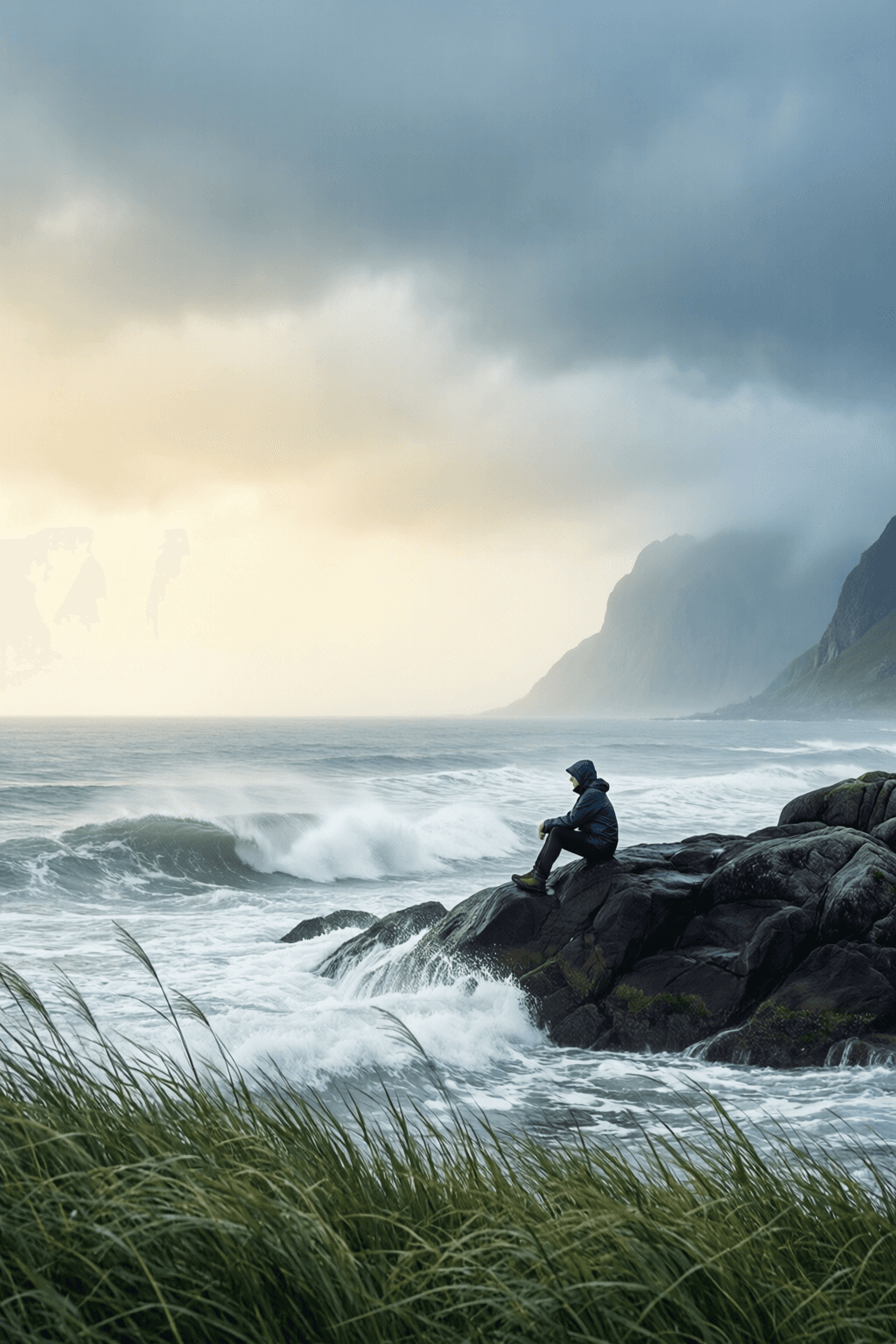
Peace is not found by controlling the storm—it's found by learning to breathe through it. — Jon Kabat-Zinn
—What lingers after this line?
The Shift from Control to Presence
Jon Kabat-Zinn’s insight begins by challenging a common human instinct: the urge to control discomfort before allowing ourselves to feel calm. Storms, whether emotional, relational, or physical, often arrive without our permission, and trying to dominate them can deepen frustration. Instead, the quote redirects attention from mastery over events to steadiness within experience. This shift is central to mindfulness. Kabat-Zinn, who developed Mindfulness-Based Stress Reduction in 1979, taught that peace does not depend on eliminating pain but on changing our relationship to it. In this sense, breathing becomes more than a bodily function; it becomes a way of returning to the present when life feels unmanageable.
Breath as an Anchor
From that perspective, the breath serves as an anchor in turbulent conditions. When anxiety rises, the mind often races toward imagined outcomes, regrets, or fears. Conscious breathing gently interrupts that spiral, reminding the body and mind that this moment, however difficult, can still be inhabited. Ancient contemplative traditions understood this well. Buddhist teachings preserved in texts such as the *Satipatthana Sutta* emphasize mindfulness of breathing as a path to clarity and equanimity. Kabat-Zinn’s modern language continues that lineage, presenting the breath not as an escape from the storm but as a stable point within it.
The Storm as a Teacher
As the image deepens, the storm becomes more than a symbol of suffering; it becomes a teacher. Life’s disruptions expose the limits of control, forcing us to confront uncertainty directly. While this can feel threatening, it can also cultivate patience, humility, and resilience. For example, someone facing grief may discover that no amount of planning can shorten sorrow on command. Yet by breathing through waves of pain, one moment at a time, they learn that emotions rise, crest, and pass. The storm does not vanish immediately, but the person’s relationship to it slowly changes.
Mindfulness and the Nervous System
Moving from metaphor to science, mindful breathing also has practical effects on the nervous system. Slow, attentive breathing can activate the parasympathetic response, helping the body soften its fight-or-flight reaction. This does not deny the seriousness of stress; rather, it gives the body a pathway back toward balance. Research on mindfulness-based interventions, including Kabat-Zinn’s clinical work at the University of Massachusetts Medical Center, has shown benefits for stress, chronic pain, and emotional regulation. Thus, the quote’s wisdom is not merely poetic. It describes a learnable practice through which inner steadiness becomes possible.
Acceptance Without Surrender
Importantly, learning to breathe through the storm is not the same as giving up. Acceptance is sometimes mistaken for passivity, but in mindfulness it means seeing reality clearly enough to respond wisely. When we stop wasting energy fighting what has already arrived, we gain strength to choose our next action. This distinction matters in daily life. A difficult conversation, an illness, or a sudden failure may still require courage and practical decisions. Yet those decisions are better made from grounded awareness than from panic. Peace, then, becomes the foundation for action rather than an excuse to avoid it.
A Practice for Everyday Turbulence
Finally, Kabat-Zinn’s words invite peace into ordinary moments, not only dramatic crises. The storm may be a traffic jam, a harsh email, a financial worry, or a sleepless night. Each moment offers the same quiet training: notice the tightening, return to the breath, and allow awareness to widen. Over time, this practice reshapes our idea of peace. It is no longer a perfect environment or a life free of disturbance. Instead, peace becomes an inner capacity—built breath by breath—to remain present, responsive, and human in the middle of whatever weather comes.
One-minute reflection
Where does this idea show up in your life right now?
Related Quotes
6 selectedTo find peace, you must stop trying to solve every problem at once. Sometimes the most productive thing you can do is simply breathe and be present. — Thich Nhat Hanh
Thich Nhat Hanh
At first glance, Thich Nhat Hanh’s insight challenges a habit many people mistake for responsibility: the need to solve every problem immediately. When the mind races from one worry to the next, it often creates more str...
Read full interpretation →Your peace is worth more than their approval. — Karen Salmansohn
Karen Salmansohn
Karen Salmansohn’s quote draws a clear boundary between inner well-being and the exhausting pursuit of validation. At its heart, it reminds us that approval from others can feel rewarding, but it is often unstable, condi...
Read full interpretation →Peace comes from within. Do not seek it without. — Buddha
Buddha
This quote emphasizes that true peace is a state of mind and heart, originating from within oneself. It encourages individuals to find tranquility by cultivating inner harmony rather than searching for it in external cir...
Read full interpretation →Take refuge in silence. Fixed in silence, established in the inner 'I,' you can be as you are. The world will never perturb you if you are well founded upon the tranquility within. — Ramana Maharshi
Ramana Maharshi
Ramana Maharshi’s counsel begins with a simple but radical invitation: to take refuge in silence. Rather than treating silence as mere absence of noise, he presents it as a sanctuary where the self is no longer scattered...
Read full interpretation →If it costs my peace, it's outside my boundary. — Adam J. Jackson
Adam J. Jackson
At its core, Adam J. Jackson’s line reframes boundaries as more than rules we impose on others; they become protections for our inner life.
Read full interpretation →Like water which can clearly mirror the sky and the trees only so long as its surface is undisturbed, the mind can only reflect the true image of the Self when it is tranquil and wholly relaxed. — Indra Devi
Indra Devi
Indra Devi begins with a simple natural image: calm water reflects the sky and trees only when its surface is still. In the same way, she suggests that the mind reveals truth not through strain or agitation, but through...
Read full interpretation →More From Author
More from Zinn →The little things? The little moments? They aren't little. — Jon Kabat-Zinn
At first glance, Jon Kabat-Zinn’s line overturns an ordinary habit of thought: we tend to rank experiences by size, drama, or public importance. Yet his point is that what we casually call “little” often carries the true...
Read full interpretation →Mindfulness is a way of befriending ourselves and our experience. — Jon Kabat-Zinn
At its core, Jon Kabat-Zinn’s statement reframes mindfulness as an act of friendship rather than self-improvement. To be mindful is not merely to pay attention, but to meet our thoughts, feelings, and bodily sensations w...
Read full interpretation →Bringing awareness to our breathing, we remind ourselves that we are here now, so we might as well be fully awake for whatever is happening. — Jon Kabat-Zinn
Jon Kabat-Zinn’s reflection begins with something deceptively ordinary: the breath. By bringing awareness to inhaling and exhaling, we anchor ourselves in the immediate moment rather than drifting into regret about the p...
Read full interpretation →We are not human doings, we are human beings. — Jon Kabat-Zinn
Jon Kabat-Zinn’s line quietly overturns a habit that defines much of modern life: measuring worth by output. At first glance, the quote sounds simple, yet it confronts the deep assumption that people must constantly perf...
Read full interpretation →