
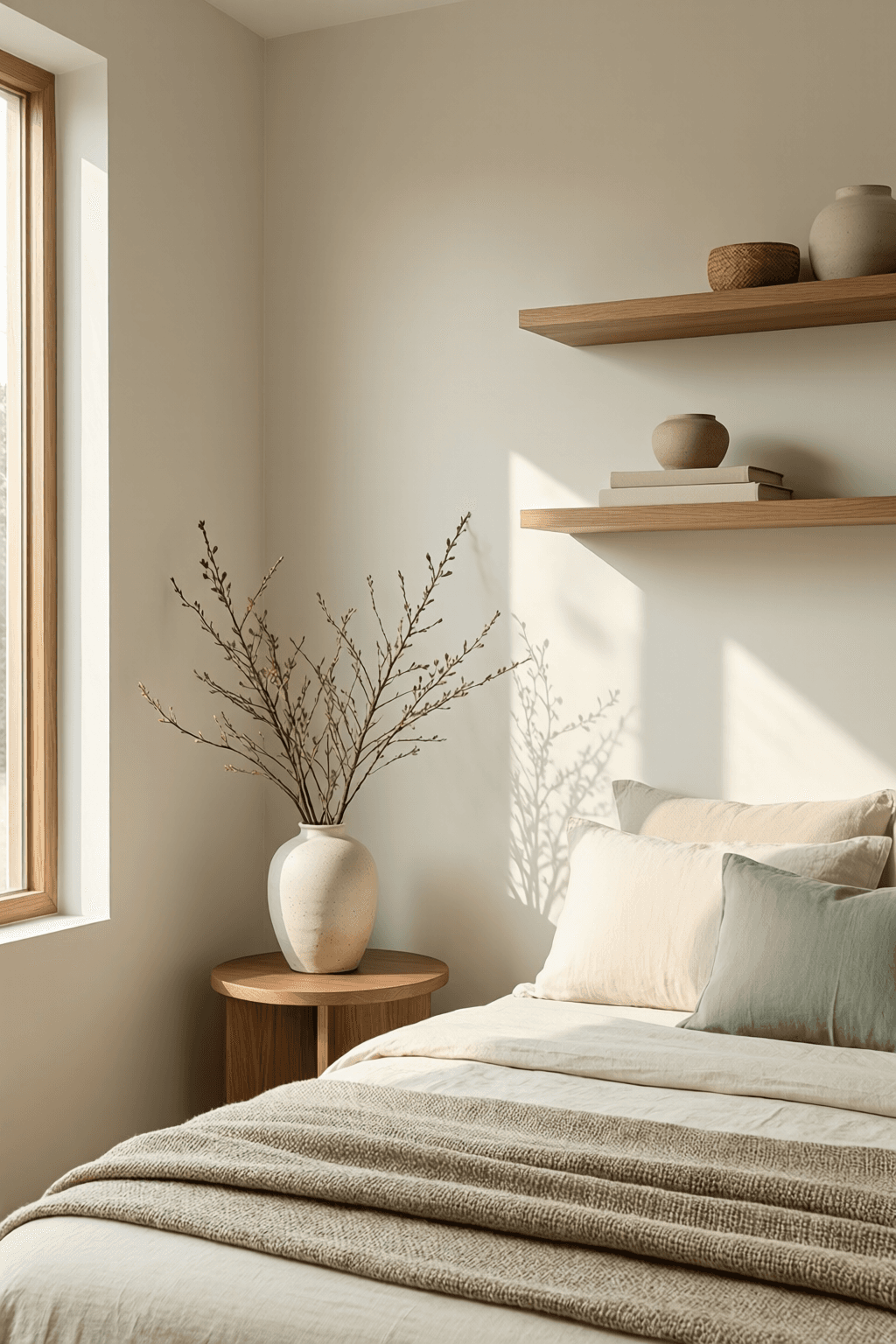
To find peace, one must learn to curate their surroundings until the walls around them reflect the calm they seek within. — Marie Kondo
—What lingers after this line?
Peace Begins in the Visible World
At first glance, Marie Kondo’s insight seems to focus on tidying a room, yet it reaches much further into the relationship between environment and emotion. She suggests that peace is not found only through inward reflection, but also through the deliberate shaping of what surrounds us. In this sense, the walls around us become more than boundaries; they become mirrors of our mental state. From this starting point, the quote proposes a practical philosophy: if we want calm within, we must build conditions that support it without. Rather than treating serenity as a purely abstract goal, Kondo frames it as something embodied in everyday choices about space, order, and atmosphere.
The Meaning of Curation
Importantly, the word “curate” implies more than cleaning or discarding. It evokes the careful, thoughtful selection one associates with a gallery or library, where each object is chosen for a reason and placed in relation to others. Thus, Kondo’s idea is not simply about emptiness, but about intentionality—deciding what deserves to remain in our personal world. As a result, the home becomes a record of values rather than a storage site for habit. Her own method in The Life-Changing Magic of Tidying Up (2011) emphasizes keeping what “sparks joy,” an approach that turns organization into a moral and emotional practice. In this way, curation becomes a quiet act of self-definition.
Walls as Emotional Mirrors
From there, the metaphor of walls deepens the quote’s power. Walls are usually seen as passive structures, but here they reflect the inner life of the person living among them. A cluttered, chaotic room can intensify distraction or unease, while a balanced and orderly space often encourages mental steadiness. Environmental psychology has repeatedly explored this connection; for example, researchers such as Sally Augustin have written about how surroundings influence mood, focus, and stress. Consequently, the quote suggests that our spaces are never neutral. They quietly shape our rhythms, thoughts, and emotional temperature. When the room begins to embody clarity, the mind may find it easier to follow.
A Discipline of Letting Go
Yet curating one’s surroundings also requires relinquishment, and this is where the idea becomes more demanding. To choose peace, one must often release objects tied to guilt, obligation, or an outdated version of the self. What remains is not merely a neater room, but a more honest life. In many households, a box of unread papers or inherited belongings carries emotional weight far beyond its physical size. Here Kondo’s philosophy aligns with older traditions of simplicity. Stoic thinkers like Seneca urged freedom from excess, while Zen-influenced aesthetics prize restraint and emptiness as forms of clarity. Thus, outer order is achieved not through perfectionism, but through the courage to stop clinging.
Calm as a Daily Practice
Ultimately, the quote frames peace not as a sudden revelation, but as an ongoing practice of arrangement and attention. A calm room does not guarantee a calm mind, yet it can become a supportive ritual space in which composure is easier to recover. Straightening a desk, opening a window, or removing what no longer belongs may seem small, but such acts gradually teach the self what it means to live with intention. Therefore, Kondo’s statement carries a gentle but firm lesson: inner peace is cultivated through repetition, not abstraction. By shaping the spaces we inhabit, we also shape the habits of mind we bring into them, until the external world begins to echo the tranquility we seek inside.
Recommended Reading
As an Amazon Associate, we earn from qualifying purchases.
One-minute reflection
What feeling does this quote bring up for you?
Related Quotes
6 selectedTrue luxury is not about more; it is about the space to breathe and the peace to simply be. — Marie Kondo
Marie Kondo
Marie Kondo’s quote quietly overturns a common assumption: luxury is not endless accumulation, but relief from excess. Rather than linking wealth to possession, she associates it with spaciousness, calm, and the rare abi...
Read full interpretation →Do not let the behavior of others destroy your inner peace. — Dalai Lama
Dalai Lama
This quote emphasizes the importance of safeguarding one's inner peace regardless of external circumstances or the actions of others. It suggests that maintaining personal tranquility is a personal responsibility.
Read full interpretation →If it costs my peace, it's outside my boundary. — Adam J. Jackson
Adam J. Jackson
At its core, Adam J. Jackson’s line reframes boundaries as more than rules we impose on others; they become protections for our inner life.
Read full interpretation →Like water which can clearly mirror the sky and the trees only so long as its surface is undisturbed, the mind can only reflect the true image of the Self when it is tranquil and wholly relaxed. — Indra Devi
Indra Devi
Indra Devi begins with a simple natural image: calm water reflects the sky and trees only when its surface is still. In the same way, she suggests that the mind reveals truth not through strain or agitation, but through...
Read full interpretation →Sometimes, protecting your peace is the better choice. — Marcus Aurelius
Marcus Aurelius
At first glance, the saying frames peace not as passivity but as discipline. To protect one’s peace is to recognize that not every conflict deserves entry into the mind.
Read full interpretation →Never be in a hurry; do everything quietly and in a calm spirit. Do not lose your inner peace for anything whatsoever. — Saint Francis de Sales
Saint Francis de Sales
At first glance, Saint Francis de Sales offers simple advice about slowing down, yet his counsel reaches far beyond time management. In urging us never to be in a hurry, he frames haste as a spiritual danger: it scatters...
Read full interpretation →More From Author
More from Marie Kondo →