
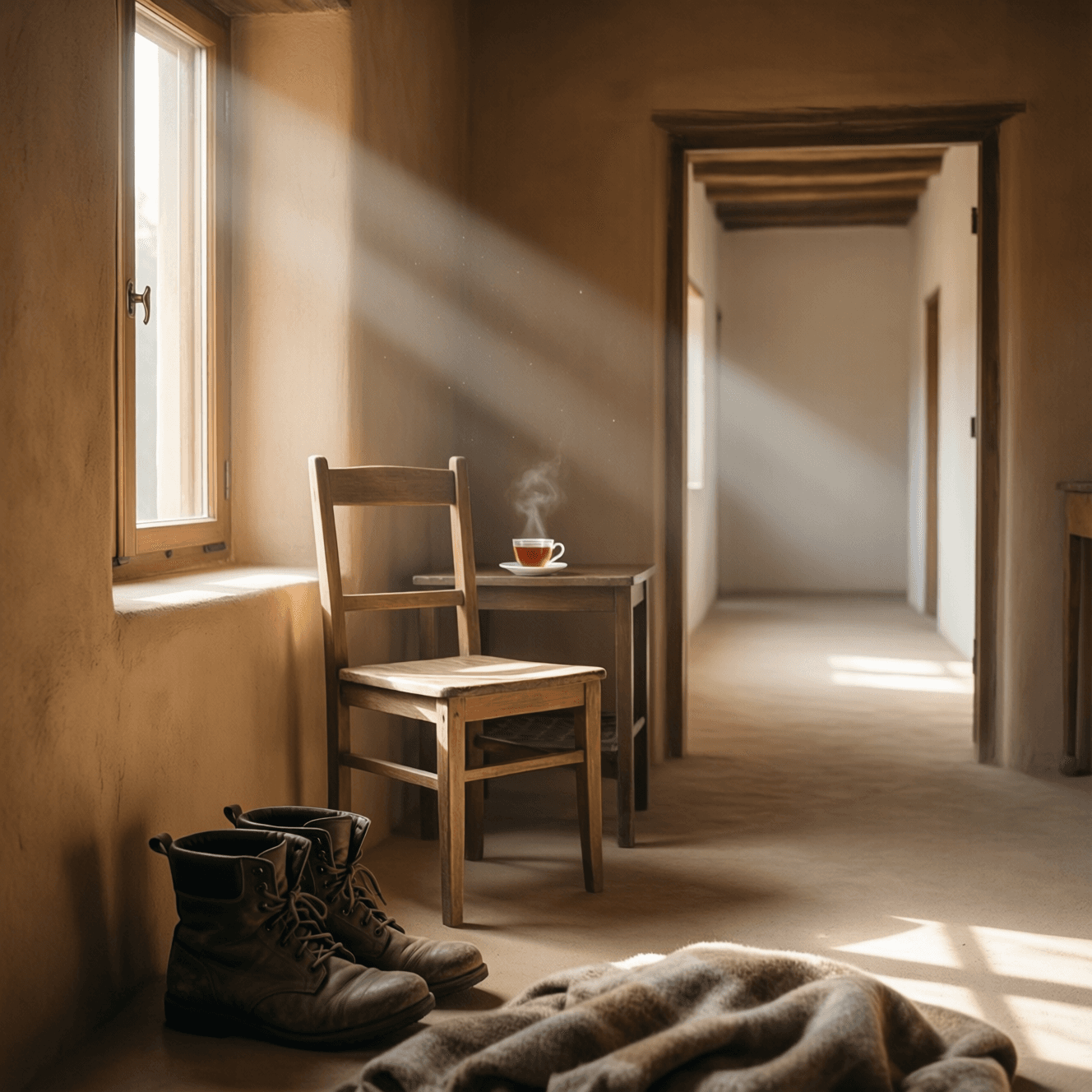
Acceptance is a small, quiet room. — Cheryl Strayed
—What lingers after this line?
A Metaphor of Interior Space
Cheryl Strayed’s line frames acceptance not as an argument you win, but as a place you enter. Calling it “a small, quiet room” suggests something enclosed and intimate—an interior refuge rather than a public performance. In this sense, acceptance is less about changing the world and more about changing where you stand inside it. From the start, the metaphor gently lowers the volume: instead of dramatic breakthroughs, Strayed points toward a subtle shift in posture, like stepping indoors after a long day outside.
The Strength of Smallness
The word “small” can sound limiting, yet here it implies manageability. Acceptance doesn’t require you to solve everything at once; it only asks you to make enough room for what is true. That scale matters, because many forms of suffering expand when we demand grand resolutions—perfect closure, perfect explanations, perfect endings. Seen this way, acceptance becomes a practical act: you don’t have to rebuild your entire life today; you just have to sit with what is real for a moment and let that reality exist without a fight.
Quiet as an End to Inner Debate
“Quiet” evokes the cessation of mental noise—those repetitive negotiations with the past: if only, what if, why me. Strayed implies that acceptance arrives when the internal courtroom adjourns, not necessarily because the verdict feels good, but because continuing the trial no longer helps. The quiet is not numbness; it is the absence of constant resistance. In practice, this can look like recognizing grief without adding a second layer of self-criticism, or admitting disappointment without immediately trying to outsmart it.
Acceptance Versus Resignation
Because the room is quiet, it can be mistaken for giving up. Yet acceptance differs from resignation: resignation says nothing can change, while acceptance says this is what is here right now. That distinction matters, since clear seeing often precedes wise action—much like cleaning a wound before you bandage it. Paradoxically, by stopping the struggle against reality, you may gain more energy to respond to it. The quiet room is where you stop flailing long enough to choose your next move.
Emotional Privacy and Self-Compassion
A room is private, and the privacy is part of the point. Acceptance can be something you do without witnesses, applause, or even certainty that you’re “doing it right.” It is often an inward kindness: letting yourself feel what you feel without demanding immediate transformation. This aligns with a broader tradition of compassionate attention—what Thich Nhat Hanh’s *Peace Is Every Step* (1991) describes as gently “holding” difficult emotions—suggesting that quiet presence can be more healing than forceful self-improvement.
Living From the Room, Not Staying There
Finally, a room is not a prison; it’s a place to return to. Strayed’s image hints that acceptance is a home base you can revisit when life becomes loud again. You enter, breathe, let reality be real, and then you step back into the world with less distortion. Over time, that repeated practice can change the texture of experience: problems may remain, but they no longer occupy every corner. The quiet room doesn’t erase pain; it reduces the unnecessary suffering that comes from refusing to let the truth sit down.
One-minute reflection
Why might this line matter today, not tomorrow?
Related Quotes
6 selectedI wanted a perfect ending. Now I've learned, the hard way, that some poems don't rhyme, and some stories don't have a clear beginning, middle, and end. — Gilda Radner
Gilda Radner
Gilda Radner’s quote begins with a deeply human wish: the desire for a perfect ending. Most people instinctively want life to resemble a well-made story, with conflicts resolved, wounds explained, and every emotional thr...
Read full interpretation →The human soul doesn't want to be advised or fixed or saved. It simply wants to be witnessed. Exactly as it is. — Parker J. Palmer
Parker J. Palmer
At its core, Parker J. Palmer’s line shifts attention away from problem-solving and toward presence.
Read full interpretation →A rational person can find peace by cultivating indifference to things outside of their control. — Naval Ravikant
Naval Ravikant
At its heart, Naval Ravikant’s statement echoes a classic Stoic principle: inner peace grows when we stop attaching our well-being to events we cannot govern. Rather than encouraging apathy toward life itself, this kind...
Read full interpretation →Whatever is going to happen will happen, whether we worry or not. — J.K. Rowling
J.K. Rowling
At its core, Rowling’s line reminds us that worry often mistakes itself for control. We rehearse disasters in our minds as if anticipation could alter reality, yet events unfold according to forces far larger than our pr...
Read full interpretation →Nothing is wrong—whatever is happening is just real life. — Tara Brach
Tara Brach
At first glance, Tara Brach’s line gently interrupts a habit many people carry: the reflex to label discomfort as evidence that something has gone wrong. Instead, she proposes a quieter interpretation—what is happening i...
Read full interpretation →There are times in our lives when we have to realize our past is precisely what it is, and we cannot change it. — Nicholas Sparks
Nicholas Sparks
Nicholas Sparks frames a difficult but necessary truth: some moments in life demand that we stop struggling against what has already happened. At first, this realization can feel like surrender, because people often revi...
Read full interpretation →More From Author
More from Cheryl Strayed →Let yourself be gutted. Let it open you. Start there. — Cheryl Strayed
At first glance, Cheryl Strayed’s words sound brutal, yet their force lies in invitation rather than destruction. To be “gutted” is to be stripped of pretense, certainty, and emotional armor; however, Strayed immediately...
Read full interpretation →When you feel overwhelmed, stop looking at the mountain and start looking at your feet. The next right action is the only one that exists. — Cheryl Strayed
Cheryl Strayed’s line begins by naming a familiar problem: when a challenge becomes a “mountain,” the mind instinctively tries to comprehend the entire climb at once. That leap in scale turns uncertainty into panic, beca...
Read full interpretation →The truth is that you can't change your life until you change your life. — Cheryl Strayed
Cheryl Strayed’s line sounds like a tautology on purpose: it traps us inside the circular logic we often use to delay action. We say we want a new life, but we keep waiting for the feeling of being “ready,” for clarity,...
Read full interpretation →Healing is a small and ordinary and very burnt thing. And it's one thing and one thing only: it's doing what you have to do. — Cheryl Strayed
Cheryl Strayed strips healing of its usual glow and spectacle, describing it instead as “small and ordinary and very burnt.” In that framing, recovery isn’t a cinematic turning point or a single enlightened insight; it’s...
Read full interpretation →