
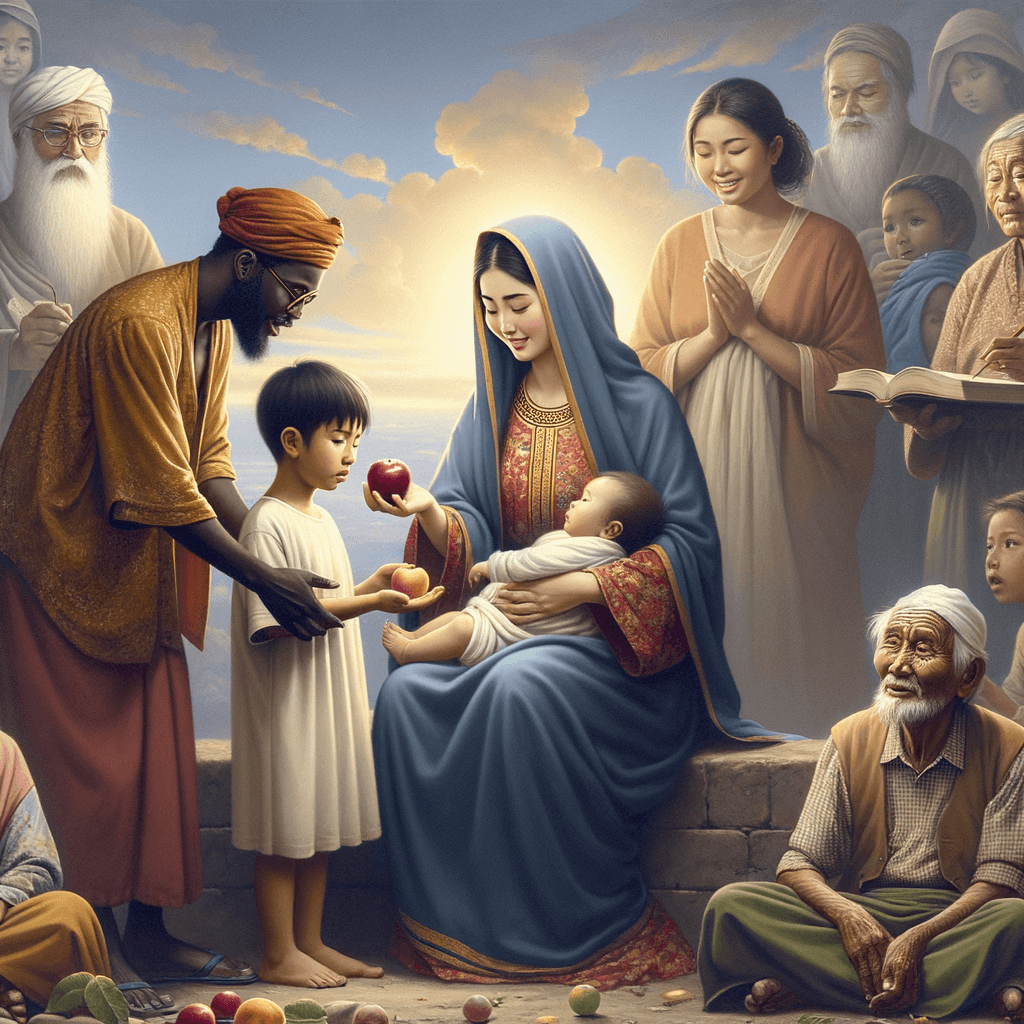
Acts of kindness are the most beautiful forms of humanity. — Muhammad Ali
—What lingers after this line?
The Essence of Humanity
This quote suggests that kindness is a fundamental trait that defines what it means to be human. Acts of kindness reflect our ability to empathize and connect with others.
Beauty in Actions
It highlights the idea that beauty is not solely found in aesthetics but also in the actions we take towards others. Kindness is portrayed as a beautiful and noble endeavor.
Ripple Effect of Kindness
Acts of kindness often inspire others to perform similar acts, creating a positive cycle that can enhance community and societal well-being.
Legacy of Kindness
Muhammad Ali's legacy extends beyond boxing; he is known for his philanthropic efforts and advocacy for social justice. This quote reflects his belief in the transformative power of kindness.
Universal Language of Kindness
Kindness transcends cultural and linguistic barriers, making it a universal language that can unite people from different backgrounds and foster understanding.
One-minute reflection
Why might this line matter today, not tomorrow?
Related Quotes
6 selectedFamily is not just a place we come from, but a sanctuary we build every day through the small, intentional acts of kindness we offer one another. — Daisaku Ikeda
Daisaku Ikeda
At first glance, Ikeda’s quote gently shifts the meaning of family away from mere ancestry or birthplace. He suggests that family is not defined only by bloodlines or shared history, but by what people actively create to...
Read full interpretation →Boundaries do not make you less kind; they make you more capable of being kind without resentment. — Brené Brown
Brené Brown
At first glance, Brené Brown’s quote challenges a common assumption that kindness means endless availability. Instead, she reframes boundaries as the structure that allows generosity to remain sincere rather than forced.
Read full interpretation →You don't have to be a billionaire to believe you can make a difference. Give your time, give your love, or simply give a smile. — Steve Goodier
Steve Goodier
At its core, Steve Goodier’s quote challenges the idea that influence belongs only to the wealthy or powerful. By placing time, love, and even a smile alongside money, he broadens generosity into something almost anyone...
Read full interpretation →With each person you meet, remind yourself that you share a common humanity. — Epictetus
Epictetus
At its core, Epictetus’s advice asks for a disciplined shift in perception. Rather than meeting others as rivals, strangers, or obstacles, we are urged to begin with a deeper truth: each person participates in the same f...
Read full interpretation →We must all do what we can to help one another. — Jane Austen
Jane Austen
At first glance, Jane Austen’s line sounds modest, yet its moral force is striking: each person carries some responsibility for the well-being of others. The phrase “what we can” is especially important, because it does...
Read full interpretation →You can be a good person with a kind heart and still say no to people. — Tracy A. Malone
Tracy A. Malone
At its core, Tracy A. Malone’s quote challenges the mistaken belief that kindness requires constant availability.
Read full interpretation →More From Author
More from Muhammad Ali →I don't have to be what you want me to be. I'm free to be what I want. — Muhammad Ali
Muhammad Ali’s line is a firm refusal to be molded by someone else’s expectations. Rather than asking permission to exist as himself, he asserts an internal authority: the right to choose who he is and how he lives.
Read full interpretation →I am the greatest; I said that even before I knew I was. — Muhammad Ali
Muhammad Ali’s line hinges on a bold reversal of the usual order: instead of waiting for evidence, he speaks the identity first. “I am the greatest” reads less like a report and more like a destination announced in advan...
Read full interpretation →Success is not the mountain we conquer, but the pebble in our shoe. - Muhammad Ali
This quote emphasizes that success is found in overcoming everyday challenges rather than achieving grand, monumental goals. It's the small, persistent issues that often determine our ability to succeed.
Read full interpretation →Don't count the days, make the days count. — Muhammad Ali
This quote encourages individuals to focus on the quality of their daily experiences instead of merely passing time. It emphasizes the importance of being present and making the most out of each day.
Read full interpretation →