
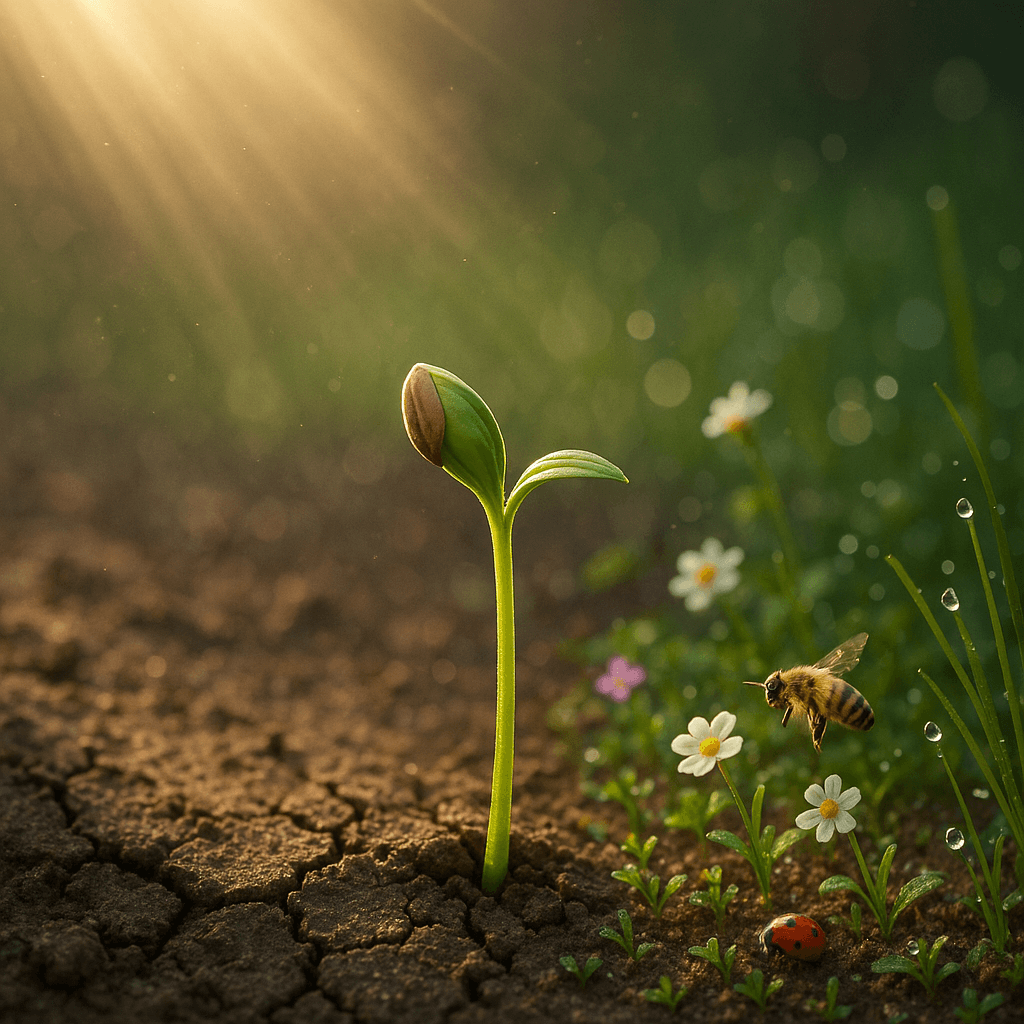
Do not be daunted by the enormity of the world's grief. Act on the smallest level you can. — Anne Lamott
—What lingers after this line?
Facing the Overwhelm of Global Sorrow
Anne Lamott’s words acknowledge a fundamental human experience: the sheer scale of the world’s suffering can feel paralyzing. Each day, news headlines and personal tragedies combine into an avalanche of grief, leaving individuals to wonder how their efforts could ever truly matter. This confrontation with enormity often leads to a sense of helplessness, posing a roadblock to compassionate action.
The Power of Single Acts
Moving from this daunting start, Lamott offers a powerful antidote—act on the smallest level you can. Rather than focusing on solving the world’s woes entirely, she encourages us to find manageable, immediate ways to respond. This echoes the Jewish teaching in the Talmud: 'You are not obligated to complete the work, but neither are you free to desist from it.' By narrowing focus, ordinary people find tangible avenues for their compassion.
Ripple Effects of Small Efforts
Furthermore, the value of small actions lies in their potential to generate broader change. Sociological studies, such as the work by Nicholas Christakis on social networks, reveal how acts of kindness can cascade through communities. Simple gestures—a comforting word, a meal prepared for a neighbor—may set off a chain of positive outcomes, multiplying the good far beyond the initial deed.
Historical Examples of Micro-Interventions
Consider stories from history that exemplify this principle. In Viktor Frankl’s *Man’s Search for Meaning* (1946), the sharing of a scrap of bread in a concentration camp became a heroic act of hope. Such moments demonstrate that responding to suffering—even at the smallest scale—can have profound significance, offering light in darkness and affirming our shared humanity.
Cultivating Enduring Hope and Agency
Ultimately, Lamott’s guidance reframes the way we approach overwhelming challenges. By embracing the idea that small acts matter, individuals reclaim a sense of agency and hope. This mindset does not diminish the seriousness of global grief, but transforms despair into motivation. Step by step, one compassionate act at a time, the collective weight of kindness becomes a force for healing the world.
One-minute reflection
What's one small action this suggests?
Related Quotes
6 selectedYou must love in such a way that the person you love feels free. — Thich Nhat Hanh
Thich Nhat Hanh
At its core, Thich Nhat Hanh’s statement redefines love as an act of care that does not confine. To love someone so that they feel free means offering affection without turning it into control, guilt, or dependence.
Read full interpretation →The sort of fearless openness required to turn toward our suffering is only possible within the spacious receptivity of love. — Frank Ostaseski
Frank Ostaseski
Frank Ostaseski’s statement begins with a striking claim: real courage is not simply toughness or willpower. Instead, the bravery required to face suffering honestly arises from love’s presence.
Read full interpretation →Healing is an art. It takes time, it takes practice, it takes love. — Maza Dohta
Maza Dohta
Maza Dohta’s quote begins by reframing healing as an art rather than a mechanical repair. That distinction matters, because art is rarely instant: it involves sensitivity, patience, revision, and care.
Read full interpretation →Do not be daunted by the enormity of the world’s grief. Act. — Clarissa Pinkola Estés
Clarissa Pinkola Estés
Estés acknowledges the overwhelming magnitude of global pain but urges against letting it paralyze action. In Viktor Frankl’s *Man’s Search for Meaning* (1946), survivors of concentration camps often faced immensity of s...
Read full interpretation →The only way to exist in a world that feels increasingly cold is to be the warmth you wish to receive from others. — Maya Angelou
Maya Angelou
At its core, Maya Angelou’s line reframes loneliness as a call to action rather than a verdict on the world. If life feels impersonal, distant, or harsh, she suggests that waiting passively for kindness may only deepen t...
Read full interpretation →We are called to be strong companions and clear mirrors to one another, to seek those who reflect with compassion how we are doing. — Wayne Muller
Wayne Muller
Wayne Muller’s quote begins with a call to companionship that is more than simple friendship. To be a strong companion is to stand beside another person with steadiness, honesty, and care, especially when life becomes co...
Read full interpretation →More From Author
More from Anne Lamott →Recovery is not a race. You don't have to feel guilty if it takes you longer than you thought it would. — Anne Lamott
Anne Lamott’s reminder begins by challenging one of the quiet cruelties of recovery: the belief that healing should follow a predictable schedule. Whether the wound is physical, emotional, or spiritual, people often comp...
Read full interpretation →Do not mistake your digital silence for peace. Real strength is found in the courage to speak the truth to the people who hold your heart. — Anne Lamott
At first glance, Anne Lamott’s quote challenges a familiar illusion: silence can resemble peace without actually creating it. Choosing not to speak may keep conflict out of sight, yet beneath that quiet surface, hurt, co...
Read full interpretation →Your worth is not a spreadsheet. You are not a project to be completed, but a life to be experienced. Stop measuring and start breathing. — Anne Lamott
Anne Lamott’s quote begins by confronting a habit many people barely notice: treating human value as if it could be tabulated. A spreadsheet symbolizes order, productivity, and comparison, yet it also reduces complexity...
Read full interpretation →The art of living is not about being a finished masterpiece; it is about being a work in progress that still knows how to laugh at its own paint spills. — Anne Lamott
At its heart, Anne Lamott’s remark reframes life from a quest for perfection into an ongoing act of creation. Instead of imagining ourselves as polished masterpieces, she invites us to see our days as brushstrokes still...
Read full interpretation →