
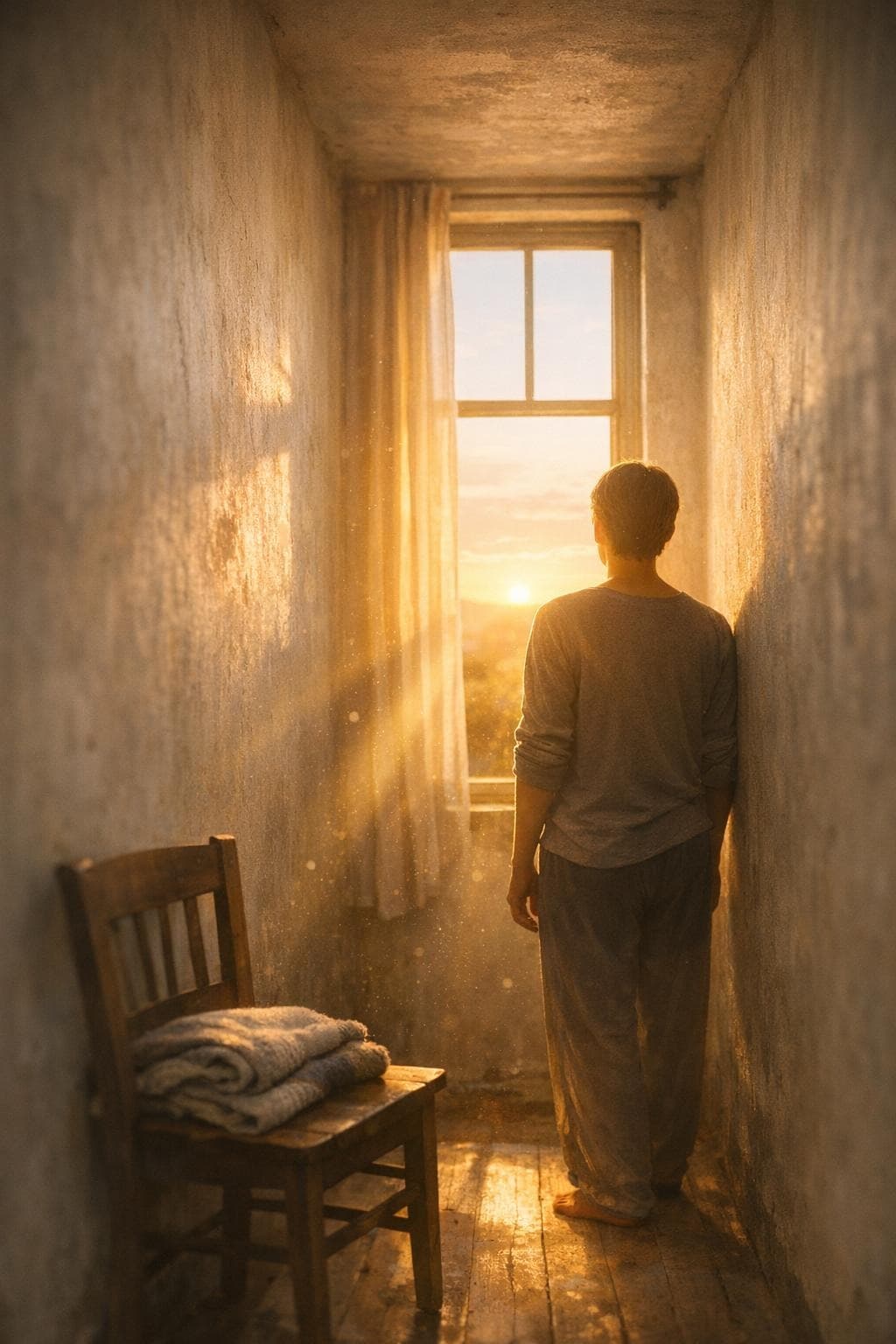
Even in the narrowest room, choose freedom by how you meet the day — Viktor E. Frankl
—What lingers after this line?
A Freedom That Survives Any Room
Frankl’s line begins with a stark image: the “narrowest room,” a place of constraint where choice seems to shrink to nothing. Yet he immediately pivots to a counterclaim—that freedom can still be chosen—not by changing the room, but by changing how one meets the day inside it. This sets the quote’s core idea: some forms of freedom are external and easily taken away, while another kind—inner freedom—remains available even when circumstances are harsh. In that sense, the room measures the body’s limits, but not the human capacity to decide what those limits will mean.
Frankl’s Logotherapy and the Human Stance
Moving from image to philosophy, the quote aligns with Viktor E. Frankl’s logotherapy, which centers meaning as a primary human drive, especially under suffering. In Man’s Search for Meaning (1946), Frankl argues that even when we cannot alter a situation, we can still choose our attitude toward it. That “how you meet the day” is not a motivational slogan so much as a deliberate stance: to respond rather than merely react. The point is not that pain disappears, but that a person can keep authorship over their inner life—choosing dignity, purpose, or care even when comfort is unavailable.
The Daily Moment as a Moral Crossroads
From there, the focus on “the day” makes freedom practical and immediate. Frankl isn’t describing one heroic decision made once and for all; he is pointing to a repeated, ordinary crossroads that arrives each morning: will I meet today with bitterness, numbness, curiosity, courage, or service? This daily emphasis matters because extreme circumstances can feel too large to face all at once. By narrowing freedom to the next hour or the next task, the quote suggests a workable scale for agency. In effect, the smallest unit of time becomes the workshop where character is built.
Confinement as Physical, Social, or Psychological
Although the “room” can be literal, it also functions as a metaphor for any condition that compresses life: illness, poverty, grief, discrimination, caregiving exhaustion, or anxiety that makes the world feel tight. Seen this way, many people recognize the narrow room without needing prison bars. Yet the quote refuses to romanticize limitation. Instead, it offers a transitional insight: if the room cannot be widened right now, meaning can still be pursued within it. The space may restrict movement, but it does not have to dictate the spirit in which one lives.
Freedom as Response-Ability, Not Denial
At this point, it becomes crucial to distinguish inner freedom from pretending everything is fine. Choosing how to meet the day is not denial; it is the decision to act with intention despite reality. Frankl’s approach implies that suffering is real, and still the person can decide what values to enact in its presence. In practice, this might look like speaking honestly rather than cynically, keeping a small routine when life is chaotic, or offering kindness when one feels depleted. Such choices do not erase hardship, but they prevent hardship from becoming the sole author of one’s identity.
How to Practice the Choice Each Morning
Finally, the quote invites application: freedom can be exercised as a ritual of attention. One can begin the day by naming what cannot be controlled, then choosing one controllable action aligned with a value—patience, excellence, compassion, or learning. This echoes Frankl’s insistence that meaning is found through purposeful work, love, and the stance we take toward unavoidable pain (Man’s Search for Meaning, 1946). Over time, these small choices accumulate. The room may remain narrow, but the inner life expands—because meeting the day with intention is a form of liberation that cannot be confiscated by circumstance.
One-minute reflection
What does this quote ask you to notice today?
Related Quotes
6 selectedEven in the darkest chapters, choose where the light falls next. — Viktor E. Frankl
Viktor E. Frankl
Viktor E. Frankl’s words arise from a life tested in extremity.
Read full interpretation →Between stimulus and response, there is a space. In that space is our power to choose our response. In our response lies our growth and our freedom. — Viktor E. Frankl
Viktor E. Frankl
This quote highlights the critical moment of pause that exists between any given stimulus and our reaction to it. Utilizing this space allows for a mindful and deliberate response.
Read full interpretation →Before complaining that you are a slave to another, be sure that you are not a slave to self. — James Allen
James Allen
James Allen’s warning begins with a reversal: the most immediate master may not be another person, institution, or circumstance, but one’s own impulses. Before condemning external control, he asks us to examine whether a...
Read full interpretation →You cannot command things, but you can command yourself. — Michael D. Pollock
Michael D. Pollock
At first glance, Michael D. Pollock’s line draws a sharp boundary between the outer world and the inner one.
Read full interpretation →A boundary is not a wall; it is a door with a lock that you control. — Annie Wright
Annie Wright
At first glance, Annie Wright’s quote corrects a common misunderstanding: people often treat boundaries as acts of distance or punishment, when in fact they are tools of intentional relationship. A wall shuts everyone ou...
Read full interpretation →When you feel like you are at a dead end, remember that you are at a place where you can choose a different path. — Haemin Sunim
Haemin Sunim
At first glance, a dead end feels like failure, as though movement itself has been denied. Yet Haemin Sunim’s insight gently reverses that impression: what seems like a wall may actually be a point of decision.
Read full interpretation →More From Author
More from Viktor E. Frankl →The meaning of life is to give life meaning. — Viktor E. Frankl
At first glance, Frankl’s line turns a timeless question inside out. Instead of treating meaning as a hidden answer waiting to be discovered, he suggests that meaning emerges through our response to life itself.
Read full interpretation →Turn the weight of doubt into the engine of your learning. — Viktor E. Frankl
Frankl’s line reframes doubt from a symptom of weakness into a signal that something matters enough to examine. Rather than treating uncertainty as an obstacle, he invites us to see it as the first honest step in underst...
Read full interpretation →Choose one honest act and build a life from it. — Viktor E. Frankl
Frankl’s line treats integrity not as a vague trait but as a concrete starting point: one honest act solid enough to build on. Instead of waiting for a grand moral transformation, he suggests choosing a single moment of...
Read full interpretation →Even in the darkest chapters, choose where the light falls next. — Viktor E. Frankl
Viktor E. Frankl’s words arise from a life tested in extremity.
Read full interpretation →