
Tags
#Inner Freedom
Quotes: 26
Quotes tagged #Inner Freedom

Freedom Begins With Mastery Over the Self
James Allen’s warning begins with a reversal: the most immediate master may not be another person, institution, or circumstance, but one’s own impulses. Before condemning external control, he asks us to examine whether a...
Created on: 8/4/2026

Freedom Beyond Anxiety About Being Imperfect
Seng-tsan’s line shifts freedom away from external conditions and toward an internal posture: a mind no longer bullied by the fear of being flawed. In this framing, you can have choices, status, or even safety and still...
Created on: 3/1/2026

Cultivating Inner Freedom Beyond External Permission
Thich Nhat Hanh reframes freedom as something more intimate than laws, leaders, or circumstances. Rather than waiting for a benefactor to grant it, he points to a lived capacity—an inner steadiness that can be developed...
Created on: 2/9/2026

Freedom Through Flowing With Life’s Changes
Zhuangzi’s line reads like a gentle instruction: stop tightening your grip on how things should go, and meet life as it actually arrives. In Daoist thought, insisting on control often creates the very tension we hope to...
Created on: 1/31/2026

Daring Days and the Freedom of Self-Intimacy
Anaïs Nin frames daily living as an artistic act: to “sketch your days” suggests that life is not merely endured or recorded, but deliberately composed. The phrase “daring strokes” implies risk—choices made without waiti...
Created on: 1/10/2026

Freedom of Attitude in Any Confinement
Frankl’s line begins with a stark image: the “narrowest room,” a place of constraint where choice seems to shrink to nothing. Yet he immediately pivots to a counterclaim—that freedom can still be chosen—not by changing t...
Created on: 12/29/2025
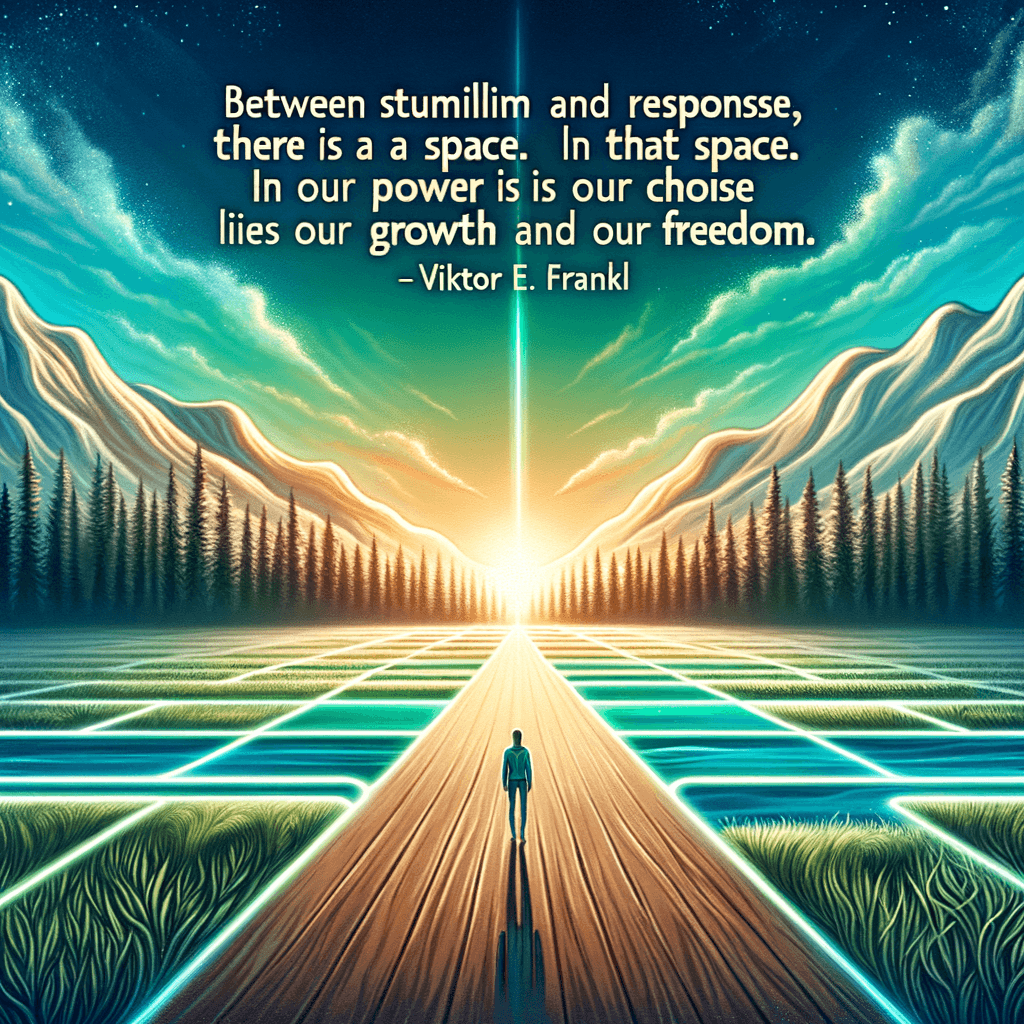
The Space Between Stimulus and Response - Viktor E. Frankl
This quote highlights the critical moment of pause that exists between any given stimulus and our reaction to it. Utilizing this space allows for a mindful and deliberate response.
Created on: 7/15/2024