
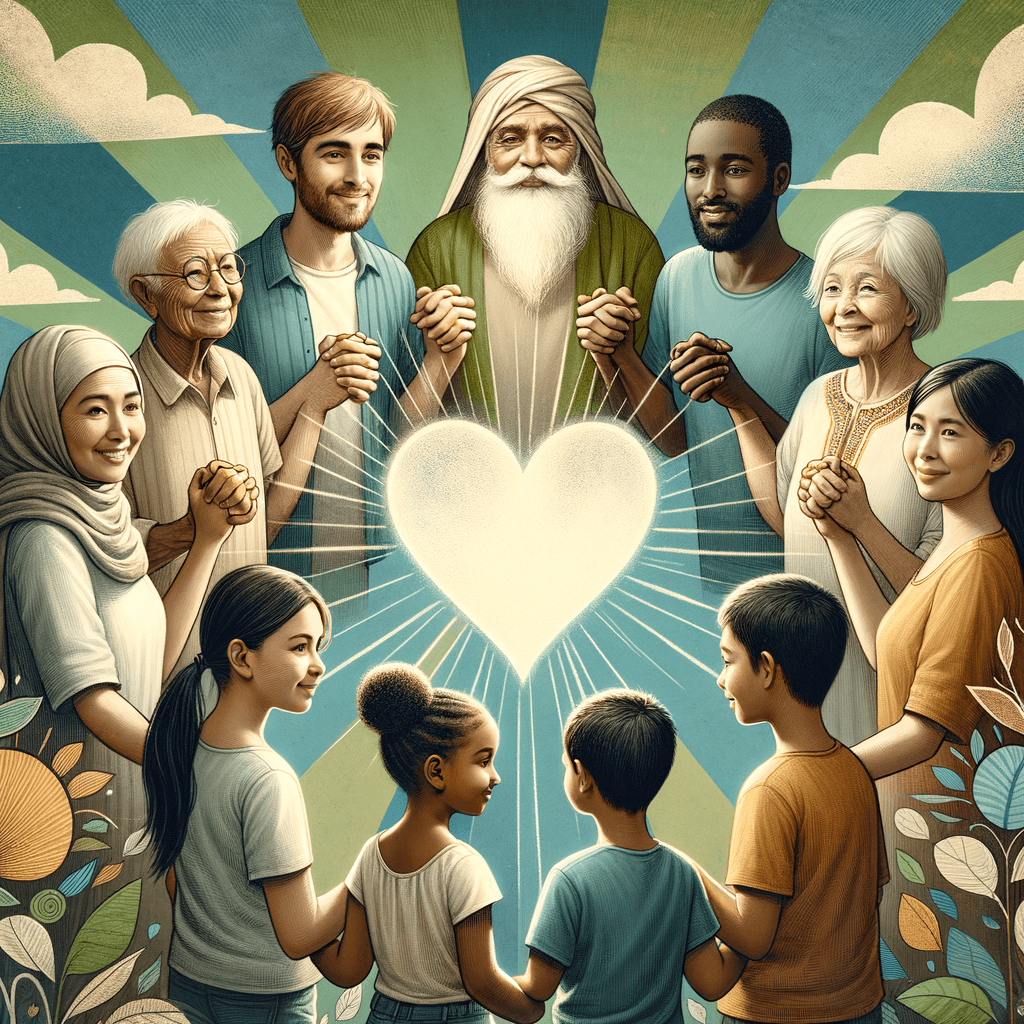
We're all human, aren't we? Every human life is worth the same, and worth saving. — J.K. Rowling
—What lingers after this line?
Equality of Human Life
This quote highlights the innate equality of all human beings, regardless of their background, status, or circumstances. Everyone's life holds the same intrinsic value.
Universal Humanity
Rowling underscores the shared humanity that connects all individuals across boundaries and divisions. We are all fundamentally human, deserving respect and value.
Moral Obligation to Save Lives
The quote challenges the reader to recognize the moral responsibility to protect and save any human life, as each person's life is equally important, no matter who they are.
Compassion and Empathy
This statement reflects a call for compassion and empathy toward others. Recognizing the equal value of human life fosters a society where people look out for and care about one another.
Philosophical Reflection on Worth
The quote can also prompt reflection on how society often places unequal value on different lives due to wealth, power, or other external factors. Rowling critiques this tendency and upholds the belief that all lives should be equally valued.
One-minute reflection
Why might this line matter today, not tomorrow?
Related Quotes
6 selectedEvery advance in human freedom has been accompanied by the greater realization of the value of human life. — John F. Kennedy, United States.
John F. Kennedy, United States.
This quote suggests a direct correlation between the progress of human rights and the increasing appreciation for human life. As societies strive for greater freedom, they also tend to recognize and cherish the intrinsic...
Read full interpretation →You must love in such a way that the person you love feels free. — Thich Nhat Hanh
Thich Nhat Hanh
At its core, Thich Nhat Hanh’s statement redefines love as an act of care that does not confine. To love someone so that they feel free means offering affection without turning it into control, guilt, or dependence.
Read full interpretation →I decided very early to love my family, and to see in each of its members something rare and good as well as the miserable and painful things that were obvious. — William Saroyan
William Saroyan
Saroyan begins with a striking idea: love within a family is not merely a feeling that appears on its own, but a conscious decision. By saying he “decided very early,” he frames affection as an act of will, suggesting th...
Read full interpretation →The sort of fearless openness required to turn toward our suffering is only possible within the spacious receptivity of love. — Frank Ostaseski
Frank Ostaseski
Frank Ostaseski’s statement begins with a striking claim: real courage is not simply toughness or willpower. Instead, the bravery required to face suffering honestly arises from love’s presence.
Read full interpretation →Healing is an art. It takes time, it takes practice, it takes love. — Maza Dohta
Maza Dohta
Maza Dohta’s quote begins by reframing healing as an art rather than a mechanical repair. That distinction matters, because art is rarely instant: it involves sensitivity, patience, revision, and care.
Read full interpretation →The only way to exist in a world that feels increasingly cold is to be the warmth you wish to receive from others. — Maya Angelou
Maya Angelou
At its core, Maya Angelou’s line reframes loneliness as a call to action rather than a verdict on the world. If life feels impersonal, distant, or harsh, she suggests that waiting passively for kindness may only deepen t...
Read full interpretation →More From Author
More from J.K. Rowling →Sometimes losing everything is how you find yourself. — J.K. Rowling
At first glance, J.K. Rowling’s line frames devastation not simply as an ending, but as a brutal kind of beginning.
Read full interpretation →Whatever is going to happen will happen, whether we worry or not. — J.K. Rowling
At its core, Rowling’s line reminds us that worry often mistakes itself for control. We rehearse disasters in our minds as if anticipation could alter reality, yet events unfold according to forces far larger than our pr...
Read full interpretation →If you want to know what a man's like, take a good look at how he treats his inferiors, not his equals. — J.K. Rowling
Rowling’s remark begins with a simple but piercing standard: character is most clearly exposed not in polite exchanges among peers, but in moments where power is uneven. When someone deals with equals, social pressure en...
Read full interpretation →Believe in the magic that’s inside you. — J.K. Rowling
This quote encourages individuals to have faith in their own abilities and inner strengths. It emphasizes the power of believing in oneself to achieve great things.
Read full interpretation →