
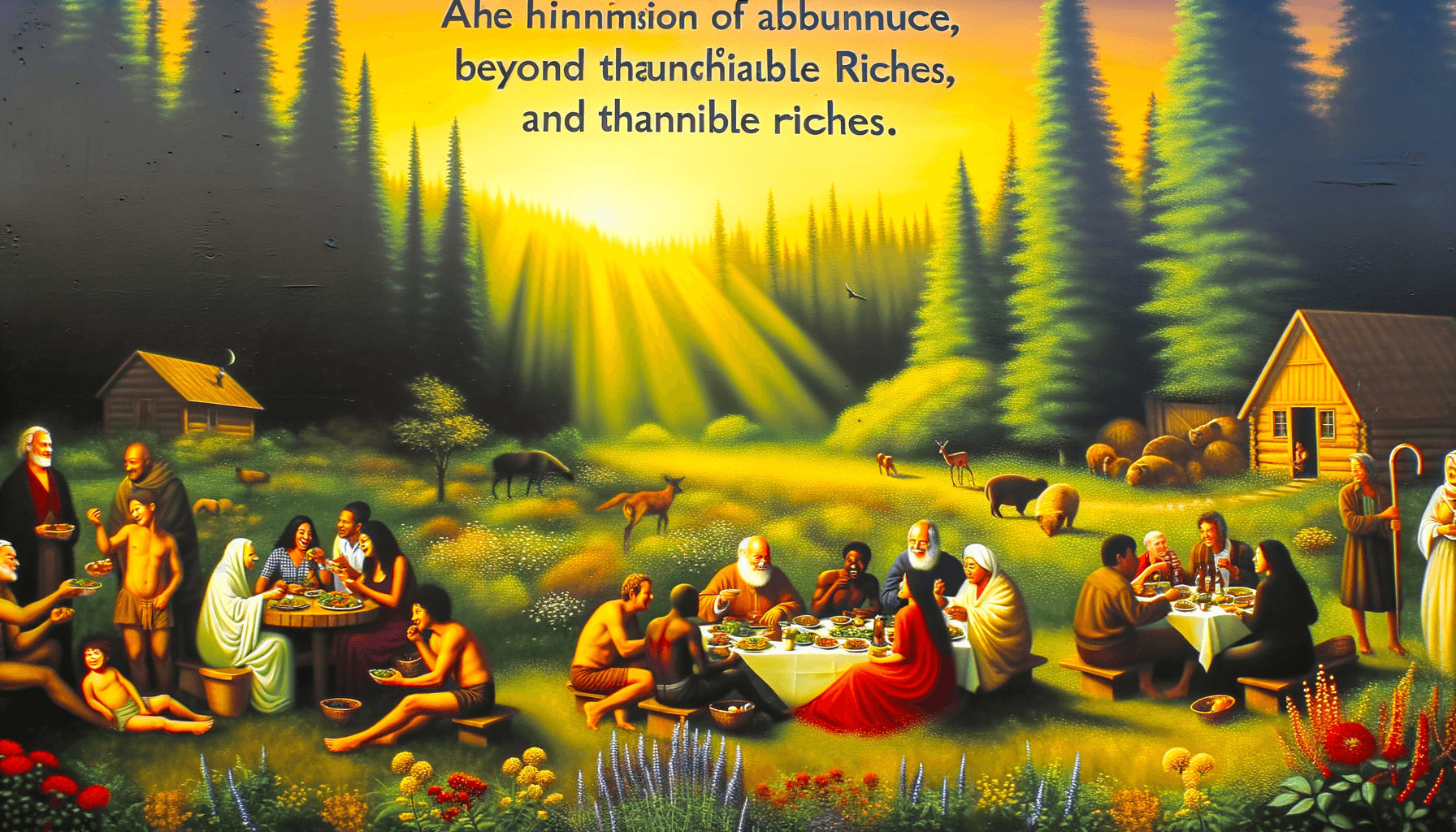
You don’t have to be rich to celebrate a rich life. — Alice Walker
—What lingers after this line?
Happiness Beyond Wealth
This quote highlights that financial wealth is not necessary to live a fulfilling and joyful life.
Value of Simple Pleasures
It emphasizes that everyday moments, relationships, and personal achievements can make life meaningful.
Inner Wealth
The statement encourages cultivating qualities like gratitude, love, and kindness as true markers of a 'rich' life.
Perspective on Success
It challenges conventional definitions of success by suggesting that real richness comes from experiences, not material possessions.
Author’s Background
Alice Walker often explores themes of spiritual and emotional abundance over materialism in her literary work.
One-minute reflection
Where does this idea show up in your life right now?
Related Quotes
6 selectedThe greatest wealth is to live content with little. — Plato
Plato
This quote highlights the importance of finding contentment and happiness in simplicity rather than material possessions. It suggests that true wealth comes from a satisfied mind and spirit.
Read full interpretation →I have learned that to be with those I like is enough. — Walt Whitman
Walt Whitman
Whitman’s line reduces happiness to something disarmingly plain: the presence of beloved company. Rather than chasing wealth, status, or elaborate pleasures, he suggests that being with people one genuinely likes can alr...
Read full interpretation →I will get there, but now I'm here, and here is wonderful. — Jenny Offill
Jenny Offill
Jenny Offill’s line gently overturns the modern obsession with destinations. At first, “I will get there” acknowledges ambition and movement, yet the sentence immediately returns us to the present: “but now I’m here.” In...
Read full interpretation →Don't go expecting perfection; be satisfied with even the smallest progress. — Marcus Aurelius
Marcus Aurelius
Marcus Aurelius advises against the exhausting demand for flawlessness and redirects attention toward modest improvement. In the spirit of Stoic thought, especially in his Meditations (c.
Read full interpretation →A crust eaten in peace is better than a banquet partaken in anxiety. — Aesop
Aesop
At first glance, Aesop’s saying contrasts two meals, yet its real subject is the quality of life surrounding them. A dry crust seems poor beside a banquet, but once peace enters the comparison, the values reverse.
Read full interpretation →The secret of happiness is to admire without desiring. — Carl Sandburg
Carl Sandburg
Carl Sandburg’s line reframes happiness as an attitude rather than an acquisition. To admire without desiring means recognizing beauty, excellence, or joy in the world without immediately trying to possess it.
Read full interpretation →More From Author
More from Alice Walker →The most beautiful things are those that take time to grow, requiring a commitment to the process rather than a hunger for the end. — Alice Walker
Alice Walker’s reflection shifts beauty away from instant results and toward slow formation. At its heart, the quote suggests that what becomes truly beautiful does so through time, care, and endurance rather than speed...
Read full interpretation →Hard times require furious dancing. Each of us is the proof. — Alice Walker
Alice Walker’s line treats “hard times” not as a cue for silence, but as a summons to movement. The phrase “furious dancing” reads like an intentional contradiction—how can joy or art survive suffering?
Read full interpretation →The most common way people give up their power is by thinking they don't have any. — Alice Walker
Alice Walker’s line points to a paradox: people often lose power not through force, but through a belief that power was never theirs to begin with. That assumption quietly reshapes behavior—choices narrow, risks feel poi...
Read full interpretation →In an age of speed, I began to think nothing is as precious as slowness. — Alice Walker
Alice Walker’s line begins with a modern assumption—life is accelerating—and then performs a quiet reversal: the rarer something becomes, the more it is worth. In an age that prizes quick replies, rapid production, and c...
Read full interpretation →