
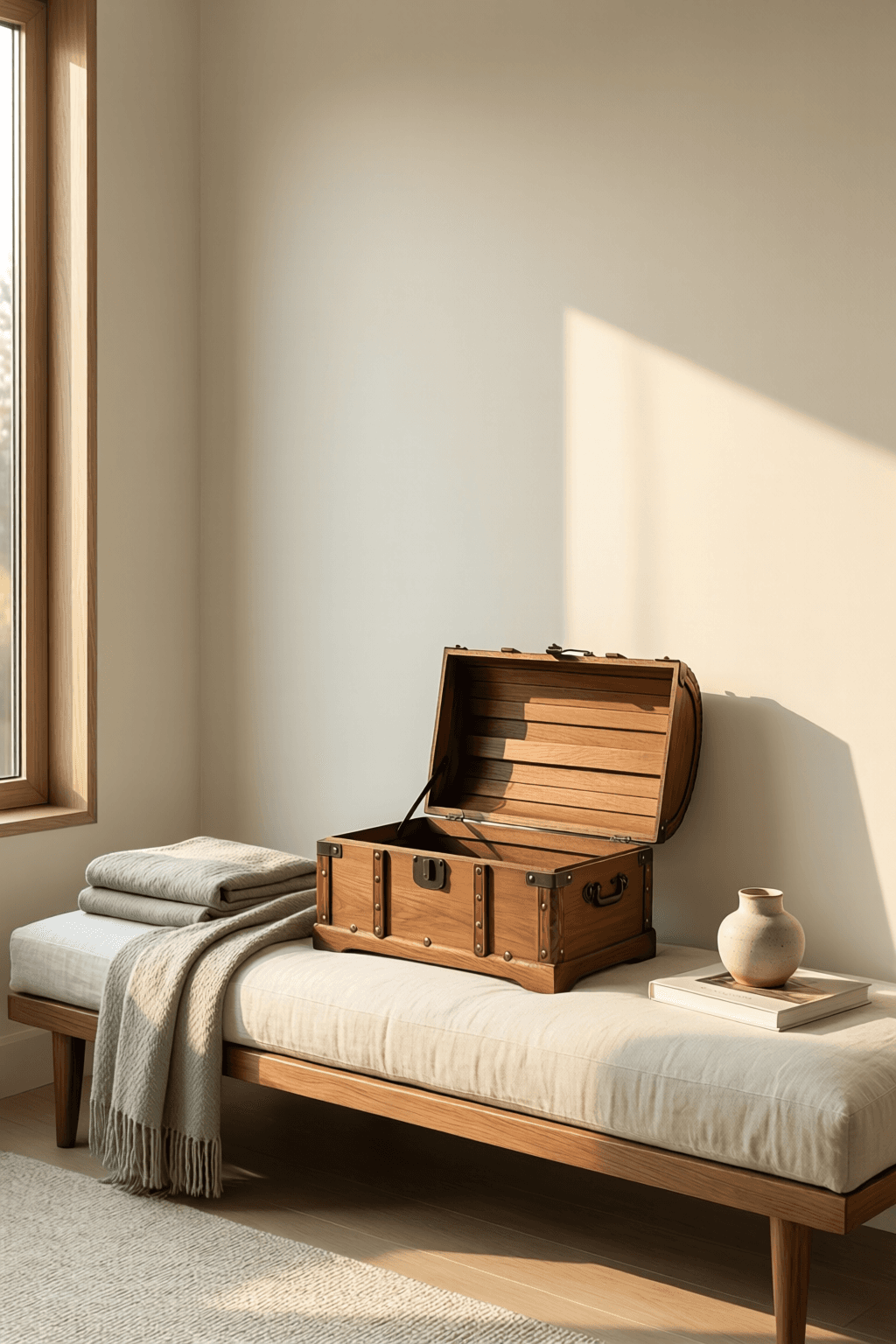
Home should be the treasure chest of living. — Le Corbusier
—What lingers after this line?
A House Becomes More Than Shelter
At first glance, Le Corbusier’s remark transforms the idea of home from a simple structure into something intimate and precious. A treasure chest does not merely contain objects; it safeguards what is valued most. In the same way, home holds the routines, relationships, and memories that give daily life its meaning, suggesting that true richness is often domestic rather than material. This image also subtly shifts our attention from display to protection. Gold in a chest is hidden not because it lacks worth, but because it matters deeply. Likewise, the most important parts of living—rest, affection, conversation, belonging—often unfold quietly at home, away from public view.
The Modernist Vision Behind the Quote
Seen in context, the statement reflects Le Corbusier’s broader architectural philosophy. Although he is famous for calling a house “a machine for living in” in Vers une architecture (1923), that phrase was never meant to strip homes of feeling. Rather, he believed design should serve life efficiently so that the essentials of living could flourish within well-ordered space. From this perspective, the treasure chest metaphor adds warmth to his modernism. Function and beauty are not opposites here; instead, careful design becomes the mechanism by which life’s treasures are stored and supported. In other words, architecture matters because it shapes the container of human experience.
Memory Stored in Ordinary Rooms
From there, the metaphor grows even richer when we consider how homes accumulate memory. A dining table may preserve years of celebrations, arguments, and reconciliations; a hallway can carry the echo of children running through it. Gaston Bachelard’s The Poetics of Space (1958) similarly explores how rooms, drawers, and corners become repositories of imagination and remembrance. Therefore, home is not valuable only because of what is inside it physically, but because of what it keeps emotionally. Even worn furniture or imperfect walls can feel irreplaceable when they have absorbed the texture of a life. The treasure, then, is not décor alone, but lived time.
Domestic Space as a Source of Identity
Moreover, a treasure chest implies selection: we place inside it what we wish to keep close. Home works in much the same way, reflecting habits, values, and identity through arrangement, decoration, and ritual. A family altar, a shelf of beloved books, or a kitchen always prepared for guests can reveal who people are more honestly than formal statements ever could. As a result, home becomes a quiet autobiography. Sociologist Pierre Bourdieu’s Distinction (1979) suggests that taste and domestic choices communicate social and personal meaning, yet Le Corbusier’s phrasing goes beyond status. It implies that home shelters not just possessions, but the self.
Why the Image Still Resonates Today
Finally, the quote endures because modern life often scatters attention and weakens attachment to place. In an age of mobility, screens, and constant distraction, the idea of home as a treasure chest feels like a corrective. It reminds us that living well may depend less on accumulation outside the home than on care within it. Thus, Le Corbusier’s sentence remains both poetic and practical. It asks us to see home not as a backdrop to life, but as one of its central vessels. When a home protects dignity, fosters connection, and gathers memory, it truly becomes a chest filled with the treasures of being alive.
Recommended Reading
As an Amazon Associate, we earn from qualifying purchases.
One-minute reflection
Why might this line matter today, not tomorrow?
Related Quotes
6 selectedHome is the place where one finally allows the armor to drop and the spirit to breathe. — Maya Angelou
Maya Angelou
At its core, Maya Angelou’s reflection defines home not merely as a structure but as a sanctuary of emotional safety. The image of letting “the armor drop” suggests that daily life often requires protection—composure, re...
Read full interpretation →A home should be an anchor, a port in a storm, a refuge, a happy place in which to dwell. — Marvin J. Ashton
Marvin J. Ashton
Marvin J. Ashton’s statement presents home not merely as a physical structure but as a place of emotional and spiritual grounding.
Read full interpretation →The best way to turn a house into a home is to fill it with love and laughter. — William J. Bennett
William J. Bennett
At first glance, Bennett’s quote draws a clear line between a house and a home. A house is a physical structure, defined by rooms, doors, and possessions; a home, by contrast, is shaped by emotional life.
Read full interpretation →Home is where laughter and gratitude grow. — Melody Beattie
Melody Beattie
At first glance, Melody Beattie’s line reframes home as something more living than a building. Instead of focusing on property, décor, or permanence, it suggests that home is recognized by what flourishes inside it: laug...
Read full interpretation →Home is where you are loved the most and act the worst. — Marjorie Pay Hinckley
Marjorie Pay Hinckley
Marjorie Pay Hinckley’s remark captures a familiar contradiction: home is often the place of deepest affection and least polished behavior. Precisely because love feels secure there, people drop the social restraint they...
Read full interpretation →The things that really matter are the things that stay when the house is empty. — Anne Lamott
Anne Lamott
Anne Lamott’s line begins with a quiet test: imagine the house emptied of furniture, noise, possessions, and display. What remains, she suggests, is the truest measure of value.
Read full interpretation →More From Author
More from Le Corbusier →