
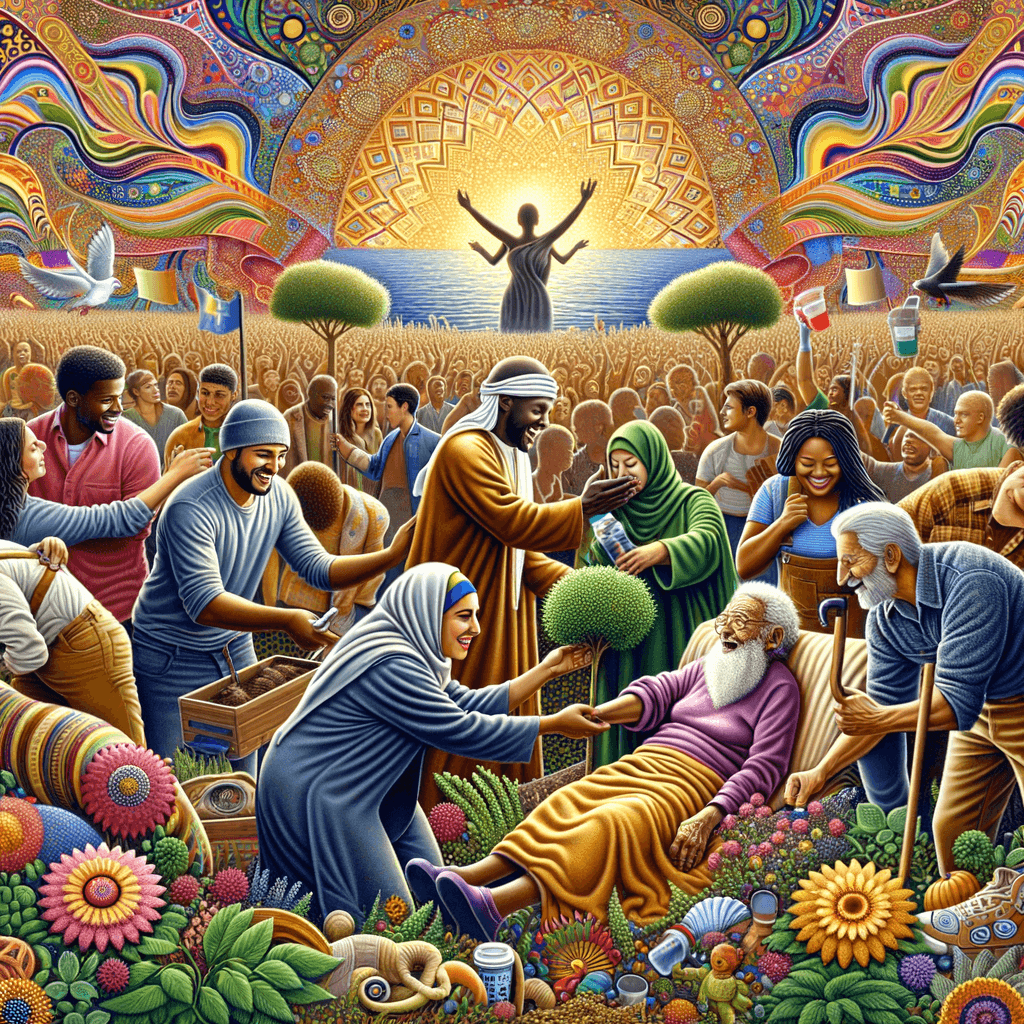
Life is not the sum of our possessions; it’s the sum of our actions. — David A. Bednar
—What lingers after this line?
Value of Actions Over Material Wealth
This quote highlights the idea that the worth of a person's life should not be measured by material possessions or wealth, but rather by their actions and the impact they have on others.
Legacy and Influence
It suggests that what truly defines a life is the legacy left behind through one’s actions. Positive actions can resonate through time, affecting others long after a person is gone.
Personal Fulfillment
The quote implies that fulfillment comes from engaging in meaningful actions rather than accumulating status or possessions. Genuine happiness often stems from helping others and making a difference.
Life Philosophy
David A. Bednar’s perspective reflects a philosophy that values ethics, morality, and community engagement, encouraging individuals to focus on their choices and behaviors rather than on material gains.
Cultural Context
As a prominent leader in The Church of Jesus Christ of Latter-day Saints, Bednar's views are shaped by spiritual and moral teachings, emphasizing the importance of living a life aligned with one’s values and principles.
One-minute reflection
Why might this line matter today, not tomorrow?
Related Quotes
6 selectedA bird is known by its song and a man by his deeds. — Miguel de Cervantes
Miguel de Cervantes
Cervantes condenses a large moral idea into a vivid comparison: just as a bird announces itself through its song, a person reveals his true nature through action. In other words, identity is not established by claims, ap...
Read full interpretation →The things you own end up owning you. It is only after you lose everything that you're free to do anything. — Chuck Palahniuk
Chuck Palahniuk
At first glance, Palahniuk’s line appears to criticize materialism, yet it goes further by describing a reversal of power. We believe we possess objects, but gradually those objects begin to dictate our time, anxiety, an...
Read full interpretation →You are not your job, you're not how much money you have in the bank. — Chuck Palahniuk
Chuck Palahniuk
Chuck Palahniuk’s line works like a quick jolt: it challenges the habit of answering “Who are you?” with a title, salary, or résumé. By insisting you are not your job or your bank balance, he separates a human life from...
Read full interpretation →Spending money to show people how much money you have is the fastest way to have less money. — Morgan Housel
Morgan Housel
Morgan Housel’s line hinges on a simple contradiction: the more you spend trying to look wealthy, the less wealth you keep. Status purchases feel like proof of success, but they often function as withdrawals from the ver...
Read full interpretation →When I was young I thought that money was the most important thing in life; now that I am old I know that it is. — Oscar Wilde
Oscar Wilde
Oscar Wilde’s line begins like a tidy moral fable: youth mistakenly worships money, while age brings wiser priorities. Yet the sentence swivels on its final clause—“now that I am old I know that it is”—turning expected g...
Read full interpretation →It is not the man who has too little, but the man who craves more, that is poor. — Seneca
Seneca
Seneca overturns the usual definition of poverty by shifting it from external possessions to internal appetite. In his view, the person with modest means can be rich if their desires are proportioned to what they have, w...
Read full interpretation →More From Author
More from David A. Bednar →