
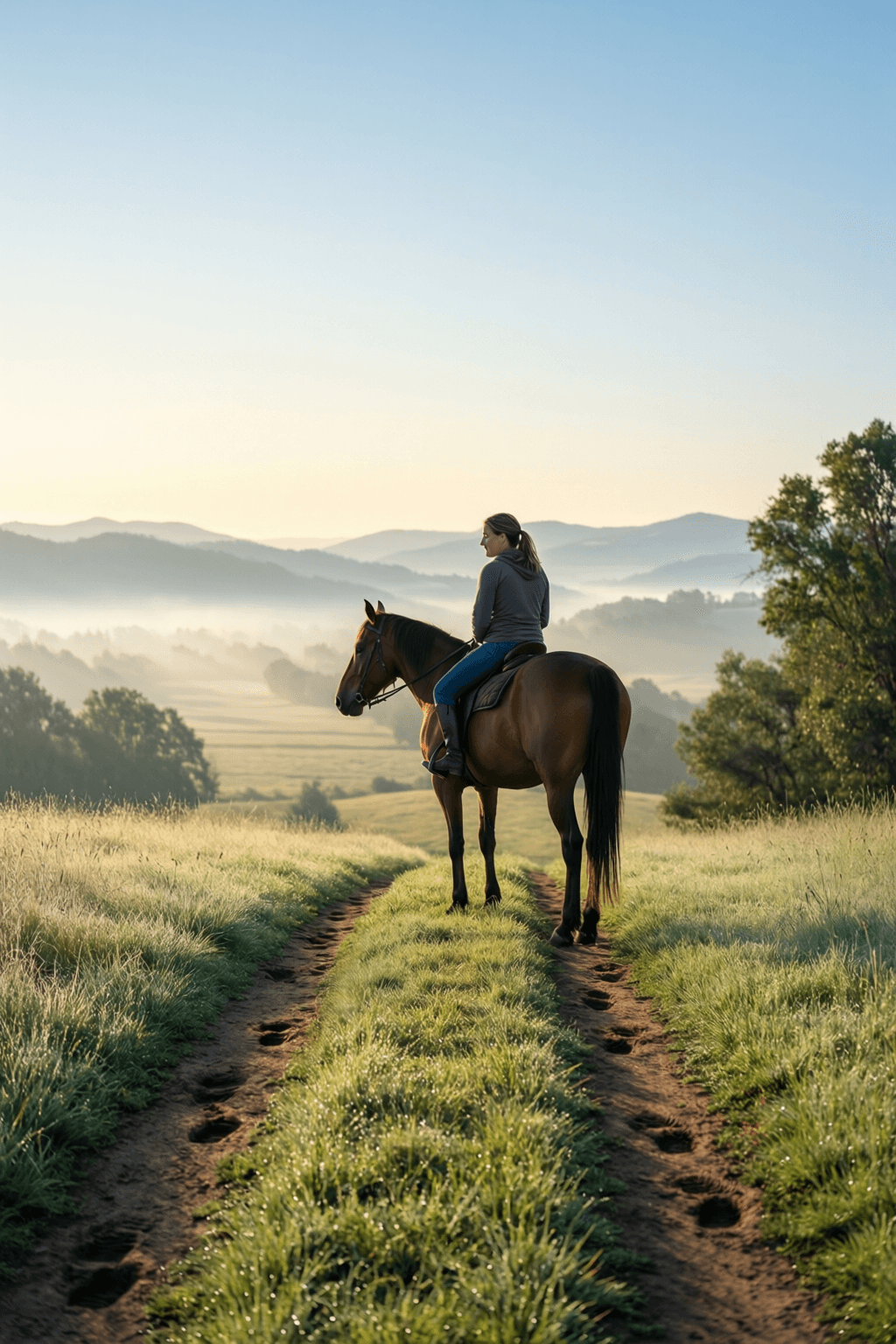
One of the best pieces of advice I ever got was from a horse master. He told me to go slow to go fast. — Viggo Mortensen
—What lingers after this line?
Wisdom from the Training Ground
At first glance, the advice sounds contradictory: how can going slowly possibly help someone move faster? Yet Viggo Mortensen’s recollection of a horse master’s guidance captures a practical truth learned in disciplines where haste creates mistakes. In horse training, rushing unsettles the animal, weakens trust, and ultimately delays progress. By contrast, steady, attentive pacing builds a foundation that makes later speed possible. In this way, the saying is not really about slowness for its own sake. Rather, it argues for patience as a form of efficiency. The horse master’s lesson turns out to be broader than horsemanship, because it suggests that careful beginnings often save us from costly corrections later.
The Paradox of Patience
From there, the quote opens into a larger paradox: impatience often wastes the very time it hopes to save. People tend to equate speed with productivity, but hurried action can produce confusion, rework, and avoidable failure. The Roman proverb festina lente—“make haste slowly,” associated with Augustus and later praised by Erasmus in Adagia (1500)—expresses a similar ideal, showing that this tension between urgency and care has long been recognized. As a result, Mortensen’s line feels timeless rather than merely personal. It reminds us that real momentum is not frantic motion but disciplined progress. When each step is secure, the path ahead becomes smoother, and what seemed slow at the beginning proves faster in the end.
Mastery Begins with Deliberate Practice
Seen another way, the advice reflects how skill is actually built. Whether one is learning to ride, act, write, or play music, early progress depends on deliberate repetition rather than reckless acceleration. Psychologist Anders Ericsson’s work on expert performance, summarized in The Cambridge Handbook of Expertise and Expert Performance (2006), emphasizes focused practice over mindless speed. Precision first, then fluency. Consequently, “go slow to go fast” becomes a rule for mastery. A rider who calmly learns balance and timing will eventually move with confidence; a performer who studies technique patiently will later appear effortless. What looks swift and natural in experts is usually the visible result of a long, careful apprenticeship.
Trust, Attention, and Relationship
Because the quote comes from a horse master, it also carries an important relational meaning. Horses respond not only to commands but to the emotional state of the person handling them. If the rider is tense, abrupt, or impatient, the animal often mirrors that instability. Going slowly, then, is a way of listening—of creating trust through consistency rather than force. This insight extends beyond animals. In leadership, friendship, and love, pushing too hard can damage the connection needed for lasting progress. By slowing down enough to notice another being’s pace, we often create the conditions for cooperation. What begins as restraint gradually becomes harmony, and harmony moves farther than pressure ever can.
A Rule for Work and Daily Life
Ultimately, the quote endures because it applies so naturally to ordinary life. In work, rushing a plan can lead to expensive revisions; in conversation, a quick reaction can become a lasting regret; in personal growth, trying to transform overnight often ends in burnout. The carpenter’s saying “measure twice, cut once” echoes the same principle: careful preparation protects future speed. Therefore, Mortensen’s remembered advice offers more than a memorable phrase. It is a compact philosophy of progress, urging us to trade panic for steadiness. By accepting a slower beginning, we often gain a surer middle and a stronger finish—discovering that patience is not the enemy of achievement, but one of its most reliable allies.
Recommended Reading
As an Amazon Associate, we earn from qualifying purchases.
One-minute reflection
Why might this line matter today, not tomorrow?
Related Quotes
6 selectedTo do anything to a high standard, you must be prepared to be bored for long periods of time. — James Clear
James Clear
James Clear’s observation cuts against the modern preference for constant stimulation. At first glance, high achievement looks exciting from the outside, yet the path toward it is usually repetitive, slow, and uneventful...
Read full interpretation →The artist must elect to fight for the beauty of the work, stitch by patient stitch, against the rush of the world. — Ursula K. Le Guin
Ursula K. Le Guin
Ursula K. Le Guin’s line begins with a deliberate verb: the artist must “elect.” In other words, beauty is not an accident or a luxury but a conscious choice made in resistance to haste.
Read full interpretation →There is no royal road to anything. One thing at a time, all things in succession. That which grows fast, withers as rapidly. That which grows slowly, endures. — J. G. Holland
J. G. Holland
J. G.
Read full interpretation →Do not mistake patience for passivity. True growth requires the discipline to walk away from what is stagnant so you can run toward what is vital. — Epictetus
Epictetus
At first glance, the quote draws a sharp line between patience and passivity, two qualities often confused in daily life. Patience, in this sense, is not silent resignation but a disciplined steadiness that allows a pers...
Read full interpretation →We were planting seeds of change, the fruit of which we might never see. We had to be patient. — Michelle Obama
Michelle Obama
Michelle Obama’s quote frames social progress through the language of cultivation: people plant seeds now, even when the harvest may come much later. In that image, change is not sudden or theatrical but gradual, organic...
Read full interpretation →One doesn't get to be a master of one's own life by rushing. You have to learn the patience of a gardener who knows the harvest cannot be hurried. — Paulo Coelho
Paulo Coelho
At its core, Paulo Coelho’s reflection challenges a modern obsession with speed. He argues that mastery over one’s life does not come from frantic action or constant acceleration, but from learning when to wait, observe,...
Read full interpretation →More From Author
More from Viggo Mortensen →