
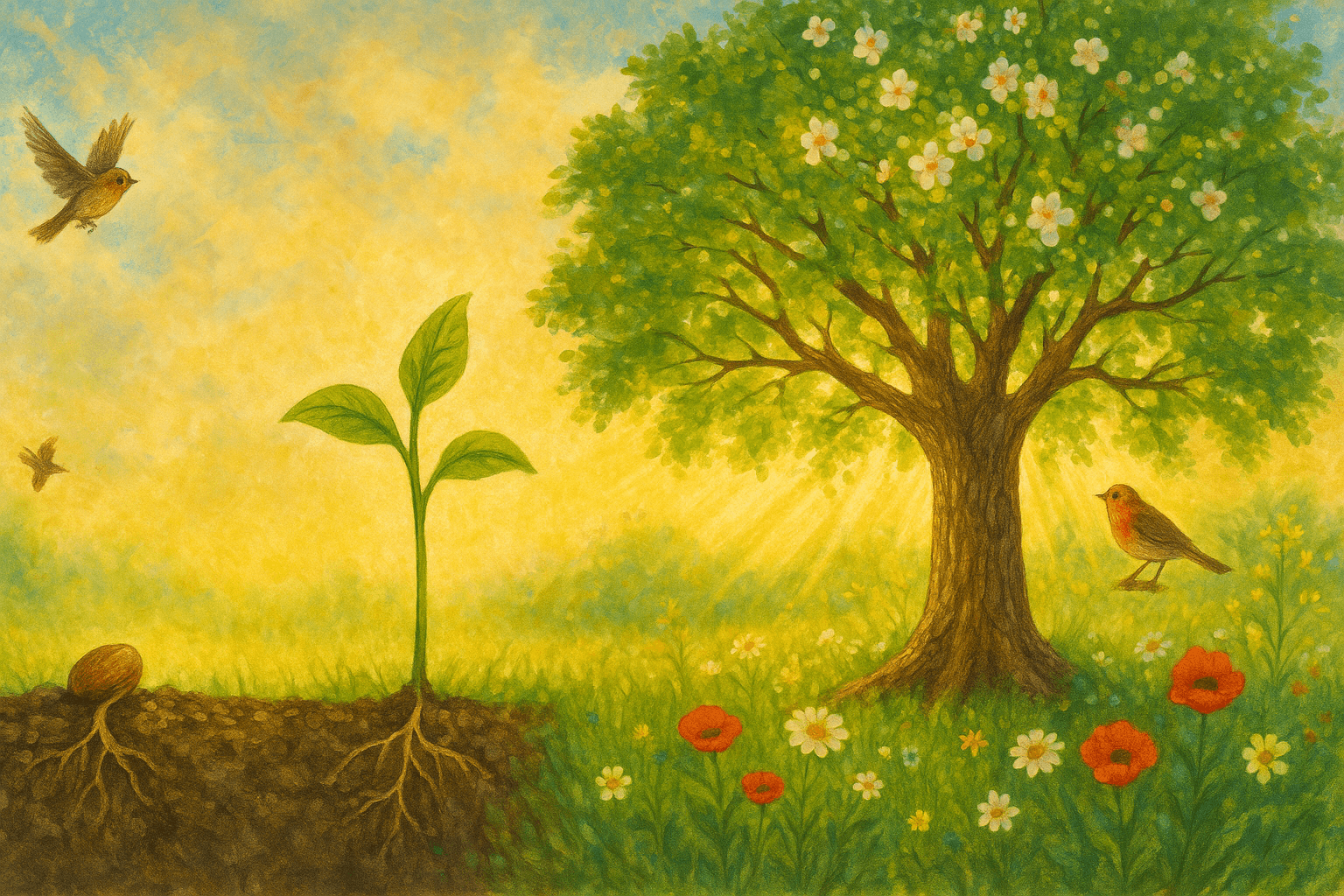
Purpose fuels the heart beyond mere survival. — Paulo Coelho
—What lingers after this line?
Moving Beyond Basic Existence
Paulo Coelho’s statement immediately pushes us to question the difference between living and merely surviving. Surviving addresses only our most basic physical needs—food, shelter, and safety. However, as soon as those essentials are met, the question arises: what gives human life its direction and energy? Here, Coelho posits that it is purpose, not just the mechanics of survival, that animates and invigorates the heart.
Historical Philosophies on Purpose
Throughout history, thinkers have grappled with the necessity of purpose. For instance, Viktor Frankl in his seminal work *Man’s Search for Meaning* (1946), chronicles how the search for meaning sustained prisoners in Nazi concentration camps when mere survival was insufficient. He argued that people with 'a why to live can bear almost any how,' echoing Coelho’s modern wisdom by demonstrating that purpose can carry individuals through unimaginable hardships.
From Biological Drives to Passion Projects
While biology ensures we seek water and warmth, it is passion and ambition that propel us forward once those needs are met. Modern examples abound: artists who dedicate years to a single canvas, scientists obsessed with unraveling mysteries, or activists undeterred by setbacks. Their achievements stem not only from their abilities, but from a burning sense of purpose—fulfilling emotional and psychological appetites that transcend biology.
Purpose and Emotional Resilience
Importantly, living with purpose also fosters resilience. Psychological studies, such as those discussed by Emily Esfahani Smith in *The Power of Meaning* (2017), reveal that people who connect daily actions to a broader purpose show greater contentment and bounce back from setbacks more easily. Thus, purpose acts as a buffer against despair and aimlessness, fortifying the heart against life's inevitable challenges.
Crafting Purpose in Modern Life
In today’s fast-paced world, many struggle to find significance beyond routine tasks. Yet, as Coelho suggests, intentionally seeking purpose—whether through relationships, creativity, or contribution to a larger cause—can transform existence from a grind into a journey. Ultimately, it is this sense of direction that elevates our experiences, fueling the heart and granting depth and radiance to everyday life.
One-minute reflection
Where does this idea show up in your life right now?
Related Quotes
6 selectedPurpose fuels passion, and passion fuels perseverance. — Paulo Coelho
Paulo Coelho
Paulo Coelho’s statement begins with the recognition that purpose is the bedrock of motivation. Throughout history, individuals who have identified a clear purpose are more likely to chart meaningful paths.
Read full interpretation →Purpose is the compass that guides storms into calm seas. — Paulo Coelho
Paulo Coelho
Paulo Coelho’s metaphor likens purpose to a compass, an essential tool for navigation especially amid tumultuous conditions. Just as a compass guides sailors through tempestuous waters, a clear sense of purpose helps ind...
Read full interpretation →A ship is safe in harbor, but that’s not what ships are for. — Paulo Coelho
Paulo Coelho
Paulo Coelho’s quote uses the ship and harbor as powerful symbols for human potential and safety. The harbor, a place of refuge, represents the comfort zones where one feels secure and unchallenged.
Read full interpretation →Our plans miscarry because they have no aim. When a man doesn't know what harbor he's making for, no wind is the right wind. — Seneca
Seneca
Seneca’s remark begins with a simple but severe diagnosis: plans fail not merely from bad luck, but from the absence of a clear aim. In his view, activity alone is not progress.
Read full interpretation →Instead of focusing on how much you can accomplish, focus on how much you can absolutely love what you're doing. — Leo Babauta
Leo Babauta
At its core, Leo Babauta’s quote invites a quiet but radical shift in priorities. Rather than measuring a day by boxes checked, milestones reached, or output produced, he asks us to judge our effort by the depth of our a...
Read full interpretation →We must take care to live not merely a long life, but a full one; for living a long life requires only good fortune, but living a full life requires character. — Seneca
Seneca
Seneca begins by drawing a sharp distinction between duration and depth. A long life, he says, may depend largely on luck—health, safety, and circumstances beyond our control.
Read full interpretation →More From Author
More from Paulo Coelho →One doesn't get to be a master of one's own life by rushing. You have to learn the patience of a gardener who knows the harvest cannot be hurried. — Paulo Coelho
At its core, Paulo Coelho’s reflection challenges a modern obsession with speed. He argues that mastery over one’s life does not come from frantic action or constant acceleration, but from learning when to wait, observe,...
Read full interpretation →It is a good idea always to do something relaxing prior to making an important decision in your life. — Paulo Coelho
Paulo Coelho’s remark begins with a simple but powerful premise: important decisions are rarely improved by agitation. When the mind is tense, it tends to confuse urgency with clarity, pushing us toward choices made out...
Read full interpretation →Your 'yes' has no value until you learn to say 'no'. — Paulo Coelho
Paulo Coelho’s line hinges on a simple contrast: a “yes” only carries weight when an alternative is genuinely available. If you can’t—or won’t—say “no,” agreement becomes automatic rather than chosen, and it starts to re...
Read full interpretation →Dare to begin where fear says to stop; the first step redraws the map — Paulo Coelho
Paulo Coelho’s line treats fear less as a warning and more as a border we mistakenly accept as permanent. When fear says “stop,” it often isn’t pointing to actual danger; it’s signaling uncertainty, inexperience, or the...
Read full interpretation →