
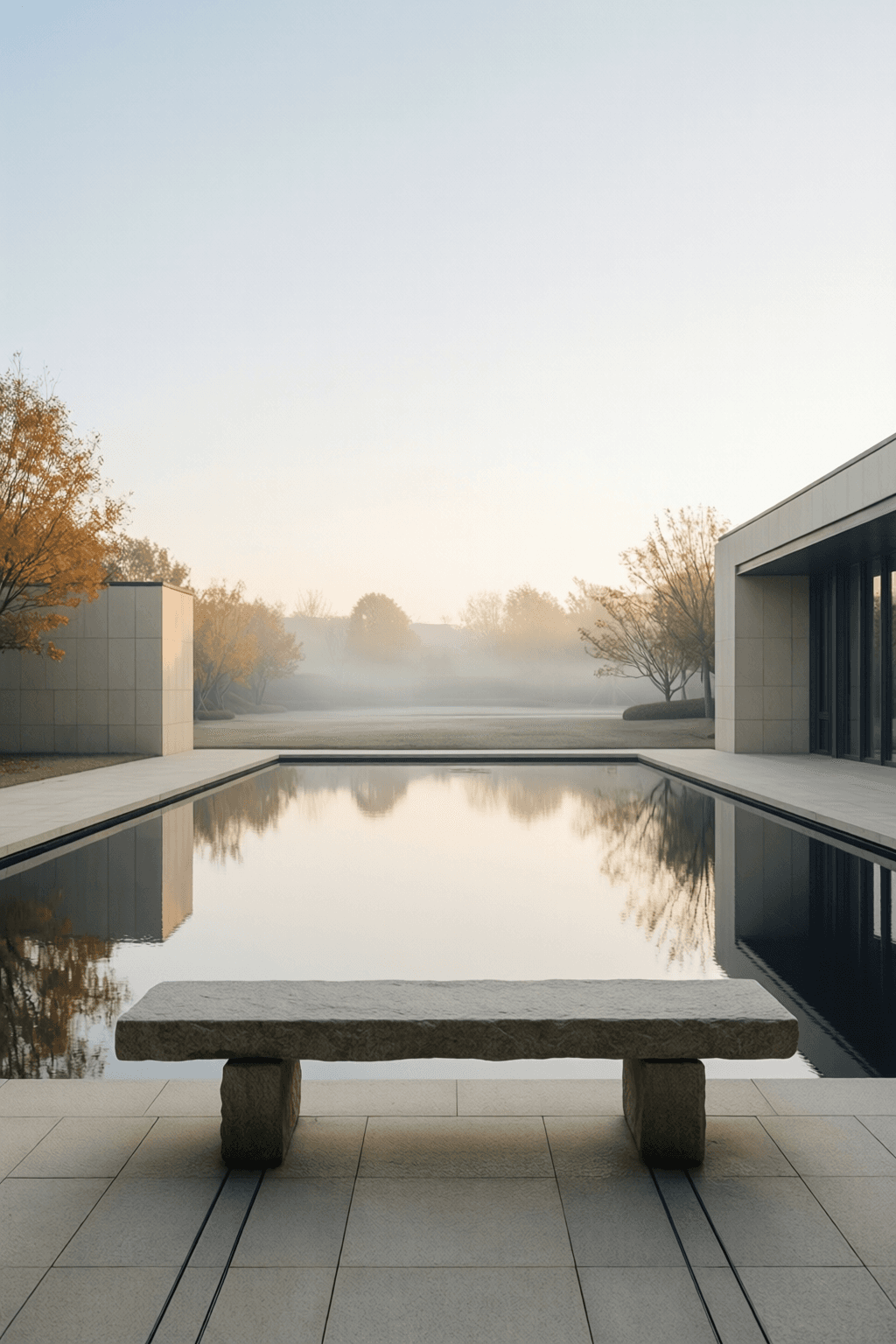
Stillness reveals what noise hides. — Marcus Aurelius
—What lingers after this line?
The Wisdom Inside Quiet
At its core, Marcus Aurelius’ line suggests that silence is not emptiness but a way of seeing. In the rush of constant chatter, distraction, and reaction, important truths are often drowned out. Stillness, by contrast, creates the space in which subtle thoughts, buried feelings, and overlooked realities can finally come into view. This insight fits naturally within Stoic philosophy. Marcus Aurelius’ Meditations (c. AD 170–180) repeatedly returns to the need for inner composure amid external disorder. In that sense, stillness is less about withdrawing from life than about clearing the mind enough to perceive it accurately.
Noise as More Than Sound
From there, it becomes clear that “noise” in this saying means more than literal volume. It includes mental clutter, social pressure, endless opinion, and the emotional turbulence that keeps a person reactive rather than reflective. What noise hides, therefore, is often not truth itself but our ability to recognize it. Modern life makes this especially vivid. Notifications, headlines, and constant commentary can produce a state of perpetual interruption. As a result, people may confuse stimulation with understanding, when in fact deeper clarity often arrives only after the surrounding interference has settled.
Self-Knowledge Through Pause
Because of this, stillness becomes a path to self-knowledge. When external distractions fall away, a person is left with motives, fears, desires, and contradictions that are usually easy to avoid. That encounter can be uncomfortable, yet it is precisely what makes quiet so revealing. This idea echoes Socrates’ insistence in Plato’s Apology (c. 399 BC) that the unexamined life is not worth living. Although Socrates emphasized dialogue, Marcus points inward: before one can live wisely, one must first become quiet enough to hear the inner life honestly. Stillness, then, is a form of moral attention.
Nature’s Lesson in Silence
Moreover, nature offers a simple illustration of the quote’s meaning. A pond churned by wind reflects nothing clearly, but when its surface becomes still, shapes appear with precision. In much the same way, a restless mind distorts experience, whereas a calm one reflects reality more faithfully. This image appears across traditions. In the Tao Te Ching, traditionally attributed to Laozi (c. 4th century BC), wisdom is often associated with emptiness, receptivity, and calm. By linking insight to stillness, both Stoic and Taoist thought suggest that truth is not always seized through force; often, it emerges when agitation ceases.
Stillness as Strength, Not Escape
Yet the quote should not be mistaken for a rejection of action. Marcus Aurelius was a Roman emperor, not a hermit, and his philosophy was forged amid war, duty, and political strain. Therefore, his praise of stillness points to disciplined inner steadiness rather than passivity. This distinction matters. Stillness is valuable not because it removes us from the world, but because it prepares us to meet the world without confusion. By quieting impulse and vanity, a person can act with greater judgment, making silence not an escape from responsibility but a foundation for it.
A Practice for Everyday Life
Finally, the saying endures because it remains practical. A brief pause before responding in anger, a walk without devices, or a few minutes of reflection at day’s end can reveal what haste conceals. Often the hidden thing is simple: a better decision, a truer feeling, or an unnecessary fear. In this way, Marcus Aurelius offers more than a poetic contrast between silence and sound. He proposes a discipline of perception. When noise recedes, what emerges is not merely calm, but understanding—and that may be the clearest form of wisdom available to us.
Recommended Reading
As an Amazon Associate, we earn from qualifying purchases.
One-minute reflection
Why might this line matter today, not tomorrow?
Related Quotes
6 selectedMaster your attention; direct it like a lamp to reveal the path beneath your feet. — Marcus Aurelius
Marcus Aurelius
Marcus Aurelius frames attention as something you can master rather than something that merely happens to you. By choosing the metaphor of a lamp, he implies both agency and clarity: the mind can be aimed, brightened, an...
Read full interpretation →Hold your focus like a lantern in fog — it will reveal the next path. — Marcus Aurelius
Marcus Aurelius
The image of a lantern in fog captures a central Stoic insight: clarity rarely comes from changing the world outside, but from steadying the light within. Marcus Aurelius, in his *Meditations* (c.
Read full interpretation →Let resolve be the light that cuts through a thousand doubts. — Marcus Aurelius
Marcus Aurelius
Marcus Aurelius' line, “Let resolve be the light that cuts through a thousand doubts,” evokes a vivid image: the mind as a landscape shrouded in mist, where uncertainty multiplies like shadows. In this scene, resolve is...
Read full interpretation →Do you have the patience to wait until your mud settles and the water is clear? — Lao Tzu
Lao Tzu
Lao Tzu’s question frames patience not as passive delay but as an active kind of wisdom. The image of muddy water settling on its own suggests that confusion often clears not through force, but through restraint.
Read full interpretation →You don't lack discipline, you lack clarity. — Ross Harkness
Ross Harkness
Ross Harkness’s line reframes a common personal frustration. People often blame themselves for inconsistency, assuming they are lazy or weak-willed, yet the quote suggests a different problem: they may simply not know ex...
Read full interpretation →Don't underestimate the value of Doing Nothing, just going along, listening to all the things you can't hear, and not bothering. — A.A. Milne
A. A. Milne
At first glance, A.A. Milne’s line sounds playful, almost like permission to be lazy.
Read full interpretation →More From Author
More from Marcus Aurelius →The art of life is more like the wrestler's art than the dancer's; stand ready and firm to meet sudden and unexpected onsets. — Marcus Aurelius
Marcus Aurelius contrasts two arts to clarify what living well demands. A dancer suggests elegance, rhythm, and practiced beauty; a wrestler, by contrast, suggests balance under pressure, resistance, and constant readine...
Read full interpretation →How much time he gains who does not look to see what his neighbour says or does or thinks, but only at what he does himself, to make it just and holy. — Marcus Aurelius
Marcus Aurelius argues that a great deal of life is wasted in watching other people—what they say, what they do, and even what they might be thinking. Instead, he recommends a disciplined inward turn: focus on your own c...
Read full interpretation →Sometimes, protecting your peace is the better choice. — Marcus Aurelius
At first glance, the saying frames peace not as passivity but as discipline. To protect one’s peace is to recognize that not every conflict deserves entry into the mind.
Read full interpretation →Don't go expecting perfection; be satisfied with even the smallest progress. — Marcus Aurelius
Marcus Aurelius advises against the exhausting demand for flawlessness and redirects attention toward modest improvement. In the spirit of Stoic thought, especially in his Meditations (c.
Read full interpretation →