
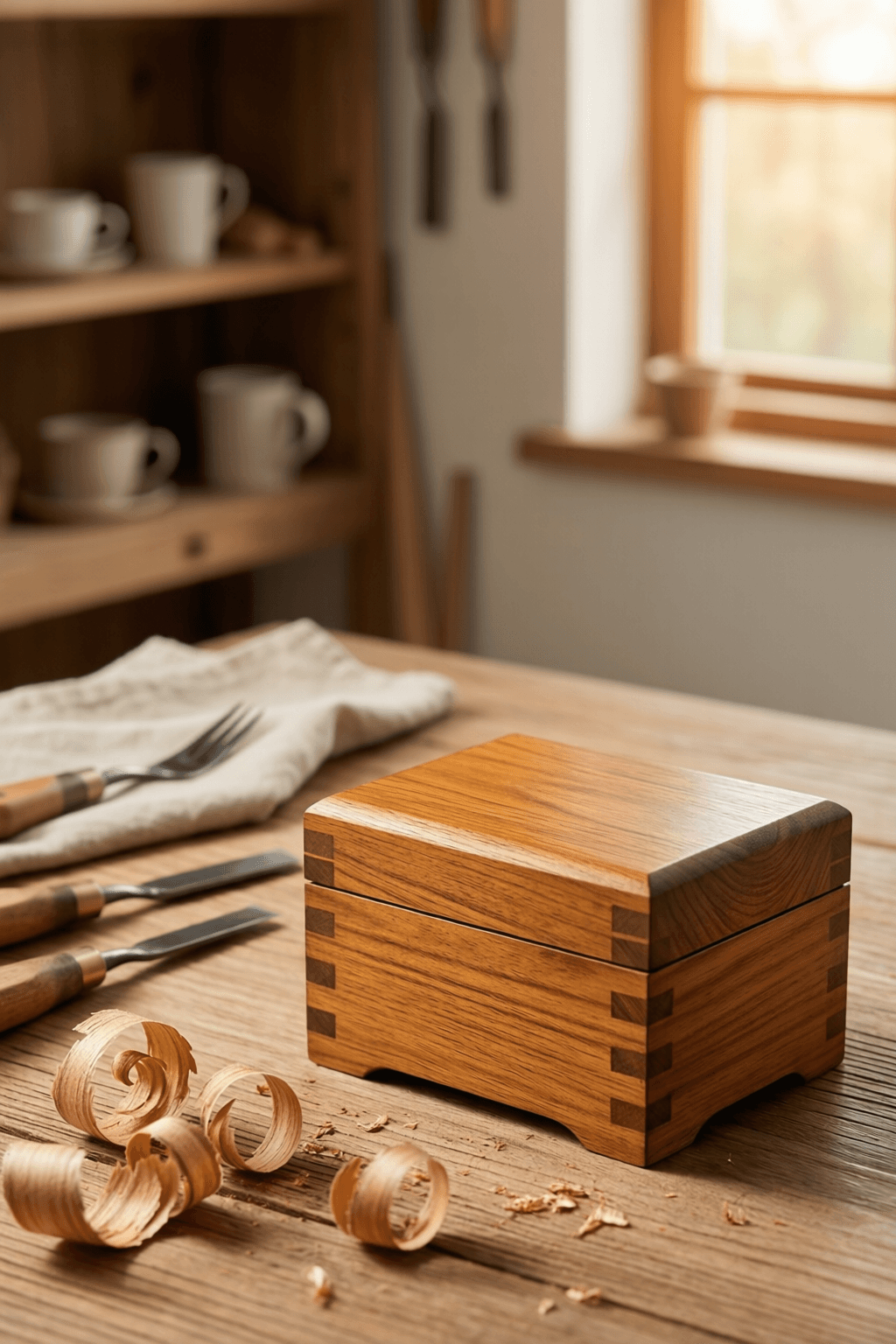
The beauty of a finely worked object points to the beauty of the craftsmanship. — Paul Klee
—What lingers after this line?
Beauty as Evidence of Making
Paul Klee’s statement begins with a simple but powerful observation: a beautiful object does not merely please the eye; it points beyond itself to the intelligence, patience, and skill that shaped it. The object becomes a visible trace of invisible labor, allowing craftsmanship to speak through proportion, surface, balance, and detail. In this sense, beauty is not accidental ornament. Rather, it is a sign of care made tangible. A finely carved chair, a balanced ceramic bowl, or a delicate drawing invites us to notice not only what has been made, but how attentively it has been brought into being.
Klee and the Artist’s Discipline
Moving from the object to Klee himself, the quote reflects an artist deeply concerned with process. Paul Klee, who taught at the Bauhaus from 1921 to 1931, believed that art involved structure, rhythm, and disciplined experimentation. His *Pedagogical Sketchbook* (1925) shows how lines, forms, and colors could be studied almost like living forces. Thus, Klee’s idea resists the notion that beauty comes only from inspiration. Instead, it suggests that creative excellence depends on trained perception and thoughtful execution. The finished work becomes a record of disciplined imagination.
The Object as a Silent Teacher
From there, the finely worked object becomes more than a possession; it becomes a silent teacher. When we look closely at an illuminated manuscript, a Japanese tea bowl, or a handwoven textile, we begin to sense the decisions embedded within it. Each curve, seam, or brushstroke carries evidence of judgment. This attention changes the viewer as well. Rather than consuming beauty quickly, we learn to read it slowly. The object guides us toward respect for craft, reminding us that refinement usually emerges through repetition, correction, and intimate knowledge of materials.
Craftsmanship and Human Presence
The quote also suggests that craftsmanship preserves human presence. In an age of mass production, handmade or finely designed objects often feel meaningful because they retain signs of touch and intention. John Ruskin’s *The Stones of Venice* (1851–1853) similarly praised the marks of the worker, arguing that imperfection could reveal life and individuality. Klee’s remark fits this broader tradition. The beautiful object is not isolated from its maker; it carries the maker’s sensitivity within it. Through craft, human thought becomes form, and form becomes a quiet expression of character.
Materials Transformed by Skill
At the same time, Klee’s insight depends on the relationship between material and mastery. Wood, clay, pigment, glass, or metal may possess natural beauty, but craftsmanship reveals what those materials can become. The maker does not simply impose a design; ideally, the maker listens to the material’s possibilities. This is why a finely worked object often feels inevitable, as though it could not have been otherwise. Skill transforms raw matter without erasing its nature. In that transformation, we perceive both the beauty of the object and the deeper beauty of the craft behind it.
A Lesson for Modern Creativity
Finally, Klee’s words remain relevant far beyond traditional art. Whether in architecture, typography, software design, cooking, or music, a well-made result reveals the quality of the thinking behind it. Elegance in any field usually comes from clarity, restraint, and sustained attention. Therefore, the quote invites us to value process as much as outcome. When an object appears beautiful because it is carefully made, it reminds us that craftsmanship is not merely technical skill. It is a form of devotion, where care becomes visible and beauty becomes the signature of work well done.
One-minute reflection
Where does this idea show up in your life right now?
Related Quotes
6 selectedCraftsmanship is the quality of design, shown in something by the skill, time, and attention to detail put in by the artist. — Canvs Editorial
Canvs Editorial
At its core, this statement presents craftsmanship as visible care. Design is not treated as mere decoration, but as the outward result of discipline, patience, and practiced skill.
Read full interpretation →The beauty of craftsmanship points to the beauty of the source of the craftsmanship. — Frank Lloyd Wright
Frank Lloyd Wright
Frank Lloyd Wright’s remark begins with a simple observation: when we encounter exquisite craftsmanship, we are moved not only by the object itself but also by the mind and spirit behind it. A finely joined chair, a care...
Read full interpretation →The beauty of craftsmanship is that it is a dialogue with time, a slow resistance against the rush of the world. — Richard Sennett
Richard Sennett
At its core, Richard Sennett’s line presents craftsmanship as more than skilled labor; it becomes a moral and temporal stance. To make something carefully is to refuse the culture of haste, where speed is often mistaken...
Read full interpretation →The beauty of the world is that it is a craft, not a product. — Simone Weil
Simone Weil
Simone Weil’s remark shifts our attention from the world as a finished object to the world as a living act of making. A product suggests completion, closure, and fixed utility, whereas a craft implies care, patience, rev...
Read full interpretation →The beauty of handmade is that it carries the soul of the maker, not the cold perfection of a machine. — Bill Watterson
Bill Watterson
At its heart, Bill Watterson’s quote praises the subtle irregularities that make handmade work feel alive. A hand-thrown bowl, a stitched quilt, or a penciled sketch often carries small asymmetries, yet those very marks...
Read full interpretation →Real craftsmanship, regardless of the skill involved, reflects real caring, and real caring reflects our attitude about ourselves, about our fellowmen, and about life. — Spencer W. Kimball
Spencer W. Kimball
Spencer W. Kimball’s statement begins by reframing craftsmanship as something deeper than technical competence.
Read full interpretation →More From Author
More from Paul Klee →It is through the cooperation of different thoughts that we can move forward. — Paul Klee
This quote emphasizes the importance of diversity in thought. By combining different ideas and viewpoints, individuals or societies are better equipped to progress and solve complex problems.
Read full interpretation →A single day is enough to make us a little larger or, another time, a little smaller. — Paul Klee
This quote highlights how each day, through its experiences and interactions, possesses the ability to influence our personal growth or cause setbacks. A single moment or event can leave a lasting impact on our character...
Read full interpretation →