
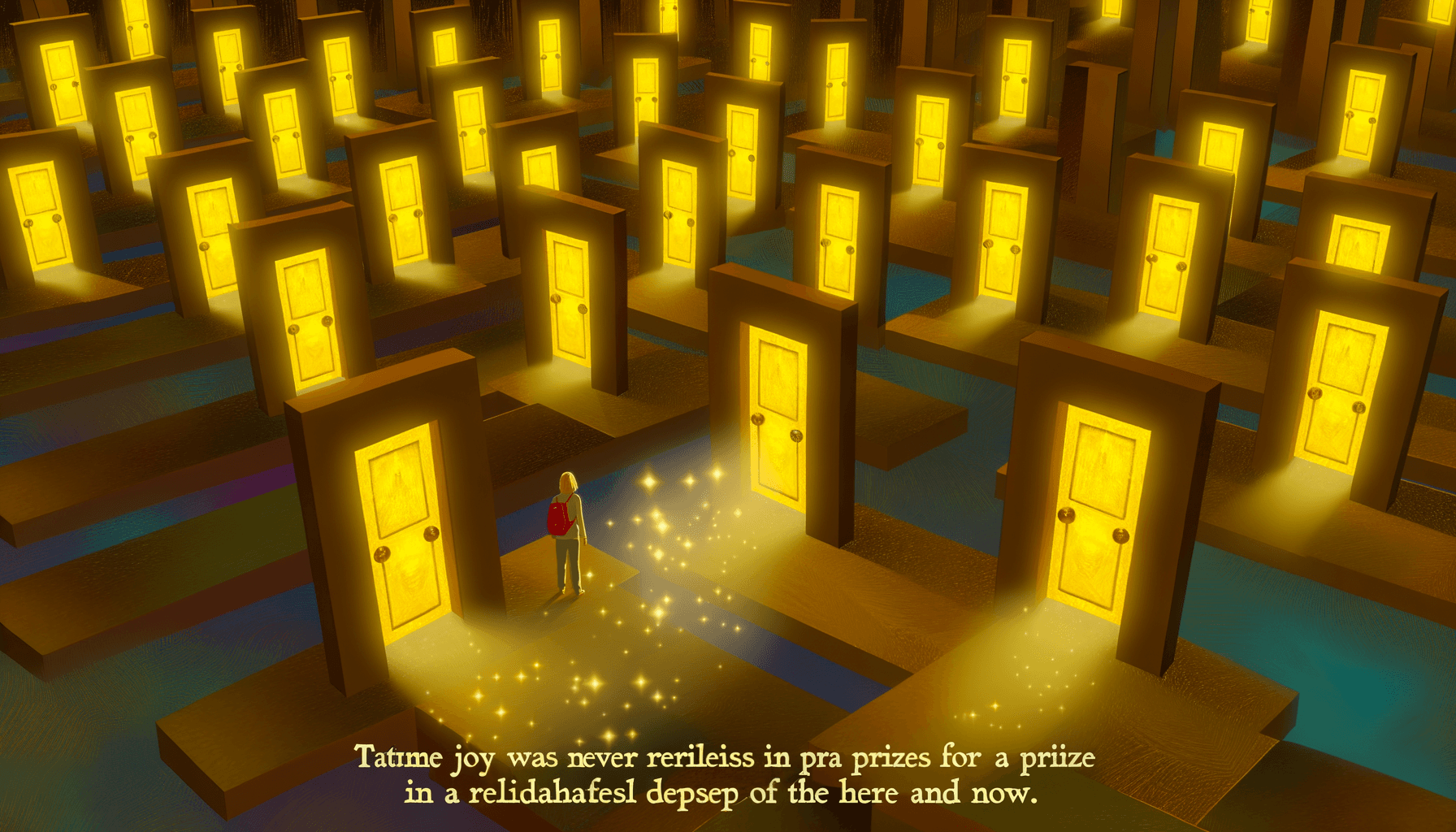
The pursuit of happiness is a most ridiculous phrase; if you pursue happiness you’ll never find it. — Viktor Frankl
—What lingers after this line?
The Paradox of Happiness
Frankl suggests that actively chasing happiness is counterproductive. Happiness is not something that can be directly pursued; rather, it is a byproduct of meaningful actions and a purposeful life.
Meaning Over Happiness
As a psychologist and Holocaust survivor, Frankl believed that true fulfillment comes from finding meaning in life. He argued that those who seek meaning rather than happiness are more likely to achieve deep and lasting satisfaction.
Happiness as a Byproduct
Happiness often arises unexpectedly when people immerse themselves in meaningful activities, relationships, and personal growth. Constantly seeking it, however, can lead to disappointment.
Psychological Perspective
From a psychological standpoint, obsessing over happiness can create anxiety and frustration. Frankl’s perspective aligns with research showing that focusing on external gratification rarely leads to long-term happiness.
Influence of Logotherapy
Frankl developed logotherapy, a form of therapy centered around finding meaning in life. His view on happiness reflects this philosophy—happiness is not an end goal but a natural outcome of living with purpose.
One-minute reflection
Where does this idea show up in your life right now?
Related Quotes
6 selectedWhen you run after happiness, it eludes you; when you focus on purpose, it arrives. — Viktor Frankl
Viktor Frankl
Viktor Frankl’s observation highlights a perplexing phenomenon: the more desperately we chase after happiness, the more it seems to slip through our grasp. This elusiveness of happiness is not a new idea—ancient philosop...
Read full interpretation →Choose meaning over comfort and you will wake each morning richer than before — Viktor Frankl
Viktor Frankl
At the outset, Frankl’s aphorism draws a sharp yet liberating distinction: comfort soothes, but meaning strengthens. Comfort seeks to reduce friction in the moment; meaning accepts friction now to deepen life’s coherence...
Read full interpretation →When you look at your life, the greatest happinesses are family happinesses. — Joyce Brothers
Joyce Brothers
Joyce Brothers’ remark begins with a retrospective question: when people survey their lives, what moments shine most brightly? Her answer is strikingly ordinary yet profound—family happiness.
Read full interpretation →The best parts of your life are the ones that happen when absolutely no one is looking. — Pema Chödrön
Pema Chödrön
Pema Chödrön’s quote turns attention away from applause and toward the private texture of living. At first glance, it suggests that life’s richest moments are not always the dramatic ones shared with an audience, but the...
Read full interpretation →If you want to be happy, learn to be alone without being lonely. Learn that being alone does not mean being unhappy. — Michael Josephson
Michael Josephson
Michael Josephson’s remark turns on a subtle but life-changing distinction: being alone is a circumstance, while being lonely is an emotional interpretation of that circumstance. In other words, solitude does not automat...
Read full interpretation →The better part of happiness is to wish to be what you are. — Desiderius Erasmus
Desiderius Erasmus
At its core, Erasmus suggests that happiness is not primarily found in acquiring a different life, status, or identity, but in reconciling oneself with one’s own nature. To wish to be what you are is to stop waging an in...
Read full interpretation →More From Author
More from Viktor Frankl →You are not responsible for your first thought, but you are responsible for your second thought. — Viktor Frankl
At its core, the quotation distinguishes between what arises automatically and what we deliberately endorse. A first thought may be reflexive, inherited, fearful, angry, or conditioned by habit; it appears before moral j...
Read full interpretation →The meaning of life differs from man to man, from day to day and from hour to hour. — Viktor Frankl
Frankl’s sentence immediately resists the idea that life has one universal, static answer. Instead, he frames meaning as something that changes with the individual and even with the passing of time—so what matters most t...
Read full interpretation →Each man is questioned by life; and he can only answer to life by answering for his own life. — Viktor Frankl
Frankl reverses a common assumption: instead of treating life like a puzzle we interrogate for meaning, he frames life as the one doing the asking. In this view, daily events—work demands, relationship conflicts, illness...
Read full interpretation →Meaning is not something you find; it is something you build. Stop waiting for a sign and start laying the bricks of your own purpose. — Viktor Frankl
Frankl’s line overturns a familiar hope—that life’s purpose is hidden somewhere, waiting to be uncovered like a buried artifact. Instead, he frames meaning as something made, assembled through choices and commitments ove...
Read full interpretation →