
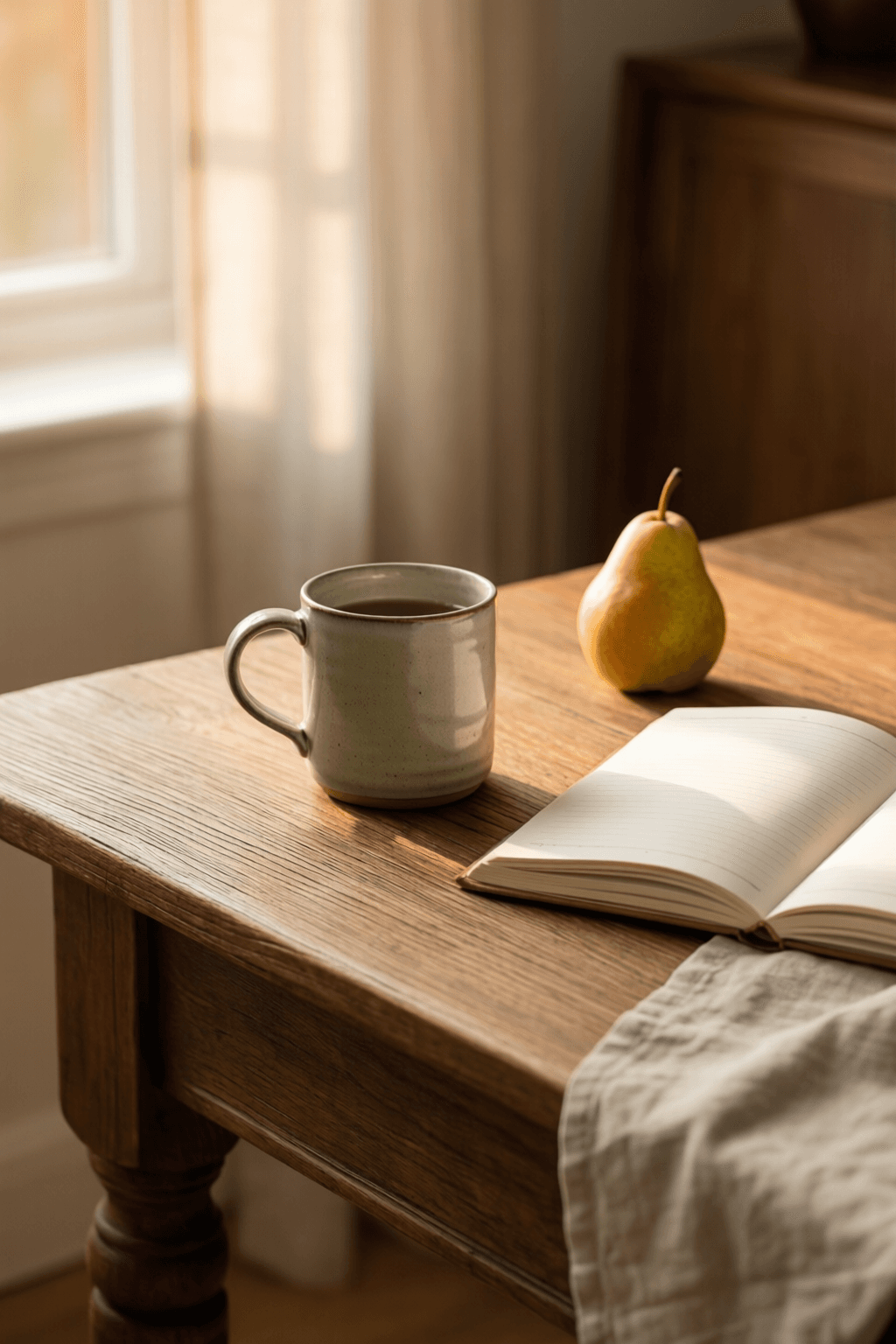
The way to capture the moment is to slow down and look within, to simplify and celebrate the everyday. — Carl Honoré
—What lingers after this line?
The Invitation to Pause
Carl Honoré’s quote begins with a gentle but radical suggestion: if we want to truly capture a moment, we must first stop rushing through it. Rather than treating life as a sequence of tasks to be completed, he asks us to pause long enough to notice what is actually happening within and around us. In that sense, the moment is not something we seize by force, but something we receive through attention. This idea immediately shifts the focus from external achievement to inner presence. By slowing down, we create the mental space needed to experience life more fully, and that inner stillness becomes the foundation for everything else Honoré recommends.
Looking Within for Meaning
From that pause, Honoré moves inward, suggesting that the richest understanding of a moment comes through self-awareness. Looking within does not mean withdrawing from life; rather, it means noticing our feelings, assumptions, and desires as they arise. In this way, ordinary experience gains depth, because we are no longer merely passing through events—we are consciously inhabiting them. This inward turn echoes older traditions of reflection. Marcus Aurelius’s Meditations (c. AD 180), for example, repeatedly emphasizes examining one’s inner life in order to meet the world with clarity. Honoré’s modern phrasing carries a similar message: presence begins inside.
The Power of Simplicity
Once we begin to pay attention inwardly, the next step naturally follows: simplify. Honoré implies that much of what distracts us from the present is unnecessary clutter, whether material, digital, or emotional. By reducing noise, we make room for perception, and what seemed small or forgettable starts to stand out with surprising vividness. Therefore, simplicity is not deprivation but refinement. The Japanese aesthetic idea of wabi-sabi, described in Leonard Koren’s Wabi-Sabi for Artists, Designers, Poets & Philosophers (1994), similarly values the modest and unadorned. Both perspectives suggest that beauty often appears most clearly when excess falls away.
Celebrating the Everyday
Having slowed down and simplified, we are finally able to do what Honoré presents as the deepest reward: celebrate the everyday. This is a striking choice of words, because celebration is usually reserved for milestones and spectacles. Yet Honoré reminds us that daily life—a shared meal, sunlight on a wall, a quiet walk—contains its own worth when we are attentive enough to see it. In literature, Virginia Woolf’s Mrs Dalloway (1925) offers a similar sensitivity to ordinary experience, turning passing impressions into moments of meaning. In that light, the everyday is not dull or secondary; it is the true setting of a human life.
A Quiet Critique of Modern Speed
At the same time, the quote carries an understated criticism of modern culture. Honoré, known for In Praise of Slowness (2004), has often argued that speed is treated as a virtue even when it erodes our capacity for joy, reflection, and connection. His words challenge the assumption that faster living is better living, suggesting instead that haste can make us strangers to our own days. Consequently, capturing the moment becomes almost an act of resistance. To slow down in a culture of constant acceleration is to reclaim attention as something precious, rather than allowing it to be fragmented by endless urgency.
Presence as a Daily Practice
Ultimately, Honoré’s insight is practical as much as poetic. It does not require a dramatic life change so much as a different way of moving through the day: lingering over conversation, noticing breath, setting aside distractions, or allowing routine tasks to unfold without impatience. These small acts train us to live less mechanically and more deliberately. Thus, the quote ends not in abstraction but in a usable philosophy. The moment is captured not through cameras, schedules, or productivity, but through presence. By slowing down, looking within, simplifying, and honoring the ordinary, we learn to inhabit life rather than merely rush past it.
One-minute reflection
Where does this idea show up in your life right now?
Related Quotes
6 selectedThe world is full of small joys; the art is in knowing how to recognize them.
Unknown
This quote emphasizes the importance of finding happiness in the little things that occur daily. It suggests that joy is often found in simple, everyday experiences that we might otherwise overlook.
Read full interpretation →Each day is a small life. - Schopenhauer
Schopenhauer
This quote emphasizes that each day is a microcosm of our entire life, filled with its own challenges, joys, and experiences. By living each day fully, we essentially live a series of mini-lives within our one lifetime.
Read full interpretation →Each day is a small life. - Schopenhauer
Schopenhauer
This quote highlights the idea that each day should be viewed as a complete unit, much like a miniature life, emphasizing the importance of making the most out of each moment.
Read full interpretation →Let your thoughts pass like clouds, and remember — you are the sky, not the storm. — Keshava Francis
Keshava Francis
At its core, Keshava Francis’s line invites a gentle shift in identity: instead of treating every thought or emotion as the whole self, it asks us to see consciousness as something larger and steadier. Thoughts may darke...
Read full interpretation →The little things? The little moments? They aren't little. — Jon Kabat-Zinn
Zinn
At first glance, Jon Kabat-Zinn’s line overturns an ordinary habit of thought: we tend to rank experiences by size, drama, or public importance. Yet his point is that what we casually call “little” often carries the true...
Read full interpretation →Mindfulness is a way of befriending ourselves and our experience. — Jon Kabat-Zinn
Zinn
At its core, Jon Kabat-Zinn’s statement reframes mindfulness as an act of friendship rather than self-improvement. To be mindful is not merely to pay attention, but to meet our thoughts, feelings, and bodily sensations w...
Read full interpretation →More From Author
More from Carl Honoré →Be fast when it makes sense to be fast, and be slow when slowness is called for. — Carl Honoré
Carl Honoré’s line begins with a practical admission: speed is not the enemy. There are moments when urgency, efficiency, and quick response are exactly what life requires.
Read full interpretation →When we are calm, ununrried, and free from stress and distractions, the brain slips into a richer, more nuanced mode of thought. — Carl Honoré
At its core, Carl Honoré’s observation suggests that the mind does not always think best at high speed. When we are calm, unhurried, and mentally unburdened, thought becomes less reactive and more reflective.
Read full interpretation →There is a kind of vitality that is not about speed, but about the depth of our attention to the things we choose to cultivate. — Carl Honoré
At first glance, vitality is often mistaken for motion, speed, or constant productivity. Carl Honoré challenges that assumption by suggesting that real aliveness comes not from rushing through life, but from how fully we...
Read full interpretation →When I slow down, I can dive deeper—and that's how I prefer to live. — Carl Honoré
At its core, Carl Honoré’s reflection presents slowness not as laziness but as a conscious way of inhabiting life more fully. By saying that slowing down allows him to “dive deeper,” he suggests that speed often keeps us...
Read full interpretation →