
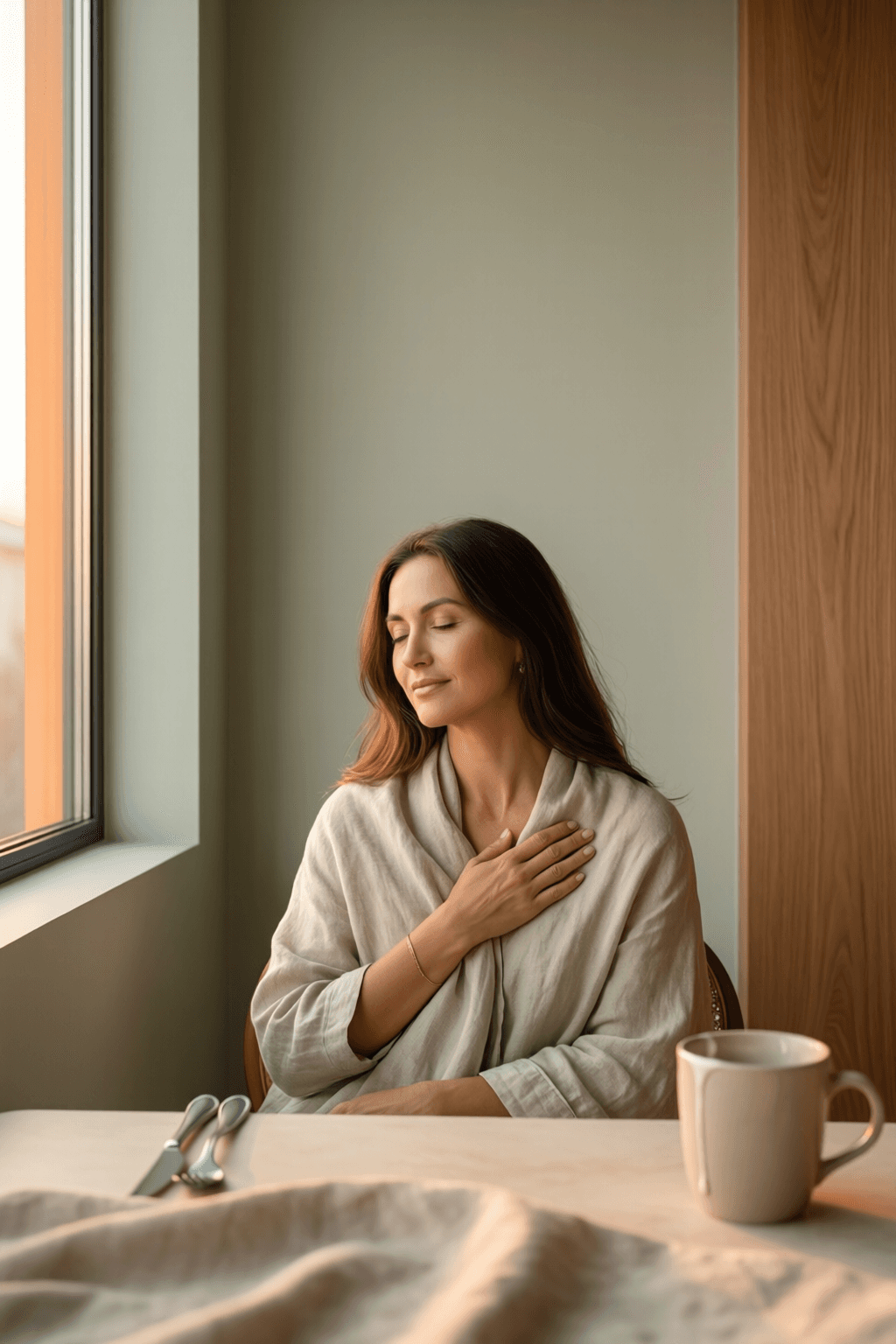
To be at home in one's own skin is the ultimate sanctuary. — Maya Angelou
—What lingers after this line?
The Meaning of Inner Home
Maya Angelou’s words recast home as something deeper than walls, geography, or possession. To be “at home in one’s own skin” means living without chronic self-rejection, inhabiting one’s body and identity with a sense of ease. In that light, sanctuary is not merely a place of escape but a condition of inner reconciliation. From the beginning, this idea carries special weight because it suggests that peace cannot be fully borrowed from the outside world. Even comfort, status, or admiration remain fragile if a person feels estranged from themselves. Angelou’s insight therefore points inward first, proposing that the safest refuge is self-acceptance.
Self-Acceptance as Protection
Building on that foundation, self-acceptance functions like an emotional shelter against judgment, instability, and comparison. When people are grounded in who they are, they become less vulnerable to every shifting opinion around them. This does not mean indifference to growth; rather, it means growth that begins without shame. Psychologist Carl Rogers’s On Becoming a Person (1961) similarly argues that change becomes possible when individuals accept themselves as they are. Angelou’s statement echoes that humanistic insight: the person who stops waging war against their own body, history, or temperament gains a durable kind of safety. In that sense, inner belonging becomes a form of resilience.
A Response to a Wounding World
At the same time, Angelou’s quote can be read as a response to a world that often teaches people to distrust or diminish themselves. For women, racialized communities, and anyone marked as different, feeling at home in one’s own skin may require resisting messages of unworthiness. Because of this, the line carries both tenderness and defiance. Angelou’s memoir I Know Why the Caged Bird Sings (1969) repeatedly traces the painful struggle to reclaim voice, dignity, and self-possession. Read alongside that life’s work, this quote becomes more than a comforting phrase: it is a declaration that one’s body and identity need not be sites of exile. They can, instead, become sites of return.
The Body as a Lived Refuge
From there, the image of “one’s own skin” brings the body into focus. Angelou does not speak in abstract terms alone; she names the physical self, implying that sanctuary involves embodiment as much as thought. To be at home in one’s skin is to stop treating the body as an enemy or a costume and to recognize it as the place through which life is experienced. This perspective resonates with philosophical discussions of embodiment, such as Maurice Merleau-Ponty’s Phenomenology of Perception (1945), which describes the body as our primary means of being in the world. Accordingly, Angelou’s line suggests that peace emerges when a person inhabits that bodily existence with dignity rather than alienation.
Why Inner Peace Is Ultimate
The word “ultimate” sharpens the quote’s claim by ranking inner belonging above more temporary forms of comfort. Houses can be lost, communities can change, and public approval can vanish quickly. Yet if a person has cultivated a grounded relationship with themselves, they retain a center that travels with them. Consequently, Angelou elevates self-possession into a profound kind of freedom. This does not deny the value of loving relationships or secure environments; instead, it suggests that their deepest benefit is fulfilled when they support an already forming inner home. Ultimate sanctuary, then, is not isolation from others but a stable self one does not abandon.
A Practice Rather Than a Destination
Finally, the quote feels enduring because it describes not a permanent achievement but an ongoing practice. Few people feel fully at home in themselves at all times; insecurity, grief, and social pressure can unsettle anyone. Still, Angelou’s language offers an aspiration: to return to oneself with compassion, again and again. In everyday life, that return may take the form of setting boundaries, rejecting corrosive comparison, or speaking to oneself with more honesty and mercy. Seen this way, sanctuary is built through repeated acts of self-recognition. Angelou leaves us with a powerful conclusion: the most lasting refuge is the self that has learned to welcome itself.
Recommended Reading
As an Amazon Associate, we earn from qualifying purchases.
One-minute reflection
What feeling does this quote bring up for you?
Related Quotes
6 selectedDo not look for a sanctuary in anyone except yourself; you are the architect of your own calm. — Maya Angelou
Maya Angelou
Maya Angelou’s statement begins by redirecting a common human impulse: the desire to seek safety in other people. Rather than condemning connection, she gently warns against making another person the sole shelter for our...
Read full interpretation →The real problem with being alone is that you're stuck with yourself all day. Make sure you're someone you actually like hanging out with. — Maya Angelou
Maya Angelou
Maya Angelou’s line begins with a sharp but compassionate truth: being alone is difficult not merely because others are absent, but because the self becomes unavoidable. In solitude, distraction fades, and our habits, th...
Read full interpretation →There is a deep peace that comes from creating something that didn't exist before. It is your way of telling the universe that you were here, and you felt something. — Maya Angelou
Maya Angelou
At its heart, Maya Angelou’s reflection suggests that creation is not merely productive but restorative. To make something that did not exist before—a poem, a garden, a melody, even a repaired room—is to experience a rar...
Read full interpretation →Each of us needs to withdraw from the cares which will not withdraw from us. — Maya Angelou
Maya Angelou
Maya Angelou’s line begins with a sober recognition: some cares don’t politely fade when we ask them to. Bills, grief, conflict, deadlines, and uncertainty can keep pressing, and if we wait for life to quiet down before...
Read full interpretation →It's okay to be a little bit of a mess. Even the moon has phases, and it's still the most beautiful thing in the night sky. — Sanober Khan
Sanober Khan
At its heart, Sanober Khan’s line offers relief from the exhausting pressure to appear composed at all times. By saying it is acceptable to be ‘a little bit of a mess,’ the quote reframes disorder not as failure but as p...
Read full interpretation →The art of living is not about being a finished masterpiece; it is about being a work in progress that still knows how to laugh at its own paint spills. — Anne Lamott
Anne Lamott
At its heart, Anne Lamott’s remark reframes life from a quest for perfection into an ongoing act of creation. Instead of imagining ourselves as polished masterpieces, she invites us to see our days as brushstrokes still...
Read full interpretation →More From Author
More from Maya Angelou →The true value of our journey is found in the people who walk beside us, turning simple moments into our most enduring milestones. — Maya Angelou
At its heart, this reflection suggests that life is not valued only by destinations reached, but by the companions who share the road. Maya Angelou’s thought reframes success away from solitary achievement and toward rel...
Read full interpretation →When we come together as a family, love multiplies, and hearts grow. — Maya Angelou
Maya Angelou’s words begin with a simple but powerful claim: family togetherness does not merely preserve love, it increases it. By saying that love multiplies, she moves beyond the idea of affection as a limited resourc...
Read full interpretation →Sustainable ambition means building a life that does not require you to dismantle yourself in the process. True resilience is knowing when to push and when to restore your own capacity. — Maya Angelou
At its core, this statement challenges the old belief that success must be purchased through exhaustion, self-denial, or inner fracture. Sustainable ambition, as framed here, is not a lesser form of drive but a wiser one...
Read full interpretation →The real problem with being alone is that you're stuck with yourself all day. Make sure you're someone you actually like hanging out with. — Maya Angelou
Maya Angelou’s line begins with a sharp but compassionate truth: being alone is difficult not merely because others are absent, but because the self becomes unavoidable. In solitude, distraction fades, and our habits, th...
Read full interpretation →