
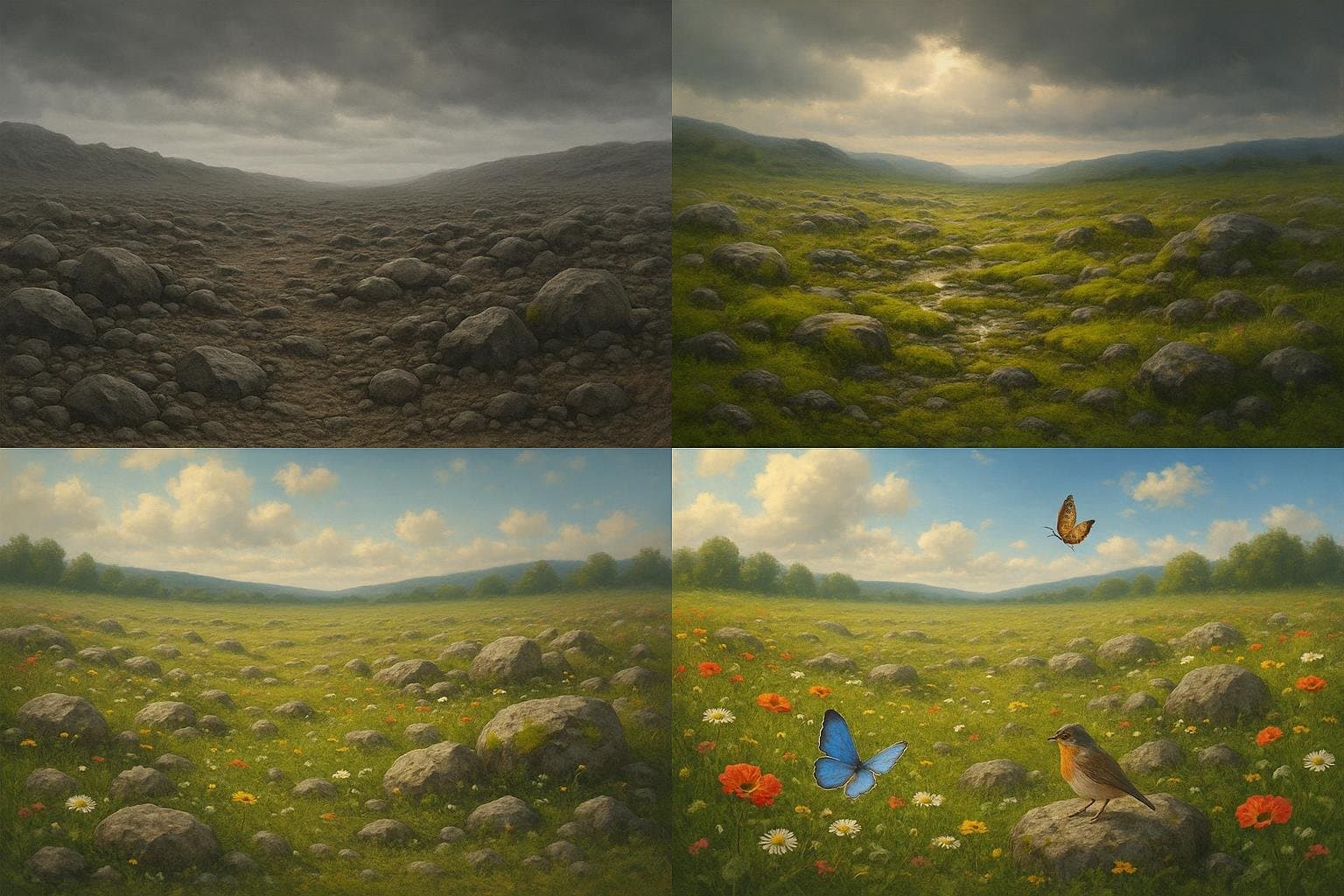
To be without some of the things you want is an indispensable part of happiness. — Bertrand Russell
—What lingers after this line?
The Nature of Desire and Contentment
Bertrand Russell’s insight invites us to reconsider the traditional equation of happiness with abundance. Rather than fulfilling every wish, he suggests that wanting plays a pivotal role in our sense of wellbeing. Our desires cultivate goals and aspirations, creating a framework in which contentment can exist. In this light, the presence of unfulfilled wants activates our imagination and propels personal growth, much as a journey’s appeal often lies in its anticipation rather than its arrival.
Philosophical Roots: Happiness in Restraint
Philosophers from Epicurus to the Stoics, like Marcus Aurelius, echoed Russell’s sentiment centuries earlier. Epicurean philosophy prized moderate desires and saw insatiable longing as the source of anxiety. Similarly, Stoicism teaches that happiness arises not from getting everything, but from accepting limits and embracing restraint. These perspectives make clear that happiness is not the product of ceaseless acquisition, but rather of a balanced relationship with one’s desires.
Anticipation as a Form of Pleasure
Moreover, psychological studies indicate that anticipating a reward often brings more pleasure than the reward itself. Gilbert and Wilson’s research on affective forecasting (2000) highlights how the journey toward a goal fuels excitement and hope. This period of anticipation, punctuated by the occasional lack, keeps the experience of happiness alive, making satisfaction richer when it finally arrives. Thus, a certain degree of unfulfillment can be a source of sustained joy.
Cultural Narratives on Want and Satisfaction
Stories old and new reflect this dynamic. Fairy tales and novels—from Cinderella’s yearning to Jay Gatsby’s longing in Fitzgerald’s *The Great Gatsby*—demonstrate how desire and the occasional absence of fulfillment provide narrative momentum and personal meaning. Without some distance from our wishes, satisfaction would lose its value, and happiness would become a bland certainty rather than a treasured occurrence.
Embracing Lack as Part of Fulfillment
Ultimately, integrating Russell’s wisdom into daily life encourages gratitude and perspective. Instead of lamenting unmet wants, seeing them as ‘indispensable’ reframes lack as an active ingredient in happiness. This shift invites us not only to celebrate what we have, but also to find joy in the aspirations and unfilled spaces that give life its ongoing vibrancy and possibility.
Recommended Reading
As an Amazon Associate, we earn from qualifying purchases.
One-minute reflection
Where does this idea show up in your life right now?
Related Quotes
6 selectedHappiness is what's there when you remove the sense that something is missing in your life. — Naval Ravikant
Naval Ravikant
Naval Ravikant frames happiness as what remains once a particular mental noise is turned off: the persistent feeling that life is incomplete. In this view, happiness isn’t primarily a prize earned by stacking achievement...
Read full interpretation →The secret of happiness is not always doing what you want, but always wanting what you do. - Leo Tolstoy
Leo Tolstoy
This quote redefines happiness as a state of contentment that comes from cultivating a positive attitude toward one's actions rather than always striving to do exactly what one desires.
Read full interpretation →The secret of happiness is not always doing what you want, but always wanting what you do. - Leo Tolstoy
Leo Tolstoy
This quote emphasizes the importance of finding contentment and acceptance in one's current circumstances. Happiness is derived not from always pursuing desires but from valuing and appreciating what one is already engag...
Read full interpretation →When you can't have what you want, you must want what you can have. - Terence
Terence
This quote emphasizes the importance of accepting what is within our reach and adapting to the circumstances we are in. It encourages finding satisfaction and contentment in what we have rather than longing for what we c...
Read full interpretation →When one cannot have what one wants, one must want what one can have. - Terence
Terence
This quote underscores the importance of accepting reality and adapting one's desires to align with what is actually attainable. It encourages a pragmatic approach to life.
Read full interpretation →I have learned that to be with those I like is enough. — Walt Whitman
Walt Whitman
Whitman’s line reduces happiness to something disarmingly plain: the presence of beloved company. Rather than chasing wealth, status, or elaborate pleasures, he suggests that being with people one genuinely likes can alr...
Read full interpretation →More From Author
More from Bertrand Russell →We need, above all things, to slow down and get ourselves to amble through life instead of to rush through it. — Bertrand Russell
At its core, Bertrand Russell’s remark argues that the speed of modern life can become a form of self-impoverishment. To rush through existence is not merely to move quickly; it is to miss texture, reflection, and the qu...
Read full interpretation →One must care about a world one will never see. — Bertrand Russell
At its core, Bertrand Russell’s line asks us to stretch our concern beyond immediate experience. To care about a world one will never see is to recognize that moral responsibility does not end with personal benefit or ev...
Read full interpretation →The trouble with always trying to preserve the health of the body is that it's so difficult to do without destroying the health of the mind. — Bertrand Russell
Bertrand Russell’s remark points to a subtle danger in the pursuit of physical well-being: the body can become such an object of vigilance that it crowds out mental freedom. In other words, health ceases to be a foundati...
Read full interpretation →The world is full of magical things patiently waiting for our wits to grow sharper. — Bertrand Russell
This quote suggests that the world is brimming with fascinating and magical elements that are not immediately obvious to us but are waiting to be discovered as our understanding and perception improve.
Read full interpretation →