
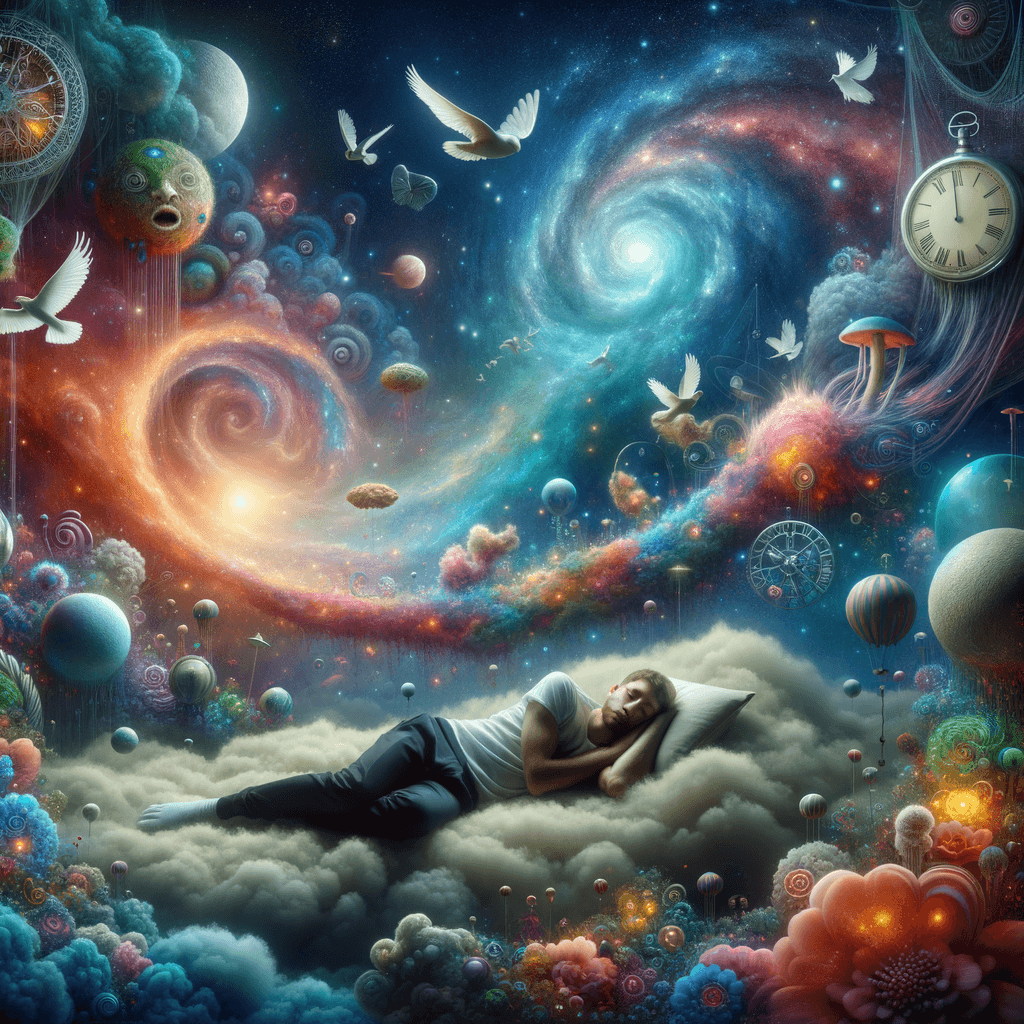
Dreaming permits each and every one of us to be quietly and safely insane every night of our lives. — Charles M. Schulz
—What lingers after this line?
The Nature of Dreaming
This quote highlights the unique and surreal nature of dreaming, where the boundaries of reality are dissolved, allowing the mind to explore scenarios that might be deemed 'insane' in waking life.
Safety in Imagination
Dreaming provides a safe space for the subconscious to wander freely. Unlike real-life experiences, dreams occur in a controlled environment where there are no real-world consequences for bizarre or irrational thoughts.
Nightly Catharsis
Dreaming acts as a healthy release for our creative, chaotic, or repressed thoughts. It permits our minds to process emotions, ideas, and experiences in ways that might not fit within the structure of everyday consciousness.
Schulz's Wit and Perspective
Charles M. Schulz, the creator of the beloved comic strip 'Peanuts,' was known for his witty and profound observations about human nature. This quote fits his reflective style, offering insight into how dreams provide an outlet for the irrational and unfiltered parts of our minds.
Balancing Sanity and Madness
By referring to dreaming as a form of 'quiet and safe insanity,' the quote suggests a balance between rationality and madness. In dreams, one can embrace the seemingly absurd without fear, maintaining sanity in waking life.
One-minute reflection
Why might this line matter today, not tomorrow?
Related Quotes
6 selectedNo man has the right to dictate what other men should perceive, create or produce, but all should be encouraged to reveal themselves. — Ansel Adams
Ansel Adams
At its core, Ansel Adams’s statement rejects artistic authoritarianism. He insists that no individual has the moral authority to prescribe what others must see, make, or express.
Read full interpretation →We are not here to fit into a mold, but to break the ones that keep our most honest work hidden. — Virginia Woolf
Virginia Woolf
At its core, Virginia Woolf’s statement rejects the quiet pressure to adapt ourselves to preexisting expectations. To “fit into a mold” suggests becoming legible, acceptable, and predictable at the cost of what is most i...
Read full interpretation →You do not need anybody's permission to live a creative life. — Elizabeth Gilbert
Elizabeth Gilbert
Elizabeth Gilbert’s statement begins by shifting creativity from something granted to something inherent. Instead of treating art as a special status bestowed by gatekeepers—teachers, critics, institutions—she frames it...
Read full interpretation →Chase your dreams like the wind chasing the leaves; let your spirit dance freely and boldly, for the world is your stage. — Unknown, Global.
Unknown, Global.
This quote encourages individuals to pursue their dreams with the same relentless energy and enthusiasm as the wind that chases leaves, emphasizing the importance of being proactive in the pursuit of one’s aspirations.
Read full interpretation →Everything that is great and inspiring is created by the individual who can labor in freedom. — Albert Einstein
Albert Einstein
This quote highlights the importance of personal freedom for creativity and innovation. When individuals have the liberty to think and act independently, they are more likely to create something remarkable and inspiring.
Read full interpretation →Refuse to let fear set the rules; write terms that allow you to move and create. — Albert Camus
Albert Camus
At the outset, the aphorism frames fear as an invisible legislator, drafting rules that limit motion and imagination. For Camus, the absurd names the gap between our craving for order and the world’s indifference.
Read full interpretation →More From Author
More from Charles M. Schulz →I have a new philosophy. I'm only going to dread one day at a time. — Charles M. Schulz
At first glance, Charles M. Schulz’s line sounds like a joke, and that is precisely its power.
Read full interpretation →Don't worry about the world coming to an end today. It's already tomorrow in Australia. — Charles M. Schulz
Charles M. Schulz turns an apocalyptic fear into a simple, disarming punchline: if the world were ending “today,” Australia has already made it to “tomorrow.” The humor doesn’t argue with the emotion of worry so much as...
Read full interpretation →