
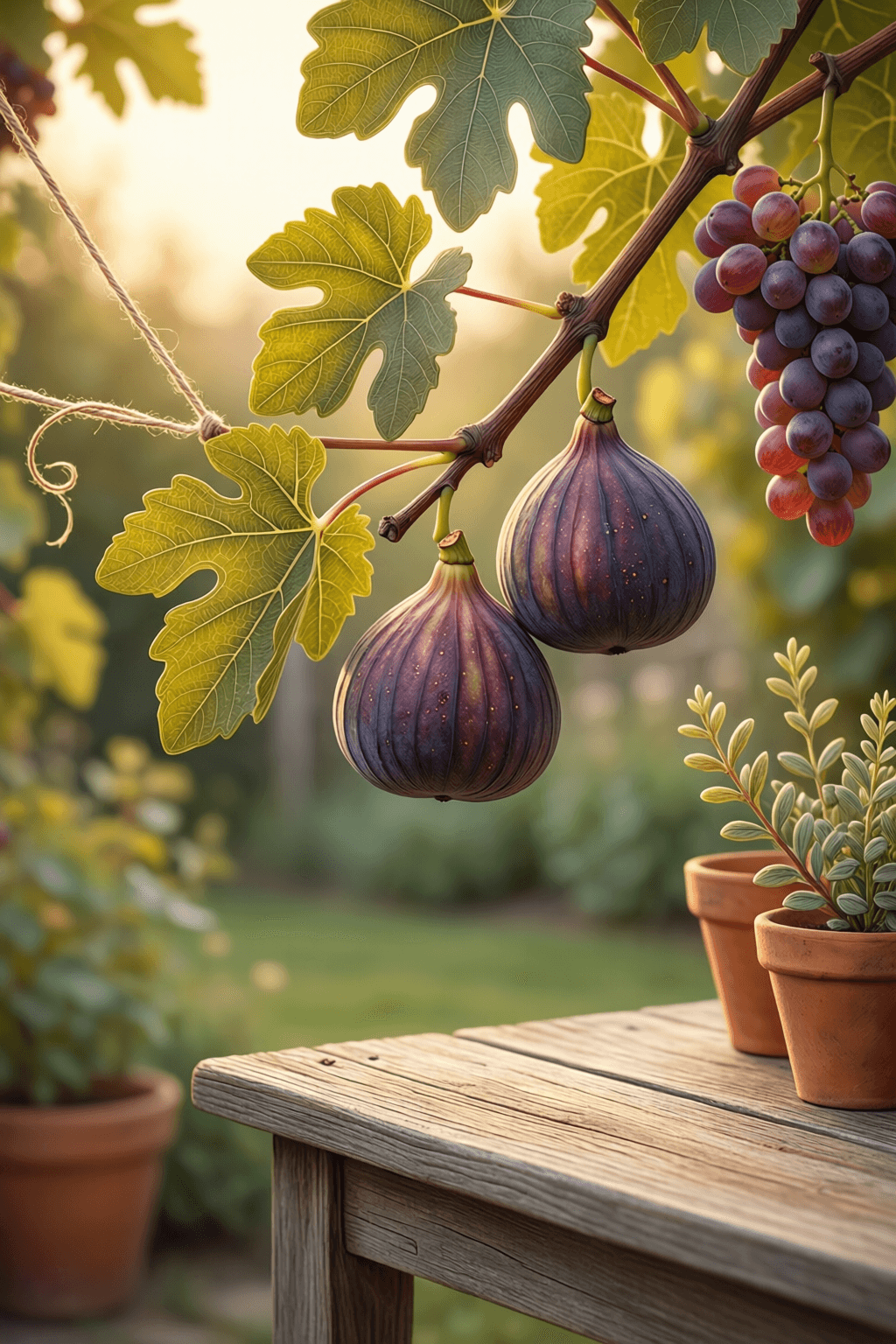
No great thing is created suddenly, any more than a bunch of grapes or a fig. If you tell me that you desire a fig, I answer you that there must be time. — Epictetus
—What lingers after this line?
Patience at the Heart of Achievement
Epictetus begins with a plain but memorable comparison: greatness does not appear all at once, just as fruit does not spring ripe from the branch in a single instant. By pairing human ambition with the slow growth of grapes and figs, he reminds us that time is not an obstacle to excellence but one of its essential ingredients. In other words, the delay we often resent is frequently the very process that makes achievement possible. From this starting point, the quote gently corrects a common human impatience. We may desire mastery, success, wisdom, or recognition immediately, yet nature itself teaches a different rhythm. The Stoic lesson is clear: if we want something genuinely worthwhile, we must also want the seasons of effort, waiting, and maturation that bring it into being.
Why Nature Becomes the Teacher
The image of grapes and figs is more than decorative; it is philosophical shorthand for organic development. A fig tree must be planted, rooted, watered, exposed to weather, and given its proper season before fruit appears. Likewise, a great character, a meaningful work, or a strong institution emerges through stages that cannot be skipped without damaging the final result. This natural metaphor fits Epictetus’s wider Stoic outlook, especially in the Discourses (early 2nd century AD), where he repeatedly urges students to respect what lies within their control and to accept the timing of what does not. Therefore, the fruit image teaches more than patience alone: it teaches alignment with reality. To demand instant ripeness is not merely unrealistic; it is a refusal to understand how growth actually works.
The Discipline of Becoming
Once this metaphor settles in, the quote begins to speak less about waiting passively and more about enduring the discipline of becoming. Time alone does not create greatness; rather, time joined with repeated effort does. A vineyard unattended will not yield noble fruit, and a person who only wishes for excellence without practicing it will remain stuck in desire. Seen this way, Epictetus shifts attention from craving outcomes to cultivating habits. Musicians practice scales for years before playing with ease, and athletes train through countless ordinary days before reaching remarkable performance. The same pattern appears in philosophy and moral life: patience is not idleness but sustained fidelity to a long process. Greatness ripens through repetition long before it is visible to others.
A Stoic Reply to Impatience
At the same time, the quote offers a subtle rebuke to the modern hunger for immediacy. We often treat delays as signs of failure, yet Epictetus would likely say that such frustration comes from confused expectations. If a person asks for a fig in winter, the problem is not the tree but the demander’s ignorance of seasons. Likewise, when we expect instant wisdom, influence, or fulfillment, we set ourselves against the structure of life itself. This is why Stoicism prizes inner adjustment as much as external effort. Marcus Aurelius, writing in Meditations (c. 180 AD), similarly reflects on cooperating with nature rather than resisting it. In that sense, Epictetus is training desire to become intelligent. He asks us not merely to want great things, but to want them in the only way they can truly arrive.
Greatness as Moral and Creative Maturity
As the saying broadens, it applies not only to visible success but to inward formation. Courage, self-command, judgment, and resilience are not sudden possessions acquired by inspiration alone. They are formed gradually, often through disappointment, restraint, and repeated choices that seem small at the time. Thus, the quote points toward a deeper definition of greatness: not spectacle, but maturity. Creative work follows the same law. Plato’s Republic (c. 375 BC) imagines education itself as a long shaping of the soul, while later artists and thinkers—from Leonardo da Vinci’s notebooks to Beethoven’s sketchbooks—show how masterpieces emerge from revision rather than lightning-like perfection. Epictetus therefore invites us to honor slow refinement. The finest results, whether ethical or artistic, usually bear the marks of long cultivation.
Learning to Trust the Season
Finally, the wisdom of the passage lies in its calming realism. It does not deny desire; in fact, it acknowledges that wanting a fig is perfectly natural. What it challenges is the fantasy that wanting alone should be enough. By reminding us that fruit and greatness alike require time, Epictetus offers a way to live with ambition without becoming consumed by restlessness. That makes the quote enduringly practical. When progress feels invisible, we can remember that many important processes are hidden while they develop: roots spread before branches thicken, and understanding deepens before confidence appears. In the end, trusting the season is not resignation but steadiness. It is the mature confidence that what is worth becoming is worth allowing to ripen.
Recommended Reading
As an Amazon Associate, we earn from qualifying purchases.
One-minute reflection
Why might this line matter today, not tomorrow?
Related Quotes
6 selectedDo not mistake patience for passivity. True growth requires the discipline to walk away from what is stagnant so you can run toward what is vital. — Epictetus
Epictetus
At first glance, the quote draws a sharp line between patience and passivity, two qualities often confused in daily life. Patience, in this sense, is not silent resignation but a disciplined steadiness that allows a pers...
Read full interpretation →Quietly persist, for great things are not created suddenly. — Epictetus
Epictetus
Epictetus compresses a profound truth into a few words: meaningful accomplishment rarely appears in a dramatic instant. Instead, it emerges through steady, often unnoticed effort sustained over time.
Read full interpretation →No great thing is created suddenly. — Epictetus
Epictetus
This quote emphasizes that achieving greatness requires patience, as all significant accomplishments take time to come to fruition.
Read full interpretation →To do anything to a high standard, you must be prepared to be bored for long periods of time. — James Clear
James Clear
James Clear’s observation cuts against the modern preference for constant stimulation. At first glance, high achievement looks exciting from the outside, yet the path toward it is usually repetitive, slow, and uneventful...
Read full interpretation →The artist must elect to fight for the beauty of the work, stitch by patient stitch, against the rush of the world. — Ursula K. Le Guin
Ursula K. Le Guin
Ursula K. Le Guin’s line begins with a deliberate verb: the artist must “elect.” In other words, beauty is not an accident or a luxury but a conscious choice made in resistance to haste.
Read full interpretation →There is no royal road to anything. One thing at a time, all things in succession. That which grows fast, withers as rapidly. That which grows slowly, endures. — J. G. Holland
J. G. Holland
J. G.
Read full interpretation →More From Author
More from Epictetus →Do not mistake patience for passivity. True growth requires the discipline to walk away from what is stagnant so you can run toward what is vital. — Epictetus
At first glance, the quote draws a sharp line between patience and passivity, two qualities often confused in daily life. Patience, in this sense, is not silent resignation but a disciplined steadiness that allows a pers...
Read full interpretation →The greatest reclamation of power is to stop letting your circumstances dictate your inner stillness. — Epictetus
At its heart, this statement distills a central Stoic lesson: real power begins when we stop treating external events as masters of our inner life. Epictetus, in the Discourses (2nd century AD), repeatedly argued that wh...
Read full interpretation →Stillness is the birthplace of strength. — Epictetus
At first glance, Epictetus turns a common assumption upside down: strength does not begin in noise, force, or visible struggle, but in stillness. The Stoic philosopher suggests that real power is born when the mind becom...
Read full interpretation →If you would live your life with ease, do what you ought, not what you please. — Epictetus
At its heart, Epictetus argues that a peaceful life does not come from indulging every passing preference, but from aligning action with obligation and principle. In other words, ease is not the same as comfort.
Read full interpretation →